

If you’ve never tried making fresh-milled palatschinken, you’re in for something really special. These thin, soft Central European crepes are a staple across many European countries (mine included!) and this version gets some extra nutty flavor you only get from fresh-milled flour. They cook quickly, roll beautifully, and work just as well for breakfast as they do for a simple dessert.

Palatschinken are popular across Central and Eastern Europe, especially in Austria, Hungary, and parts of the Balkans. They’re often served as a sweet meal or light dessert, filled with things like jam, sweet cheese, or chocolate spread.
It's these palatschinken, fresh milled potato dumplings or fresh milled apple strudel for me when anyone asks what my favorite "traditional" recipes is. If you have leftover palatschinken, make baked crepes with sweet cheese filling!
This version leans into freshly milled flour, which gives them a little more depth than traditional white flour versions.
Summarize & Save This Recipe On:
Quick Look
- Prep Time: 15 minutes
- Cook Time: 25 minutes
- Total Time: 40 minutes
- Servings: 4–6 servings (10–12 palatschinken)
- Difficulty: Easy
- Baking Method: Stovetop
- Best For: Breakfast, dessert, light meals
Jump to:
- Summarize & Save This Recipe On:
- Quick Look
- Important Ingredients
- Substitutions & Variations
- How to Make Palatschinken (Central European Crepes)
- Baking Schedule
- 💭Crucial Success Tips
- Recipe FAQs
- How To Store Palatschinken (Central European Crepes)
- Other Delicious Recipes
- Fresh-Milled Palatschinken (Central European Crepes)
- Need Help Tweaking This Recipe?
- Other Fresh-Milled Dessert Recipes You'll Love
Important Ingredients
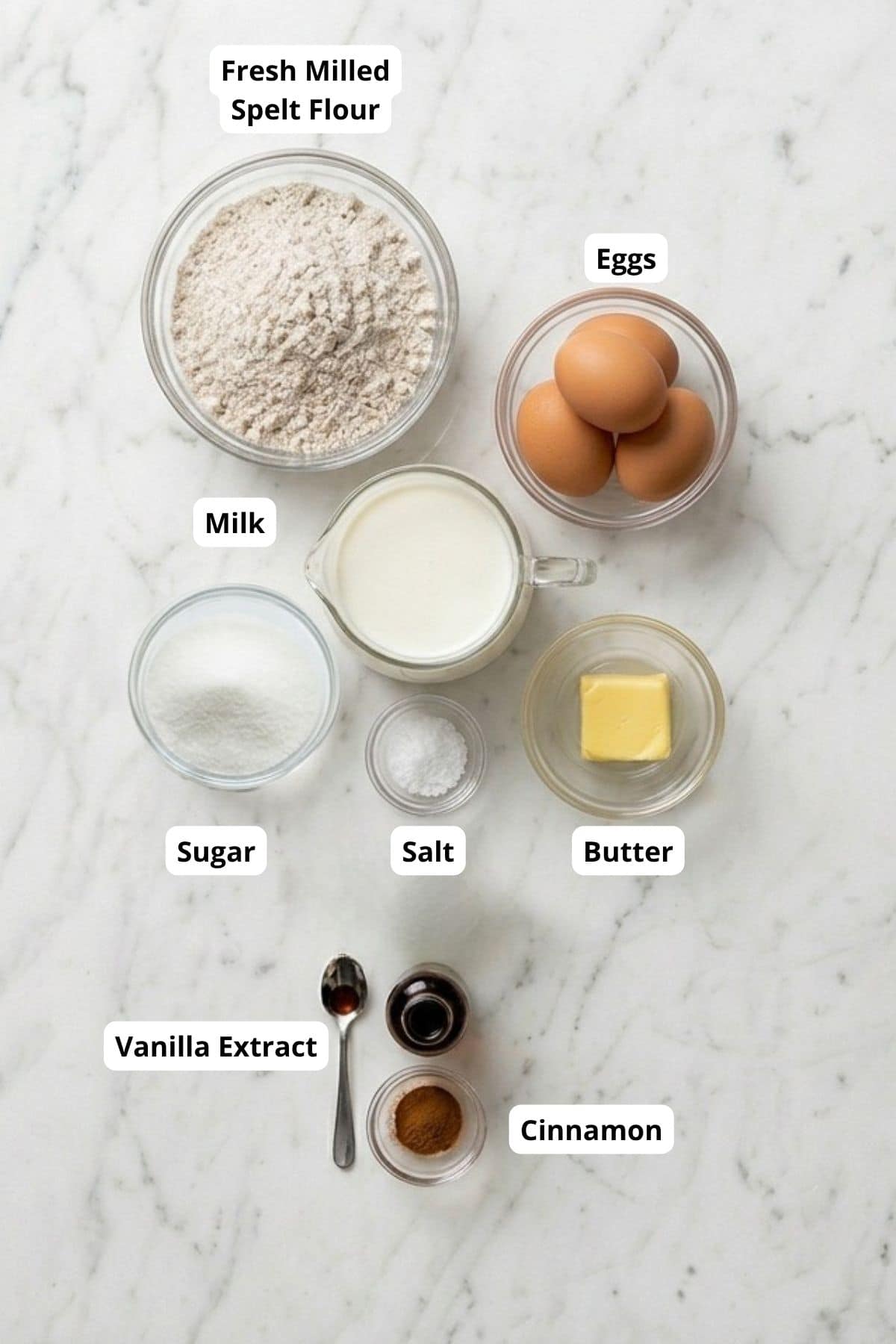
- Fresh-milled spelt flour gives a soft texture and slightly nutty flavor while keeping the crepes tender.
- Eggs help hold everything together and give structure.
- Milk creates a smooth, thin batter that spreads easily in the pan.
- Sugar (optional but helpful) adds a light sweetness, especially if using sweet fillings.
See recipe card for quantities.
Substitutions & Variations
- Flour options: You can use fresh-milled wheat instead of spelt. It will still work, just slightly different texture.
- Flavor additions: Vanilla and cinnamon are optional but add a nice extra layer if you’re going for sweet fillings.
- Sparkling water trick: You can replace a small part of the milk with sparkling water for lighter, more delicate crepes.
How to Make Palatschinken (Central European Crepes)
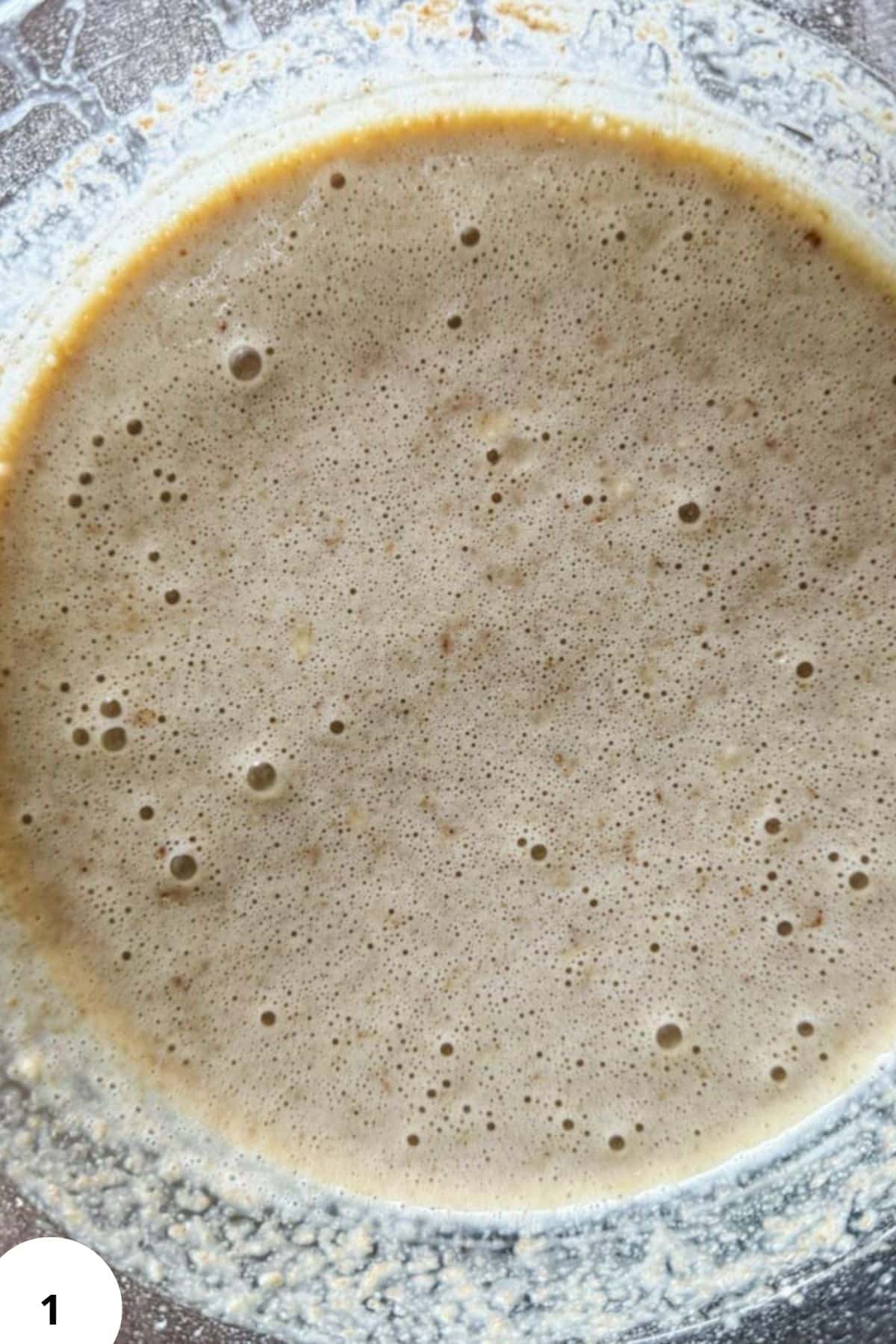
Step 1: In a large mixing bowl, combine the milk, eggs, fresh-milled flour, sugar and salt (Image 1).
If you like a little extra flavor, add the vanilla extract and cinnamon as well. These are optional but pair nicely with sweet fillings.
Mix the mixture well until the batter becomes smooth and most lumps disappear. A hand mixer or immersion blender works well for this step, with hand mixer being my top recommendation!
Because fresh-milled flour absorbs more liquid, the batter may thicken slightly as it sits. The consistency should be fairly thin, similar to heavy cream. If it seems too thick, stir in a small splash of milk.
Step 2: Some cooks prefer to let crepe batter sit for 15–20 minutes so the flour hydrates.
With palatschinken, I often skip this step and start cooking immediately, and they still turn out thin and flexible.
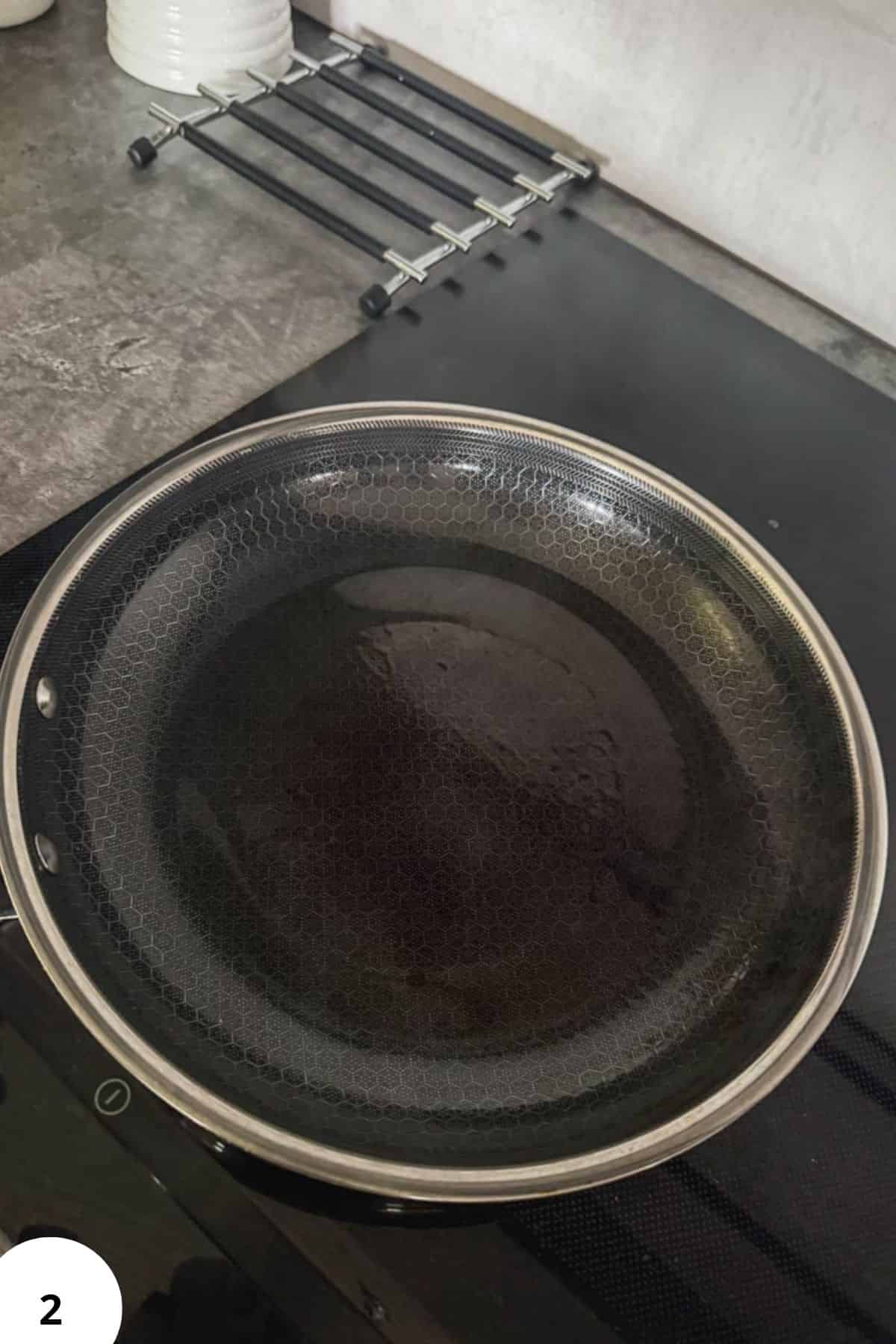
Place a nonstick skillet over medium heat.
A good nonstick surface makes these much easier to cook. A well-seasoned cast iron pan can also work if it’s properly preheated.
Lightly coat the pan with a little butter or oil (Image 2).
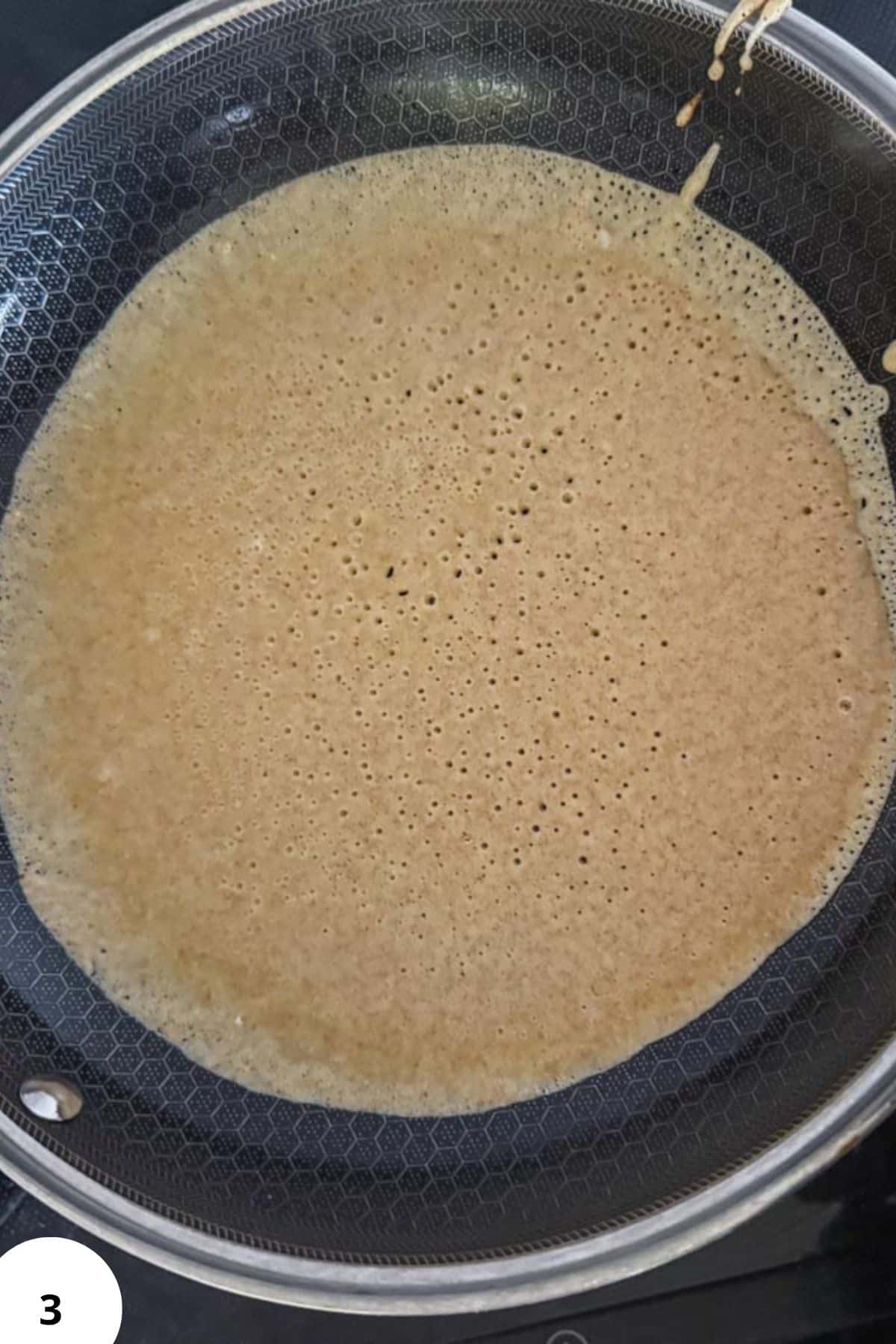
Step 3: Pour roughly ¼-½ cup of batter into the center of the pan (start with ¼ cup and see if you can cover the surface of your pan. If not, add up to ½ cup)
Quickly tilt and rotate the pan so the batter spreads into a thin layer across the bottom (Image 3).
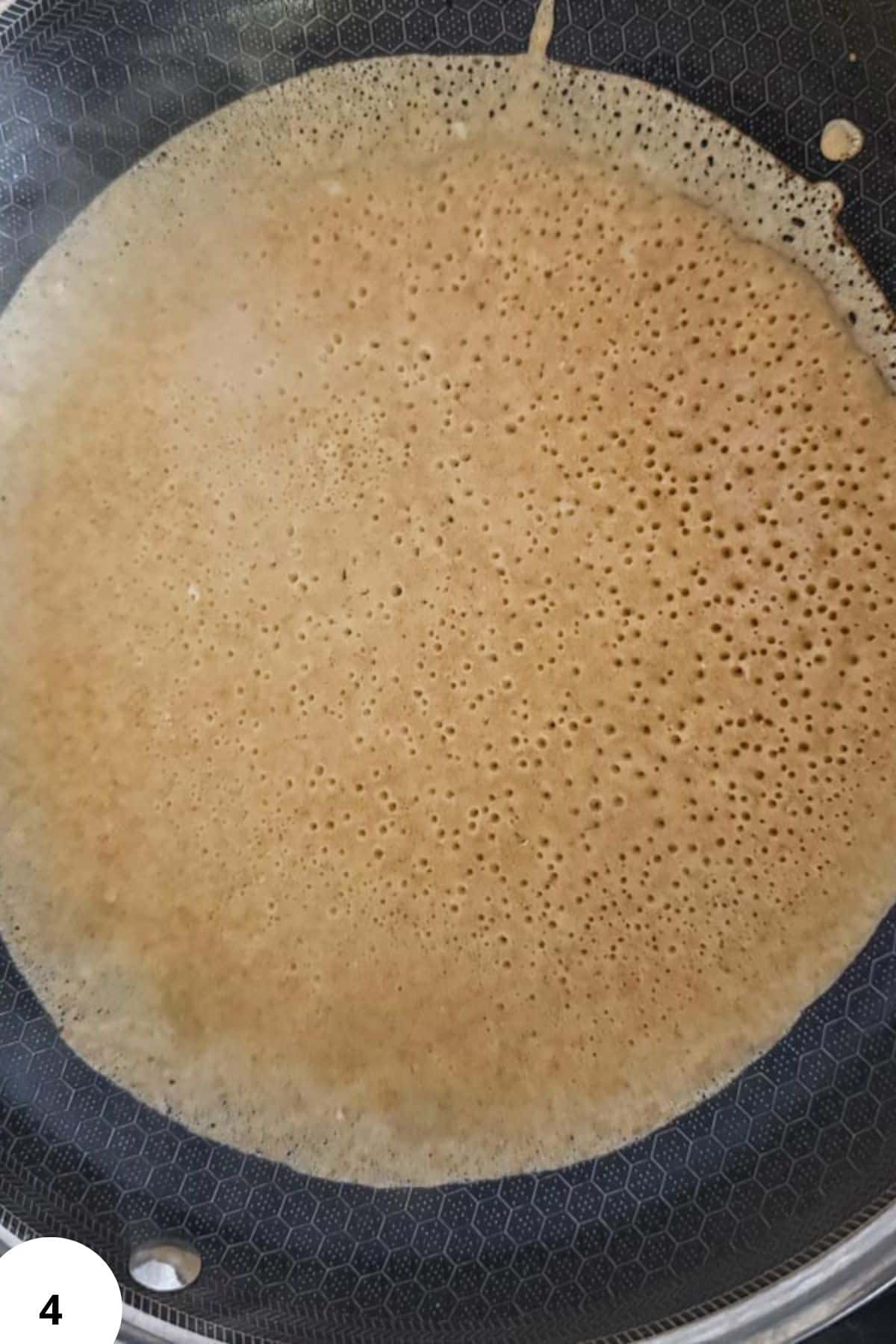
Step 4: Allow the palatschinken to cook for 45–60 seconds.
The edges will start to lift slightly and the underside should turn lightly golden (Image 4).
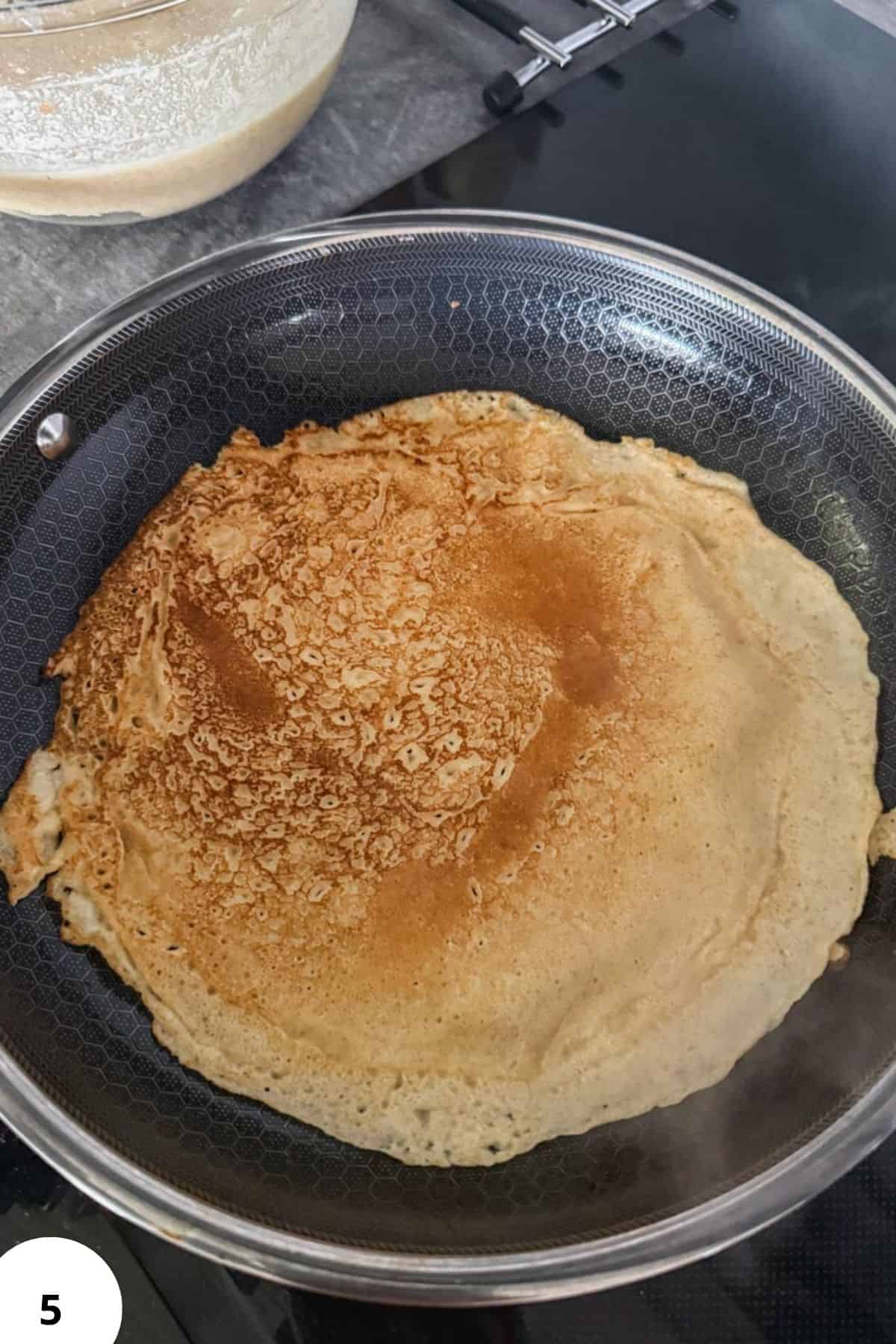
Step 5: Slide a thin spatula underneath and gently turn the crepe over. I like using an offset spatula, which slides under the crepe very easily. I often help myself with a cake server (the triangular tool used for serving cake) to support the other side while flipping
Cook the second side for about 20–30 seconds until lightly browned (Image 5).
Using two spatulas can make flipping easier, especially with very thin crepes.
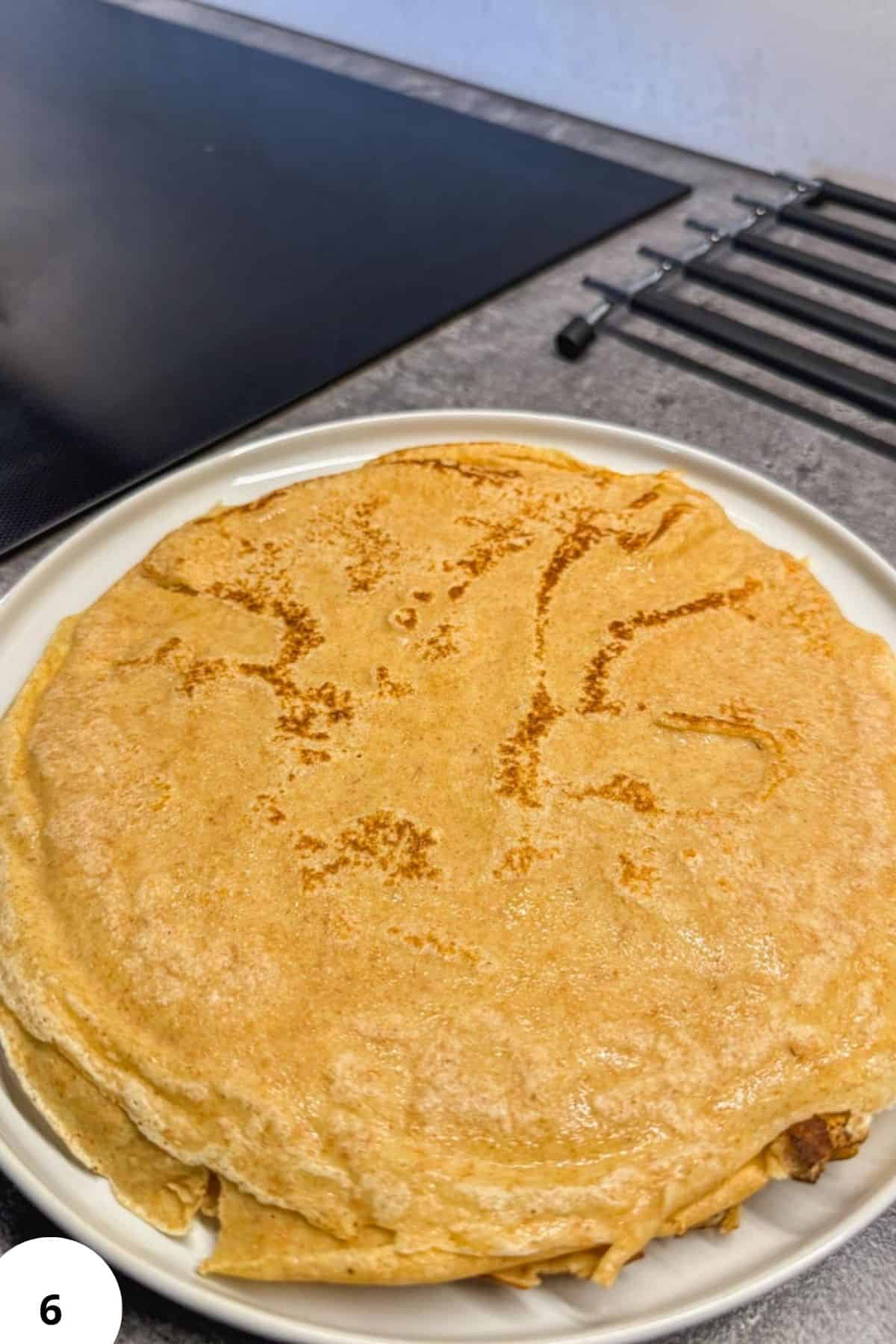
Step 6: Transfer the finished palatschinken to a plate and repeat with the remaining batter.
Stack them directly on top of each other to keep them soft and flexible (Image 6).
Hint: you can mix the batter a few hours ahead and refrigerate it! Just make sure to thin it out with milk, because it will probably thicken up during the rest period.
Baking Schedule
Same-day cooking (best texture):
- Mix batter → cook immediately
- This gives you soft, flexible crepes with the best flavor
Optional short rest (15–20 minutes):
- Letting the batter sit allows the flour to fully hydrate
- This can make the crepes slightly more tender and easier to spread
Make-ahead option:
- You can mix the batter a few hours ahead and refrigerate it
- Stir well before using and thin with a little milk if needed
💭Crucial Success Tips
The most important thing to get right here is batter consistency. Palatschinken batter should be thin. Thinner than pancake batter. I think it's helpful to try to get closer to heavy cream consistency wise.
If your batter is too thick, the crepes will turn out dense and they won't spread easily in the pan. If your batter is too thin, they may tear when flipping.
Recipe FAQs
Yes. Regular flour works well, but the flavor will be milder. Fresh-milled flour adds a slightly nutty taste and more depth.
Fresh-milled flour continues absorbing liquid over time. This is normal. Just stir in a little milk to loosen it back up.
No. Resting helps with hydration, but these work well even if you cook them right away.
How To Store Palatschinken (Central European Crepes)
Store in the fridge for up to 2–3 days, covered well so they don’t dry out.
They also freeze well, stack with parchment between each one and freeze for up to 1–2 months. Reheat gently in a pan or microwave.
Other Delicious Recipes
- Fresh-Milled Sourdough Pancakes

- Fresh-Milled Sourdough Mini Pancakes (Jar Ring Pancakes)

- Fresh Milled Blueberry Banana Muffins

- Fresh Milled Sourdough Pizza Toast

If you tried these fresh-milled palatschinken (central European crepes) or any other recipe on my blog please leave a 🌟 star rating and let me know how it went in the 📝 comments below! Happy Baking!


Fresh-Milled Palatschinken (Central European Crepes)
Ingredients
- 480 g milk
- 3 eggs large, about 150 g without shells
- 160 g fresh-milled spelt flour Optional alternative: 120 g fresh-milled wheat flour of any kind
- ¼ teaspoon salt
- 20 g sugar
- 1 teaspoon vanilla extract optional
- ¼ teaspoon cinnamon optional
- Butter or oil for the pan
Instructions
- In a large mixing bowl, combine the milk, eggs, fresh-milled flour, sugar and salt. If you like a little extra flavor, add the vanilla extract and cinnamon as well. These are optional but pair nicely with sweet fillings. Mix the mixture well until the batter becomes smooth and most lumps disappear. A hand mixer or immersion blender works well for this step, with hand mixer being my top recommendation! Because fresh-milled flour absorbs more liquid, the batter may thicken slightly as it sits. The consistency should be fairly thin, similar to heavy cream. If it seems too thick, stir in a small splash of milk.Some cooks prefer to let crepe batter sit for 15–20 minutes so the flour hydrates. With palatschinken, I often skip this step and start cooking immediately, and they still turn out thin and flexible.
- Place a nonstick skillet over medium heat. A good nonstick surface makes these much easier to cook. A well-seasoned cast iron pan can also work if it’s properly preheated. Lightly coat the pan with a little butter or oil.
- Pour roughly ¼-½ cup of batter into the center of the pan (start with ¼ cup and see if you can cover the surface of your pan. If not, add up to ½ cup). Quickly tilt and rotate the pan so the batter spreads into a thin layer across the bottom.
- Allow the palatschinken to cook for 45–60 seconds. The edges will start to lift slightly and the underside should turn lightly golden.
- Slide a thin spatula underneath and gently turn the crepe over. I like using an offset spatula, which slides under the crepe very easily. I often help myself with a cake server (the triangular tool used for serving cake) to support the other side while flipping. Cook the second side for about 20–30 seconds until lightly browned. Using two spatulas can make flipping easier, especially with very thin crepes.
- Transfer the finished palatschinken to a plate and repeat with the remaining batter. Stack them directly on top of each other to keep them soft and flexible.
Video
Notes
- Fresh-milled flour behavior
Fresh flour absorbs more liquid than store-bought flour. If the batter thickens while you cook, simply stir in another splash of milk. - Spelt vs hard white wheat
Spelt produces very soft, tender crepes with a mild nutty flavor. Hard white wheat works well too and gives the palatschinken a slightly stronger structure. - The first crepe is a test
It’s normal for the first palatschinken to act as a test while you adjust the heat and the amount of batter. - Sparkling water trick
In many Austrian and Slovenian kitchens, cooks add a small splash of sparkling mineral water to the batter. The bubbles help make the crepes extra light.

Shaw Keranen says
For the fresh-milled palatschinken ingredients, I do not see any milk quantitie? How much? Thanks.
Tina says
Hi Shaw,
I'm so sorry about that, I'm dealing with a glitch in the recipe portion of the post. But now you should see the milk measurement too: it's 480 grams!
I hope you still want to give them a try!