

For the longest time, I though that freshly milled flour simply won't work in strudel. But than I started to play around with ration and fount one that offers me the best from both world: the elasticity and strength of some bread flour, but amazing flavor and health benefits from fresh milled flour. There's nothing quite like homemade fresh-milled cherry strudel during cherry season, and with the right amounts and some patience, you can have it on the table in a matter of hours!

I mostly use hard white wheat for this recipe, but if you prefer the rustic taste and color of hard red wheat, that'll work too (I've tested it!).
Cherry strudel has been enjoyed throughout Central and Eastern Europe for generations, especially during the summer when fresh cherries are at their peak. The in the fall, we make apple strudel.
While apple strudel may be the better-known version, cherry strudel is every bit as delicious! Freshly milled flour brings even more depth of flavor to this classic dessert while the bread flour makes sure the dough stays elastic for stretching.
Summarize & Adapt This Recipe On:
Quick Look
- Prep Time: 45 minutes
- Dough Rest Time: 1 hour 30 minutes
- Cook Time: 35 minutes
- Total Time: Approximately 2 hours 50 minutes
- Servings: 12 servings (3 small strudels)
- Difficulty: Intermediate
- Baking Method: Conventional or Fan Oven
- Best For: Summer baking, cherry season, afternoon coffee, and family desserts
Jump to:
- Summarize & Adapt This Recipe On:
- Quick Look
- Important Ingredients
- Substitutions & Variations
- How to Make Fresh-Milled Cherry Strudel
- Baking Schedule
- 💭Crucial Success Tips
- Recipe FAQs
- How To Store Fresh-Milled Cherry Strudel
- Other Recipes with Freshly Milled Flour
- Fresh-Milled Cherry Strudel
- Need Help Tweaking This Recipe?
- Other Fresh-Milled Dessert Recipes You'll Love
Important Ingredients
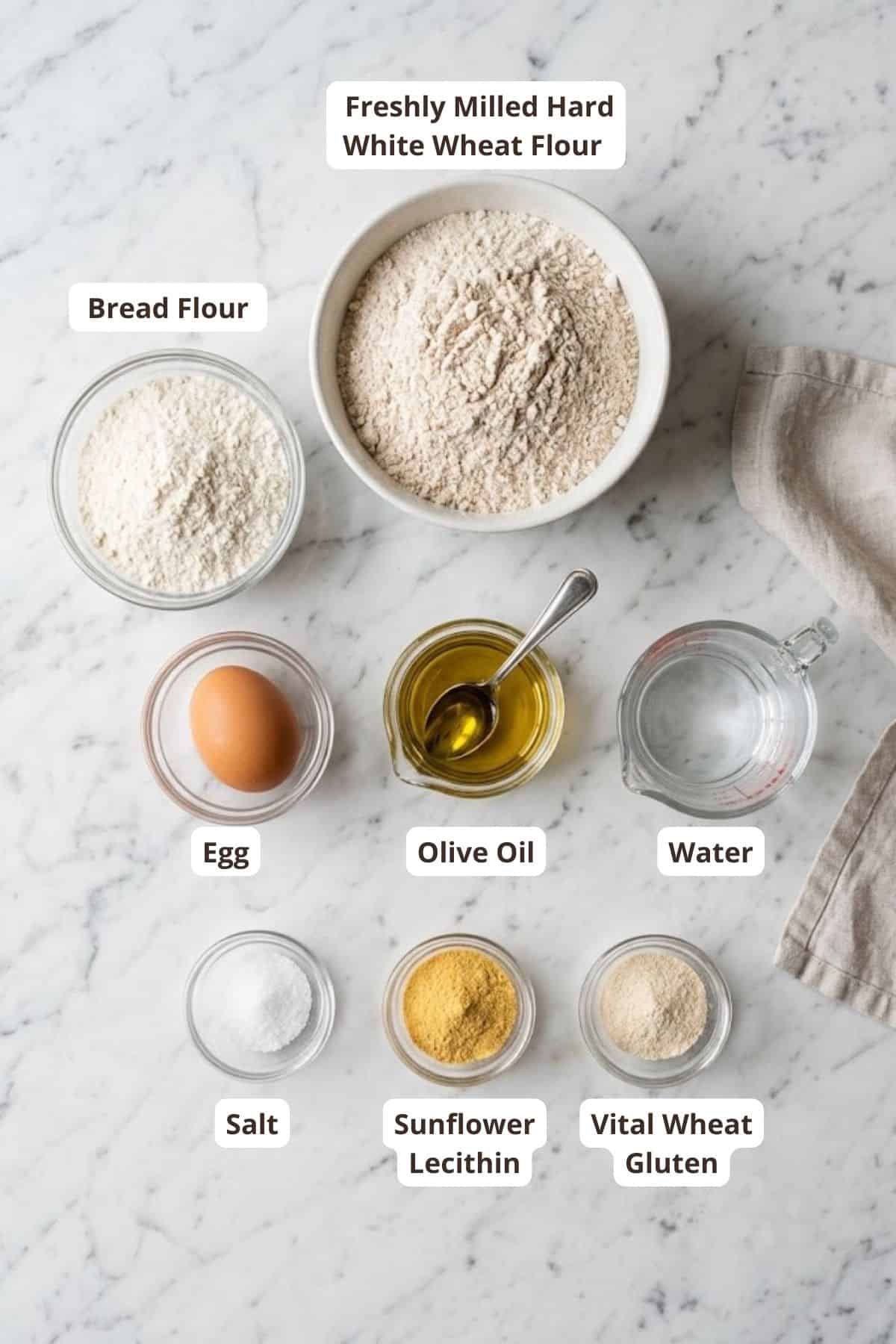
Dough Ingredients
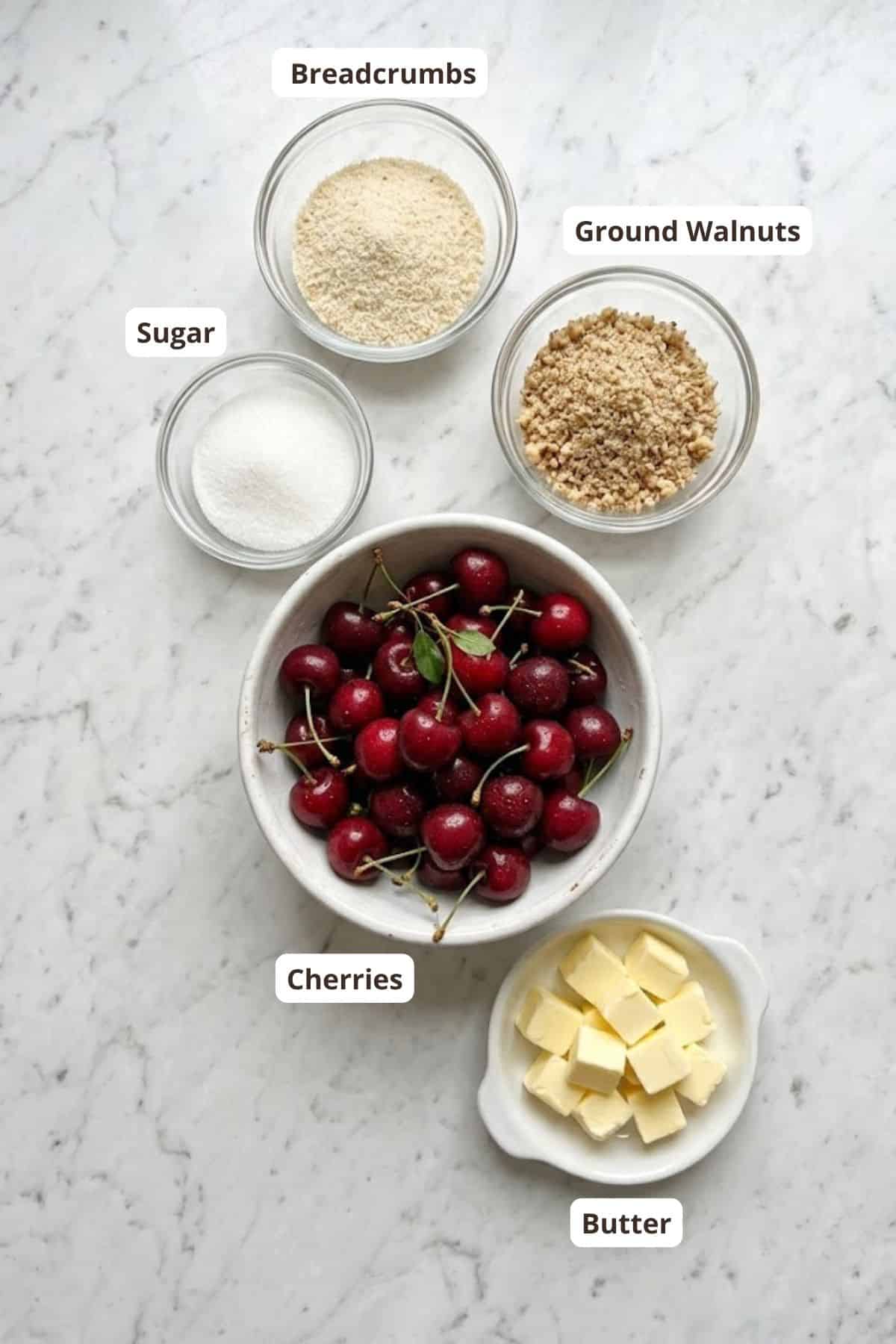
Filling Ingredients
- Freshly Milled Hard White Wheat Flour creates a flavorful dough and gives you all of those nutrients.
- Fresh Cherries sweet, juicy cherries are the star of this recipe and give the filling its vibrant flavor and color.
- Ground Walnuts add richness, some fat, and absorb some of the cherry juices, keeping the filling from becoming too wet.
- Cold Butter grated over the filling, it melts into the cherries and creates an incredibly rich, juicy strudel.
See recipe card for quantities.
Substitutions & Variations
One of the things I love most about homemade strudel is how easy it is to customize based on what's in season or what you already have on hand.
- Hard red wheat flour can be used instead of hard white wheat for a slightly heartier flavor.
- Replace some of the cherries with quark, cottage cheese, or skuta for a creamier filling (or if you simply don't have enough cherries on hand.
- Add a pinch of cinnamon or grated lemon zest to make the strudel "brighter".
- If your cherries are especially tart, simply increase the sugar to taste!
How to Make Fresh-Milled Cherry Strudel
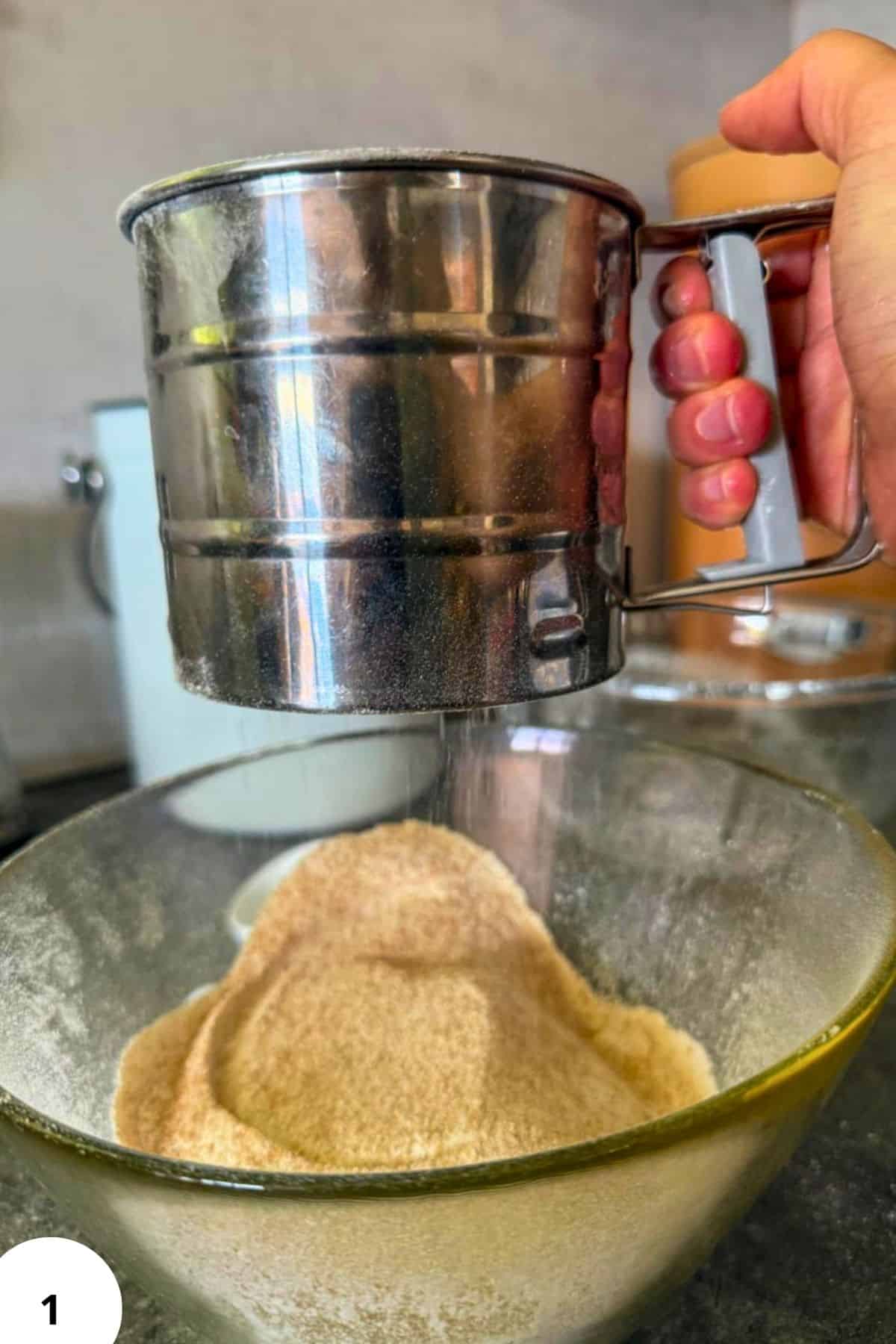
Step 1: Sift the freshly milled flour. Add the bread flour, salt, and, if using, the sunflower lecithin and vital wheat gluten into the bowl of a stand mixer (Image 1). Add the egg, oil, and water.

Step 2: Mix until a rough, fairly stiff dough forms. At first it may look dry, but keep mixing until it comes together into a shaggy mass (Image 2).
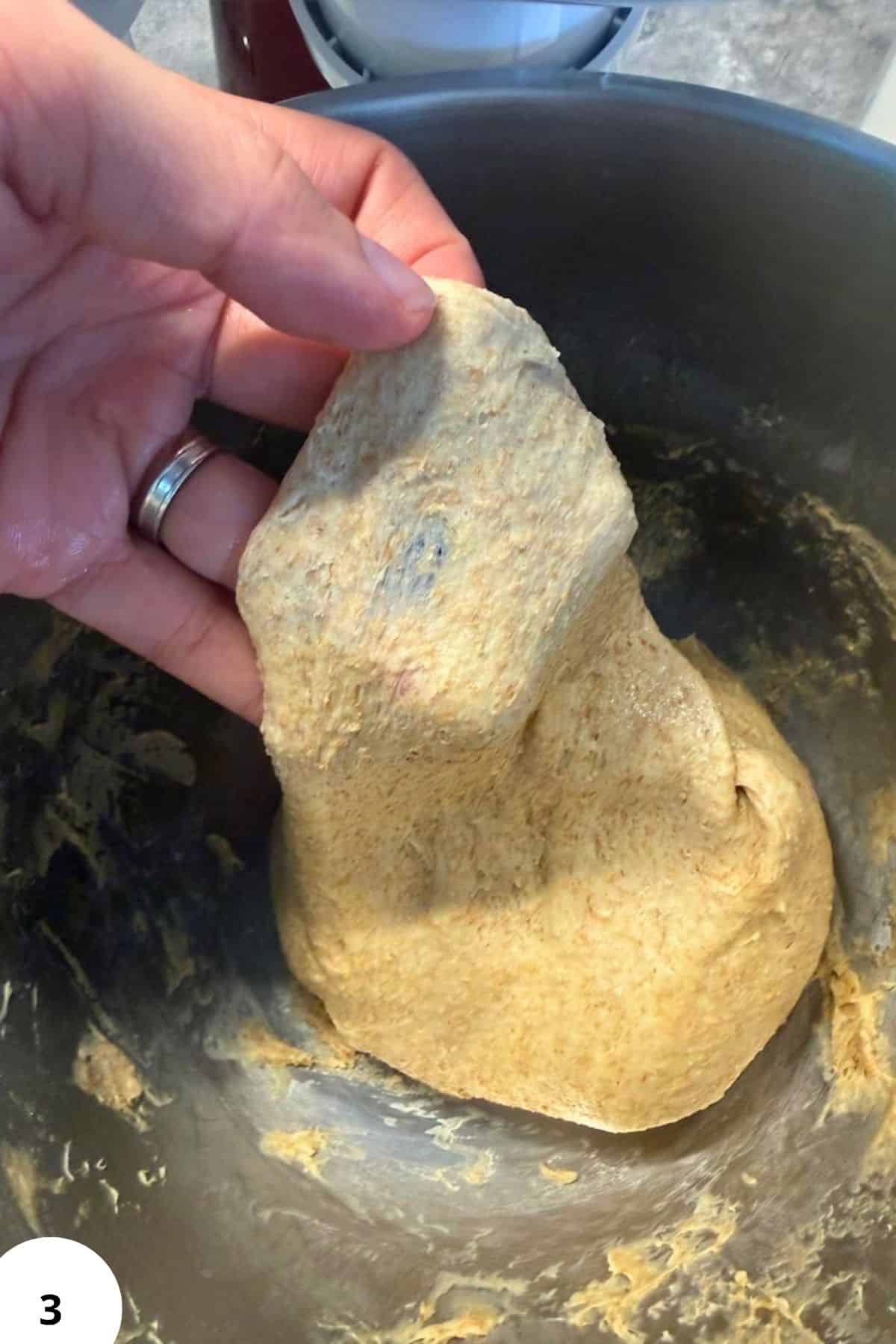
Step 3: Cover the bowl and let the dough rest for 30 minutes. This allows the freshly milled flour to fully absorb the liquid. After the rest, check the dough. If it still feels noticeably sticky (Image 3), add 15-25 g of bread flour. The exact amount will depend on your flour and egg size. The dough should feel firm and only slightly tacky. For strudel, a stiffer dough is much easier to stretch successfully than a soft one.

Step 4: Mix the dough in the stand mixer for 5-10 minutes. By the end of mixing, the dough should be smooth, elastic, and quite firm. Cover the dough again and let it rest for at least 1 hour and up to several hours (Image 4). You can keep it at room temperature for shorter rests. If it will be more than about 4 hours before you are ready to make the strudel, refrigerate the dough until needed.
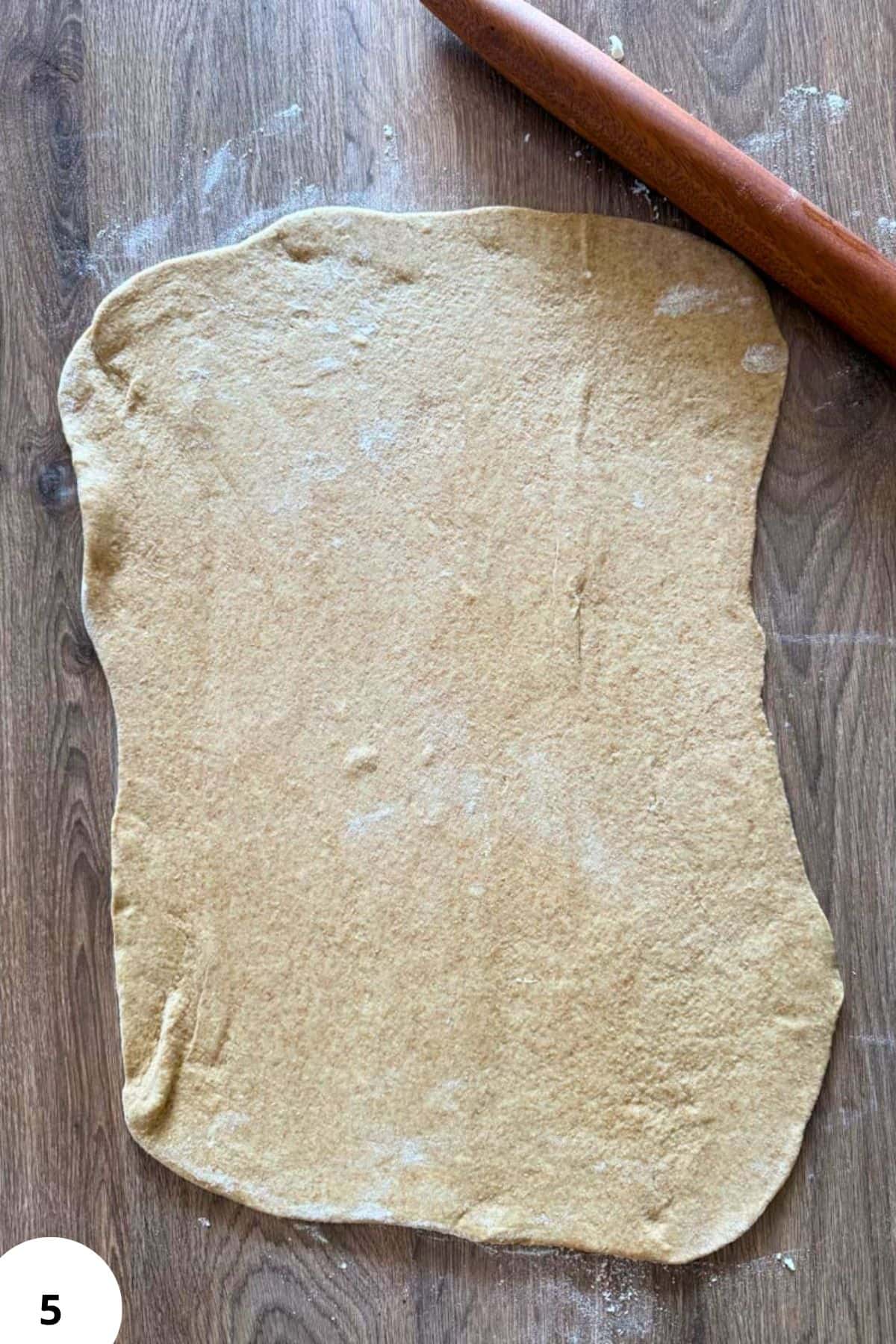
Step 5: Generously flour your kitchen table. Flatten the rested dough into a rectangle and roll it out with a rolling pin (Image 5).
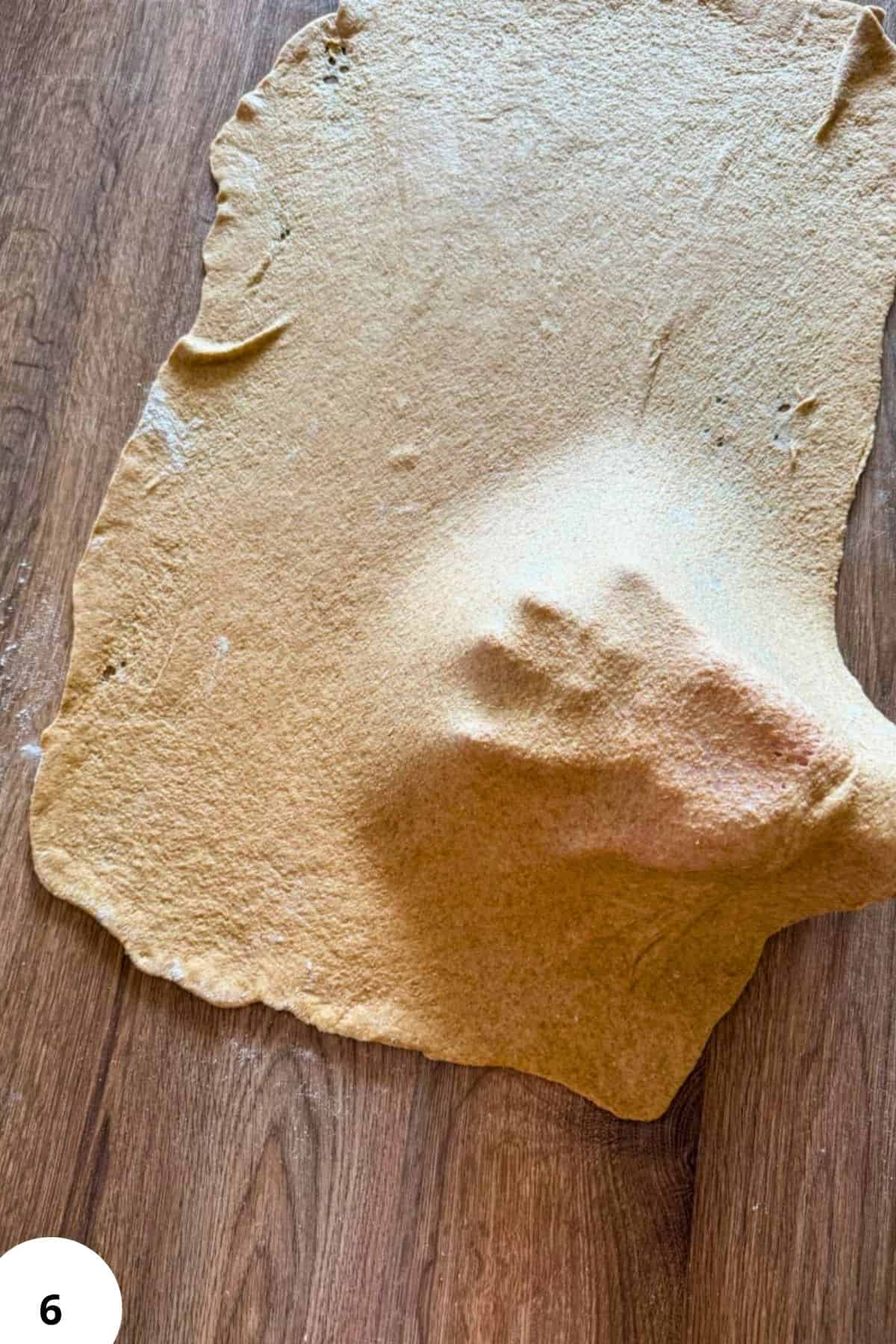
Step 6: Once the dough is fairly thin, switch to stretching it by hand (Image 6). Gently use the backs of your hands and knuckles to stretch it from underneath, working slowly until the dough is very thin and nearly see-through. If it starts resisting or shrinking back, let it rest for 5-10 minutes, then continue.
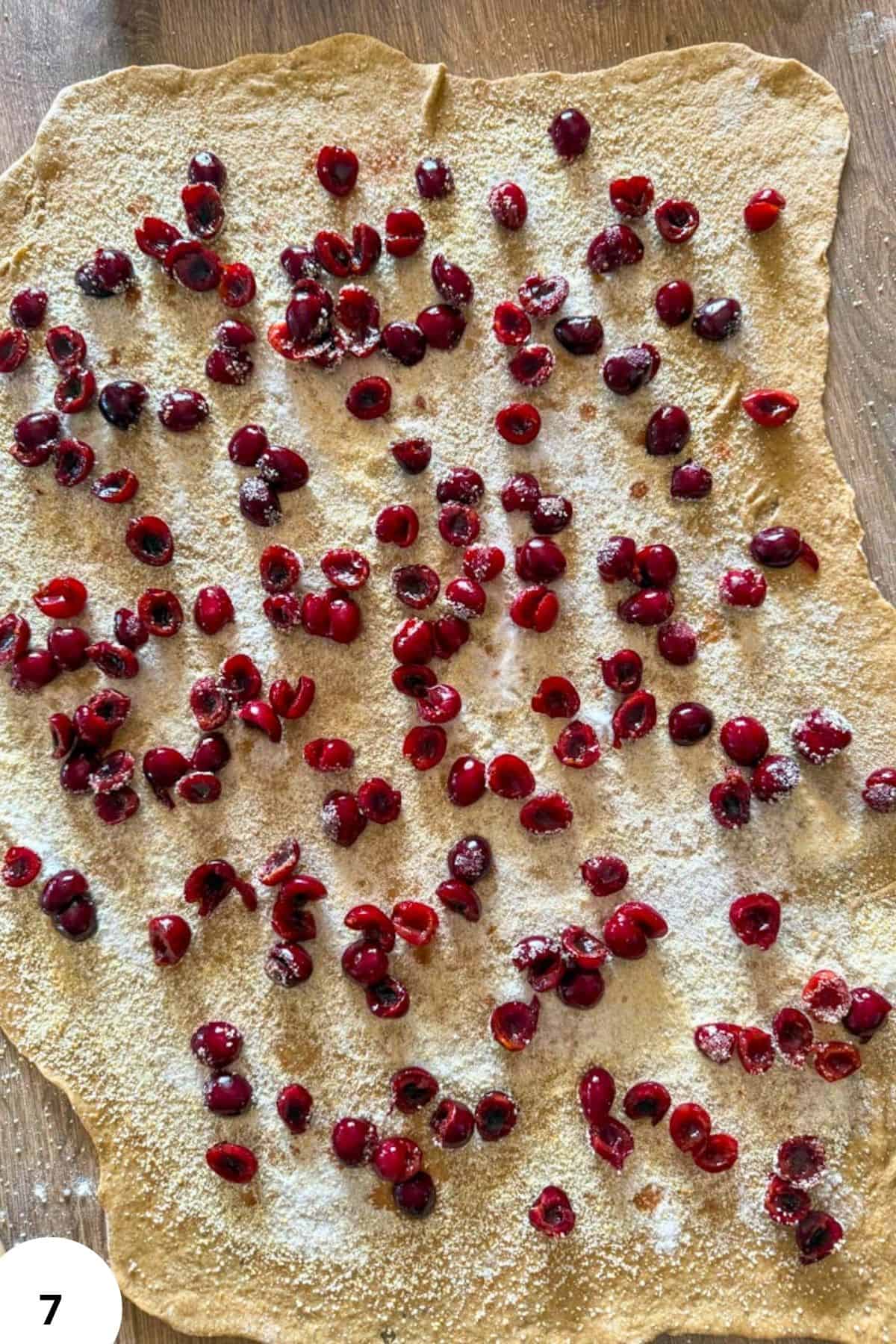
Step 7: Evenly sprinkle the breadcrumbs and walnuts across the stretched dough. Scatter the halved cherries on top, then sprinkle over the sugar (Image 7).
OPTIONAL: If you're using quark, cottage cheese, or skuta, dollop it evenly over the cherries. This is a great way to stretch the filling if you're short on cherries, and it adds a creamy texture that pairs nicely with the fruit.
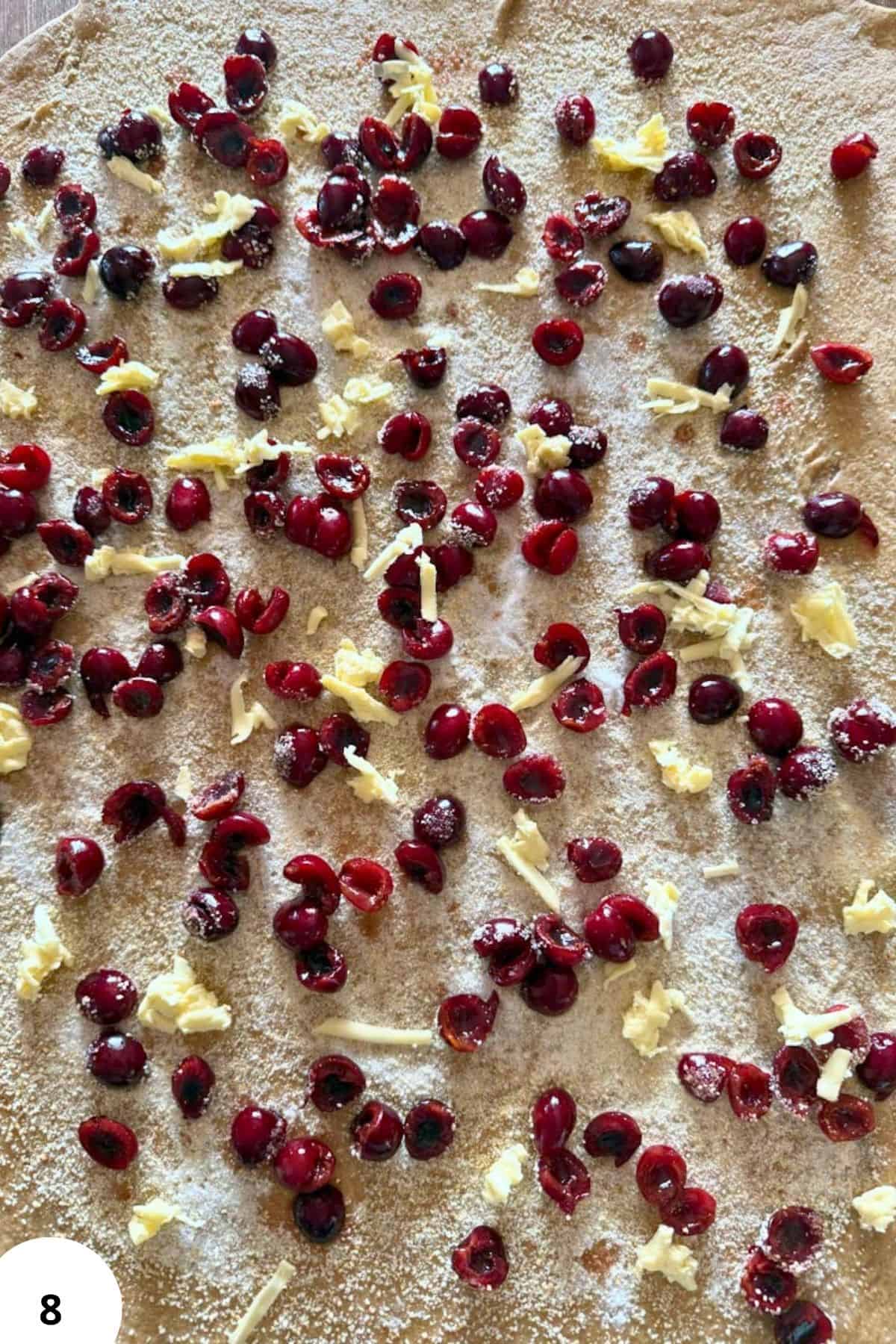
Step 8: Finish by grating plenty of cold butter over the entire surface (Image 8). Don't be shy here. The butter helps create a rich, juicy filling.

Step 9: Starting from one of the long edges, gently roll the dough into a log (Image 9). Don't worry about making it perfect. A rustic-looking strudel is exactly how homemade strudel should look.
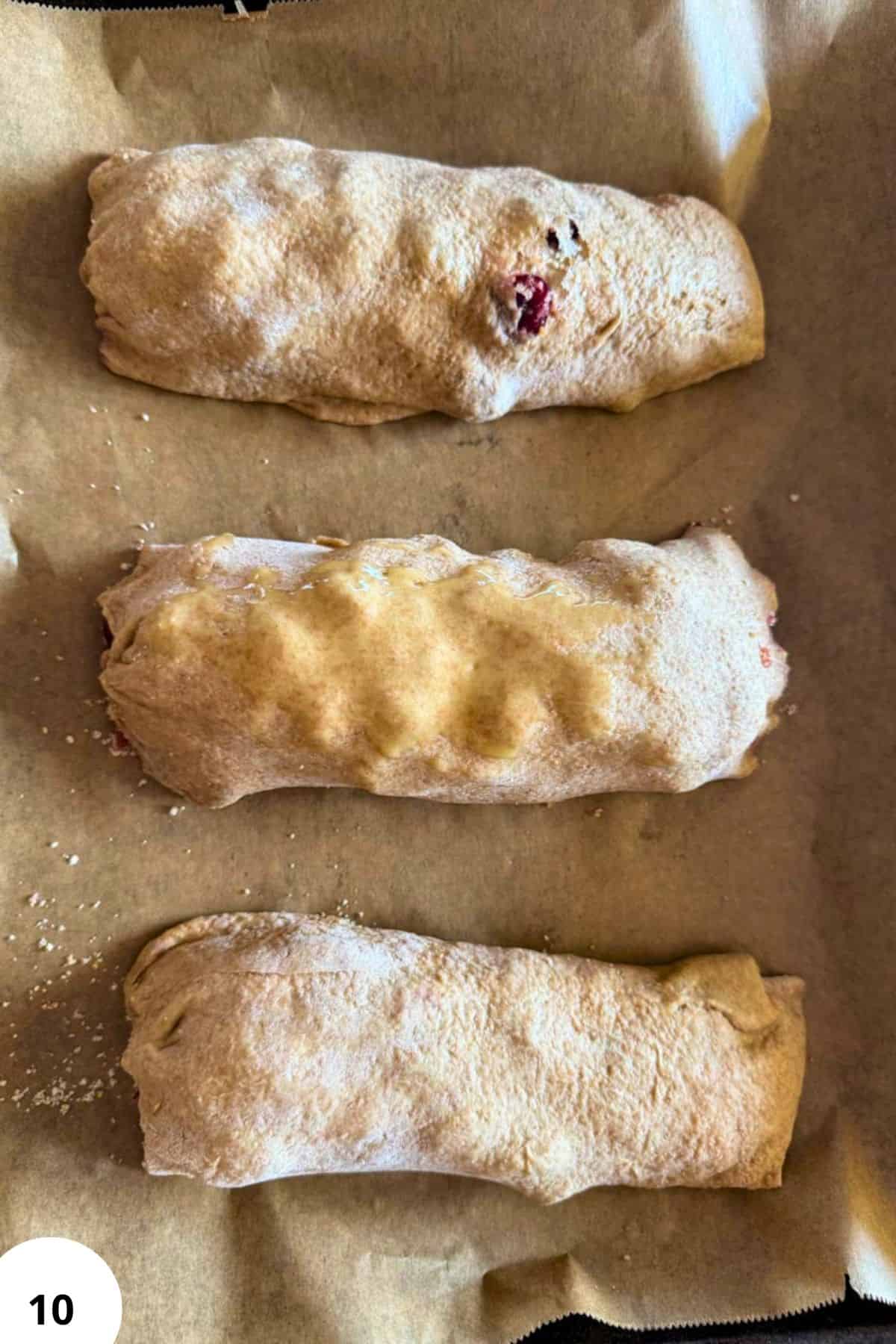
Step 10: Cut the log into three equal pieces, creating three smaller strudels. Place the strudels seam-side down on a parchment-lined baking sheet (Image 10). Optionally, brush with melted butter.

Step 11: Bake in a fan oven at 200°C (390°F) for about 35 minutes, or in a conventional oven at 210°C (410°F) for about 35 minutes. The tops should be golden brown and the filling should be just beginning to bubble. Let the strudels cool for at least 20-30 minutes before slicing. Dust with powdered sugar before serving (Image 11), if you want to make it extra fancy.
Hint: one of the biggest secrets to successful homemade strudel is resisting the urge to make the dough too soft. A slightly firmer dough is much easier to stretch into a thin, nearly transparent sheet without tearing.
Baking Schedule
If you're planning this recipe around your day, here's a simple timeline to follow:
- Mix the dough and let it rest for 30 minutes so the freshly milled flour fully hydrates.
- Knead until the dough becomes smooth, elastic, and slightly firm.
- Rest the dough for at least 1 hour. Longer resting makes stretching even easier.
- Stretch the dough, add the filling, roll, and divide into three strudels.
- Bake for approximately 35 minutes until deeply golden and the filling begins bubbling.
- Allow the strudels to cool for at least 20 to 30 minutes before slicing so the filling can set.
💭Crucial Success Tips
When stretching the dough, focus on making it evenly thin rather than perfectly shaped. Also, make sure to do pauses in the stretching process. The dough needs time to relax after you stretch it, and then after the relax period, you'll be able to stretch it more! Small holes around the edges are completely normal and will disappear once the strudel is rolled. Traditional homemade strudel is meant to look rustic, not factory perfect.

Recipe FAQs
Small tears are completely normal and easy to patch together as you work. If the dough tears frequently or feels difficult to stretch, it usually needs more resting time. Resting allows the gluten to relax, making the dough much more elastic. Be sure to stretch gently using the backs of your hands instead of pulling with your fingertips.
Yes! The dough can be made several hours in advance or refrigerated overnight. Let it come close to room temperature before stretching so it's easier to work with. You can also assemble the strudels a few hours ahead and refrigerate them until you're ready to bake.
Absolutely. Frozen cherries are a great option when fresh cherries aren't in season. Thaw them completely, drain away any excess juice, and pat them dry before adding them to the filling. This helps prevent a soggy pastry while still giving you plenty of delicious cherry flavor.
How To Store Fresh-Milled Cherry Strudel
Store leftover strudel in an airtight container at room temperature for up to 2 days, or refrigerate for up to 4 days.
To reheat, warm slices in a 325°F (160°C) oven for about 8–10 minutes to crisp the pastry again.
You can also freeze baked strudel for up to 3 months. Thaw overnight in the refrigerator before reheating.

Other Recipes with Freshly Milled Flour
- Fresh-Milled Sourdough Pancakes

- Fresh-Milled Sourdough Mini Pancakes (Jar Ring Pancakes)

- Fresh-Milled Sourdough Hot Dog Buns

- Fresh Milled Sourdough Grissini (Twisted Italian Breadsticks)

If you tried this fresh-milled cherry strudel or any other recipe on my blog please leave a 🌟 star rating and let me know how it went in the 📝 comments below! Happy Baking!

Fresh-Milled Cherry Strudel
Ingredients
- 250 g freshly milled hard white wheat flour or hard red wheat flour
- 60 g bread flour plus 15-25 g more if needed
- 1 egg medium
- 3 tablespoons olive oil or another neutral oil
- 120 g water
- ½ teaspoon salt
- ¼ teaspoon sunflower lecithin Optional but highly recommended:
- ½ teaspoon vital wheat gluten Optional but highly recommended:
- 28 g breadcrumbs ¼ cup, plain
- 28 g walnuts ¼ cup, ground
- 37 g sugar 3 tablespoons, or more if your cherries are tart
- 500 g cherries halved and pitted (just over 1 pound), fresh
- 56 g butter grated (4 tablespoons or ½ stick), plus more if you want it to be indulgent, cold
- 250 g quark Optional, cottage cheese, or skuta if you're short on cherries
Instructions
- Sift the freshly milled flour. Add the bread flour, salt, and, if using, the sunflower lecithin and vital wheat gluten into the bowl of a stand mixer. Add the egg, oil, and water.
- Mix until a rough, fairly stiff dough forms. At first it may look dry, but keep mixing until it comes together into a shaggy mass.
- Cover the bowl and let the dough rest for 30 minutes. This allows the freshly milled flour to fully absorb the liquid. After the rest, check the dough. If it still feels noticeably sticky, add 15-25 g of bread flour. The exact amount will depend on your flour and egg size. The dough should feel firm and only slightly tacky. For strudel, a stiffer dough is much easier to stretch successfully than a soft one.
- Mix the dough in the stand mixer for 5-10 minutes. By the end of mixing, the dough should be smooth, elastic, and quite firm. Cover the dough again and let it rest for at least 1 hour and up to several hours. You can keep it at room temperature for shorter rests. If it will be more than about 4 hours before you are ready to make the strudel, refrigerate the dough until needed.
- Generously flour your kitchen table. Flatten the rested dough into a rectangle and roll it out with a rolling pin.
- Once the dough is fairly thin, switch to stretching it by hand. Gently use the backs of your hands and knuckles to stretch it from underneath, working slowly until the dough is very thin and nearly see-through. If it starts resisting or shrinking back, let it rest for 5-10 minutes, then continue.
- Evenly sprinkle the breadcrumbs and walnuts across the stretched dough. Scatter the halved cherries on top, then sprinkle over the sugar. OPTIONAL: If you're using quark, cottage cheese, or skuta, dollop it evenly over the cherries. This is a great way to stretch the filling if you're short on cherries, and it adds a creamy texture that pairs nicely with the fruit.
- Finish by grating plenty of cold butter over the entire surface. Don't be shy here. The butter helps create a rich, juicy filling.
- Starting from one of the long edges, gently roll the dough into a log. Don't worry about making it perfect. A rustic-looking strudel is exactly how homemade strudel should look.
- Cut the log into three equal pieces, creating three smaller strudels. Place the strudels seam-side down on a parchment-lined baking sheet. Optionally, brush with melted butter.
- Bake in a fan oven at 200°C (390°F) for about 35 minutes, or in a conventional oven at 210°C (410°F) for about 35 minutes. The tops should be golden brown and the filling should be just beginning to bubble. Let the strudels cool for at least 20-30 minutes before slicing. Dust with powdered sugar before serving, if you want to make it extra fancy.
Video
Notes
- Hard white wheat produces a lighter-colored strudel dough, while hard red wheat gives a slightly heartier flavor. I prefer hard white for this one!
- The bread flour helps strengthen the dough and improves its ability to stretch thin. You can technically make this strudel with 100% fresh milled flour, but you won’t be able to stretch it so thinly.
- Sunflower lecithin is optional but makes the dough noticeably easier to stretch.
- Vital wheat gluten provides additional strength, which again, is very helpful in this recipe.
- A longer resting time makes stretching the dough easier.








Leave a Reply