
Estimated reading time: 6 minutes
What is Autolyse and Why it Matters More With Fresh Milled Flour
Autolyse is a simple step where you mix flour and water before adding anything else from the recipe and let it rest. With all-purpose flour, this is something I usually skip.
That flour is already very easy to work with, and in most breads, I don’t notice a big enough difference to make the extra step necessary.
With fresh milled flour, though, it’s a completely different story; fresh milled flour is different (but definitely in a good way!)
When I mix fresh milled flour and water and give it time to rest, the natural enzymes in the flour start working right away. Proteins begin forming gluten, and starches slowly break down into simple sugars that later feed the sourdough during the first rise.
This happens with all flour, but with fresh milled flour, the effect is much more noticeable.
Summarize & Save The Instructions On:
How to Autolyse Fresh Milled Flour
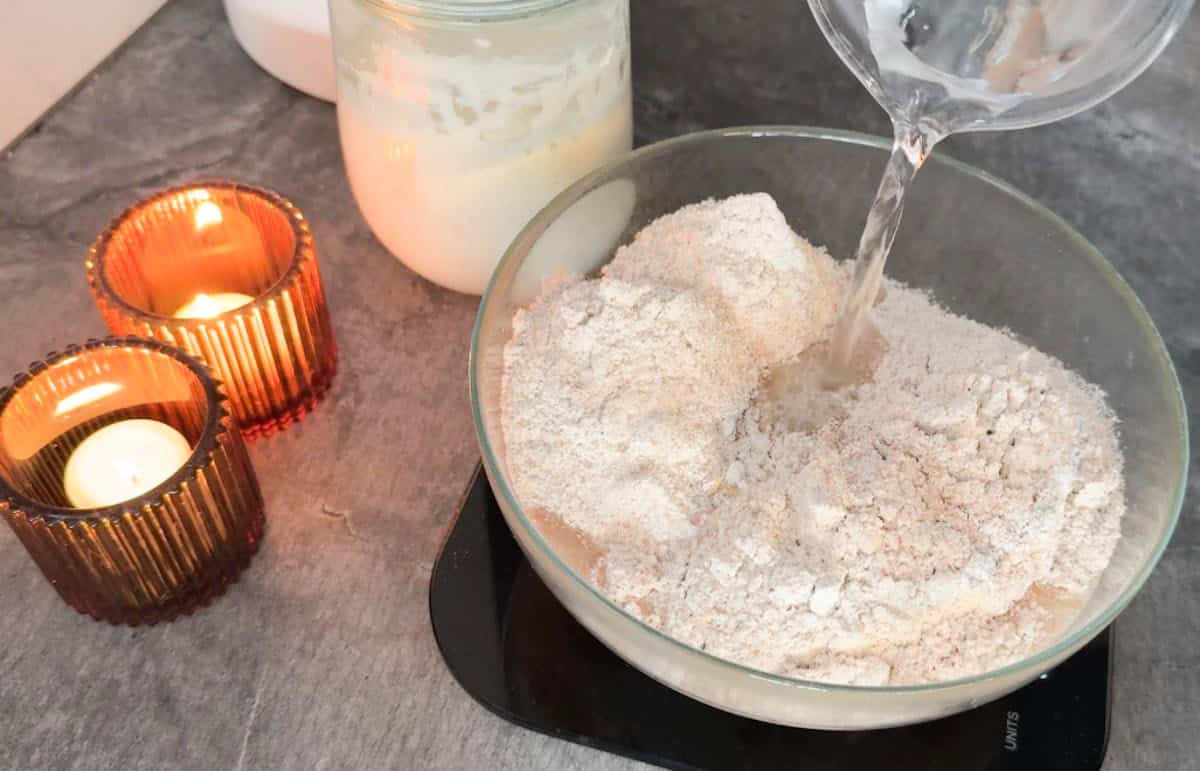
To autolyse, I combine the flour and water in a bowl and mix them just until there are no dry patches left.
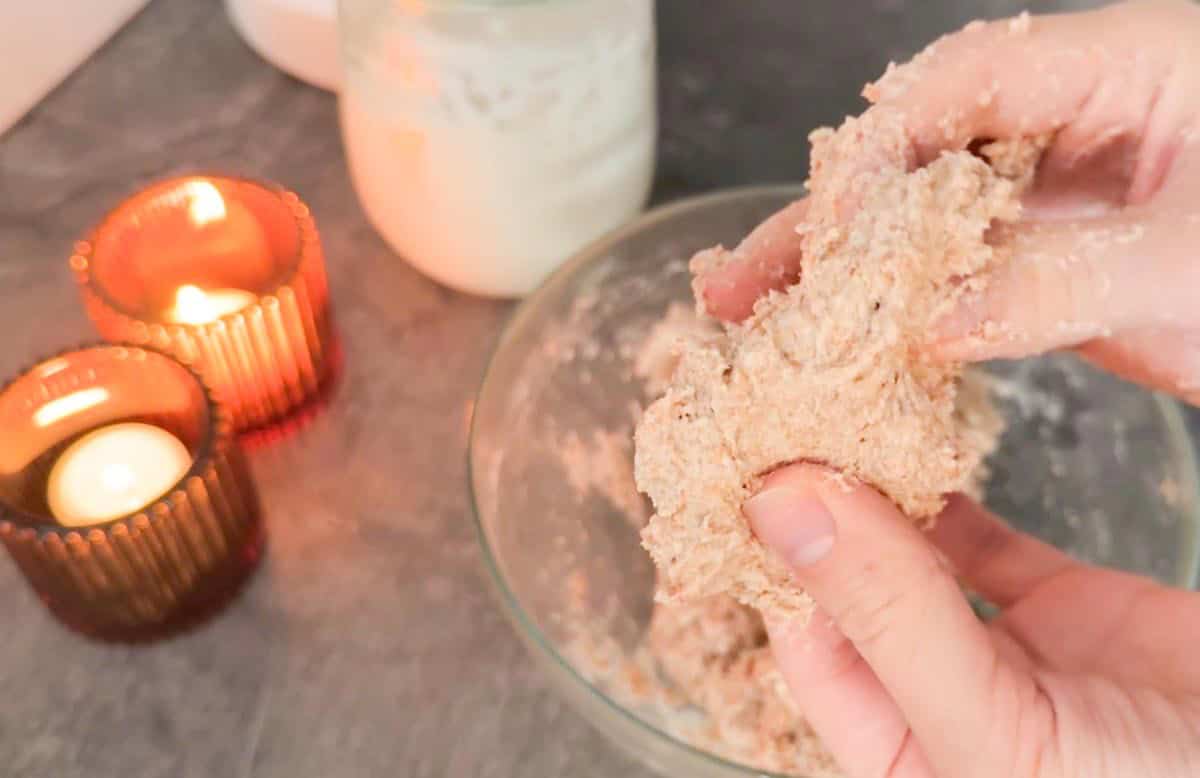
The easiest way to do this is with your hands. I "squeeze" the shaggy dough that forms a few times to make sure all the flour come sin contact with water.
I avoid kneading at this stage because the germ and bran can be quite sharp, especially in fresh milled flour. If you knead too early, those sharp particles can start cutting through the developing gluten before it has a chance to strengthen.
Letting the dough rest first gives the bran and germ time to fully hydrate and soften.
How Long to Autolyse Fresh Milled Flour
I cover the bowl and let it rest on the counter. For fresh milled flour, I usually aim for at least 30 to 60 minutes, and sometimes longer, depending on the grain and how coarsely it’s milled.
Can You Autolyse Fresh Milled Flour Overnight?
Yes, but you must be careful about it.
Fresh milled flour is very active, and a long autolyse at room temperature can push enzyme activity too far. If you leave it overnight on the counter, the dough can become overly slack, sticky, or start breaking down before you even add the starter, yeast, salt or other ingredients.
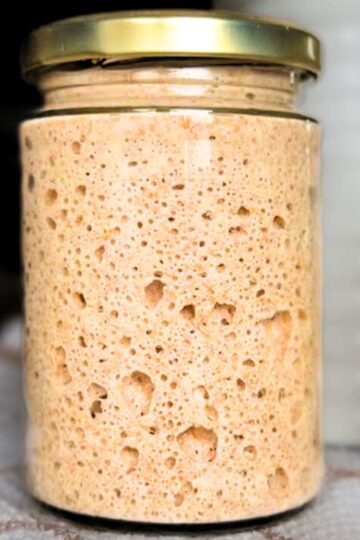
(Btw, this is how you can make your own fresh milled sourdough starter!)
If you want to autolyse fresh milled flour overnight, the fridge is the safer option. Cold temperatures slow everything down while still allowing the flour to fully hydrate. This works especially well if you’re using very coarse flour or high-bran grains and want extra softness without weakening the dough.
Why Autolyse Alone Can Almost Pass the Windowpane Test
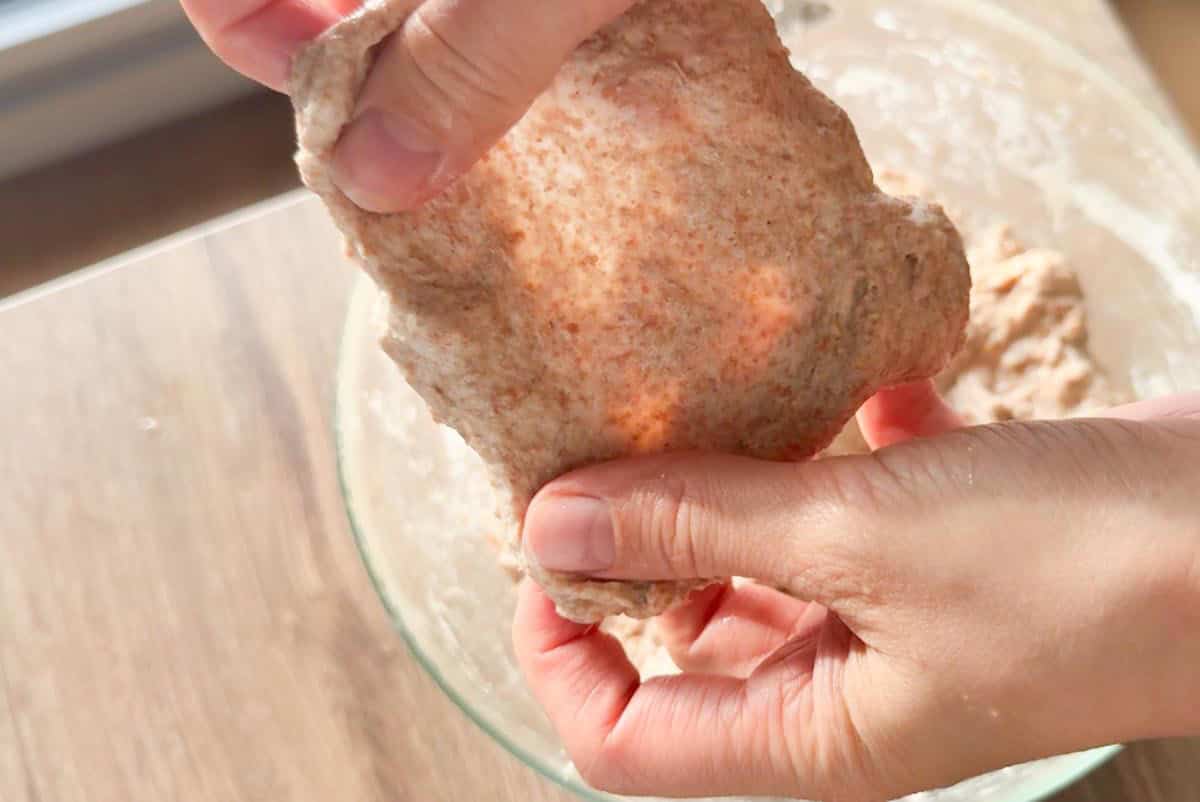
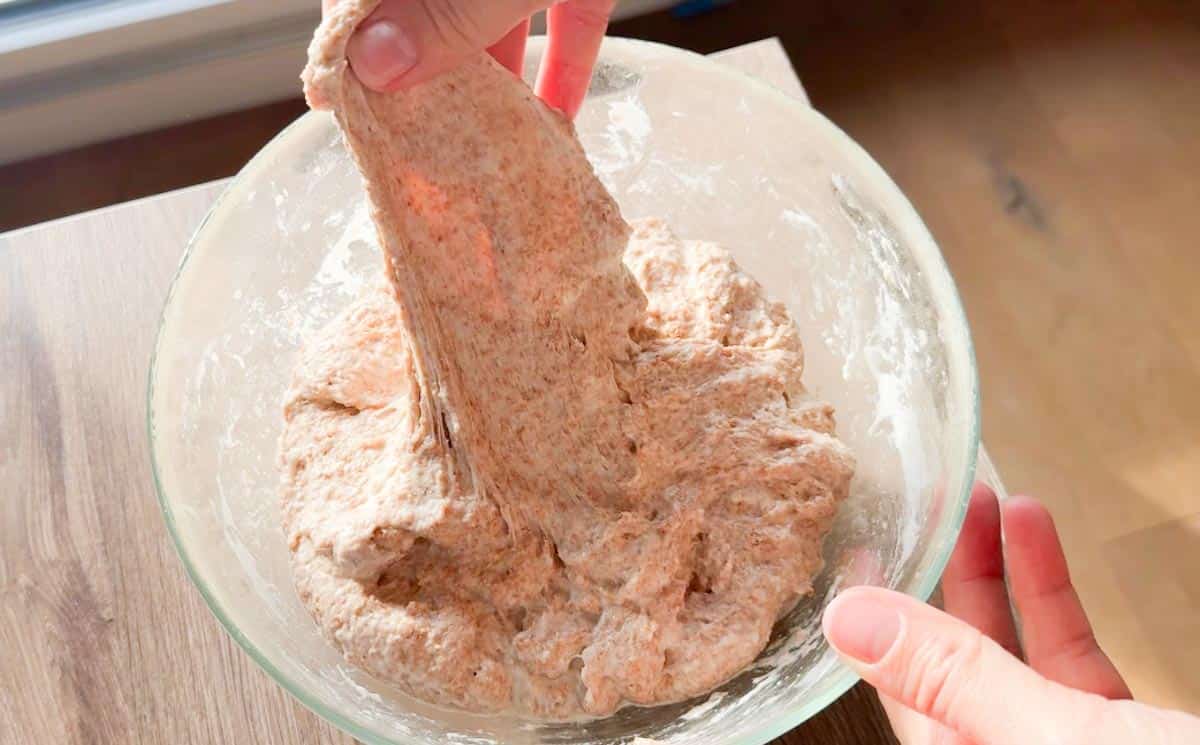
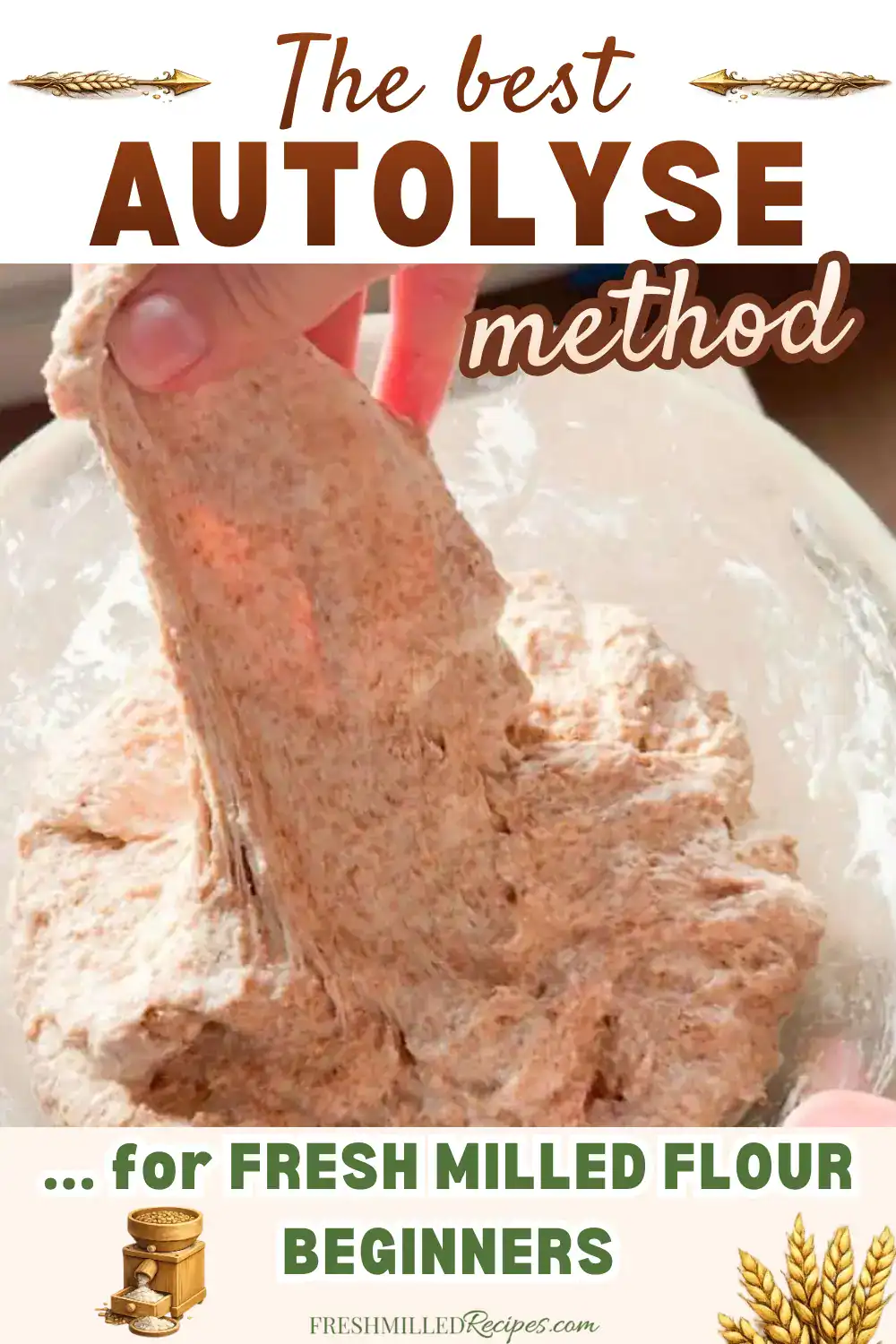
One interesting thing you might notice after autolyse is that the dough already shows some stretch and elasticity, even before any real kneading. If you gently stretch a small piece, it may look like it almost passes the windowpane test, at least if you squint a little!
That’s because autolyse actually allows gluten to start forming on its own, without any mixing or kneading. The proteins have time to align and bond naturally, especially once the bran has softened and stopped interfering as much.
This doesn’t mean the dough is fully developed yet, but it does mean that you'll be able to actually handle the dough without any problems.
What Does Autolyse Do For Fresh Milled Flour?
During this rest, the flour fully absorbs the water and becomes properly hydrated. Even though it looks like nothing is happening, the difference is obvious once you come back to the dough. It feels smoother, more elastic, and much easier to handle.
In short, you won't be dealing with a soupy mess after you properly autolyse your dough!
Fresh milled doughs benefit especially from this step because the softened bran is less likely to tear the gluten structure.
Because the dough develops more strength on its own, it needs less handling later. That means less oxidation and better flavor in the finished bread.
What Does That Mean In Practice?
It means that even if you don't want to bother with the terminology (some of it is explained below), it's really beneficial to leave your dough to rest for at least 30 minutes after you mix it together when you're working with fresh milled flour.
That's all!
It's just a fancy term that describes mixing fresh milled flour with water and letting it rest before adding anything else.
Autolyse vs. Fermentolyse (what’s the difference?)
Autolyse is when flour and water are mixed first and left to rest on their own. This rest gives the flour time to soften, helps the bran absorb water (in the case of fresh milled flour), and allows gluten to start forming naturally. After the rest, the other ingredients are added (starter, salt, and any additional ingredients).
Fermentolyse skips one extra step by adding the sourdough starter (and sometimes salt) right away, so fermentation already begins during the rest.
So ... which one should you do?
In my opinion, the overall result of fermentolyse compared to a "proper" autolyse is only slightly better. Mixing everything at once keeps the process simpler, means you only use your scale once and get your hands dirty once. I think it's worth it to skip a step that only minimally improves the end result!
That said, if you're after picture perfect sourdough and are interested in taking your bread from 97% to 100% perfect (whatever that means to you), autolyse will probably be better option.
Got any questions?
Leave them in the comments below, I check them regularly and I'll do my best to help!
Leave a Reply