

These fresh-milled sourdough cinnamon rolls are everything a cozy Sunday morning should feel like. Even when 100% whole grain, they're soft, fluffy, and swirled with buttery cinnamon filling. Using freshly milled flour makes them taste fuller and sweeter naturally, and sourdough fermentation makes them tender and healthier for you.
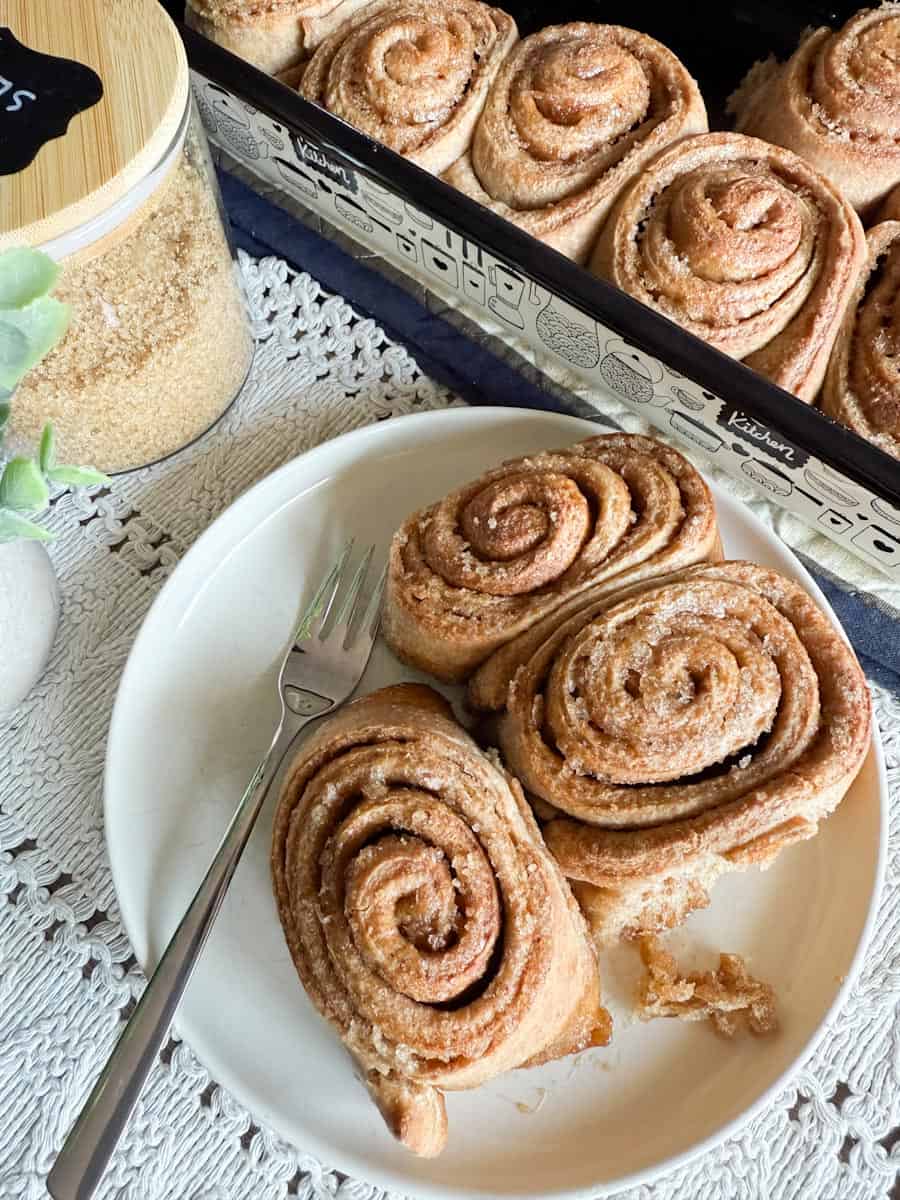
If you’ve enjoyed my other enriched fresh-milled sourdough bakes, you’ll find this recipe familiar and easy, as it uses the same fresh-milled brioche dough as a base.
If you're up for something a bit more unique, try making my fresh milled sourdough cardamom buns, or go for my fresh milled sourdough star bread for a holiday version from this exact same dough!
If you're feeling creative, I even have a fresh-milled cinnamon roll pull-apart sourdough focaccia recipe on this site!
(also...fresh-milled soft chocolate chip cookies are really quick to throw together if you're in a hurry, no chilling or fermenting required.)
Summarize & Save This Recipe On:
Quick Look
- Prep time: 40 mins.
- Rest time: 6–10 hrs (including bulk fermentation and optional overnight refrigeration).
- Bake time: 22–30 mins.
- Servings: 12.
- Main ingredients: Fresh-milled hard wheat flour, sourdough starter, milk, butter, eggs, sugar, cinnamon
- Cooking method: Baking 🡢 Oven
- Difficulty: Medium
- Serving ideas: Serve warm with cream, powdered sugar, or fruit
Jump to:
- Summarize & Save This Recipe On:
- Quick Look
- Important Ingredients
- Substitutions & Variations
- How to Make Fresh-Milled Whole Grain Sourdough Cinnamon Rolls
- Baking Schedule
- 💭Crucial Success Tips
- Recipe FAQs
- How To Store Fresh-Milled Whole Grain Sourdough Cinnamon Rolls
- Other Delicious Recipes
- Fresh-Milled Whole Grain Sourdough Cinnamon Rolls
- Need Help Tweaking This Recipe?
- Other Fresh-Milled Sourdough Recipes You'll Love
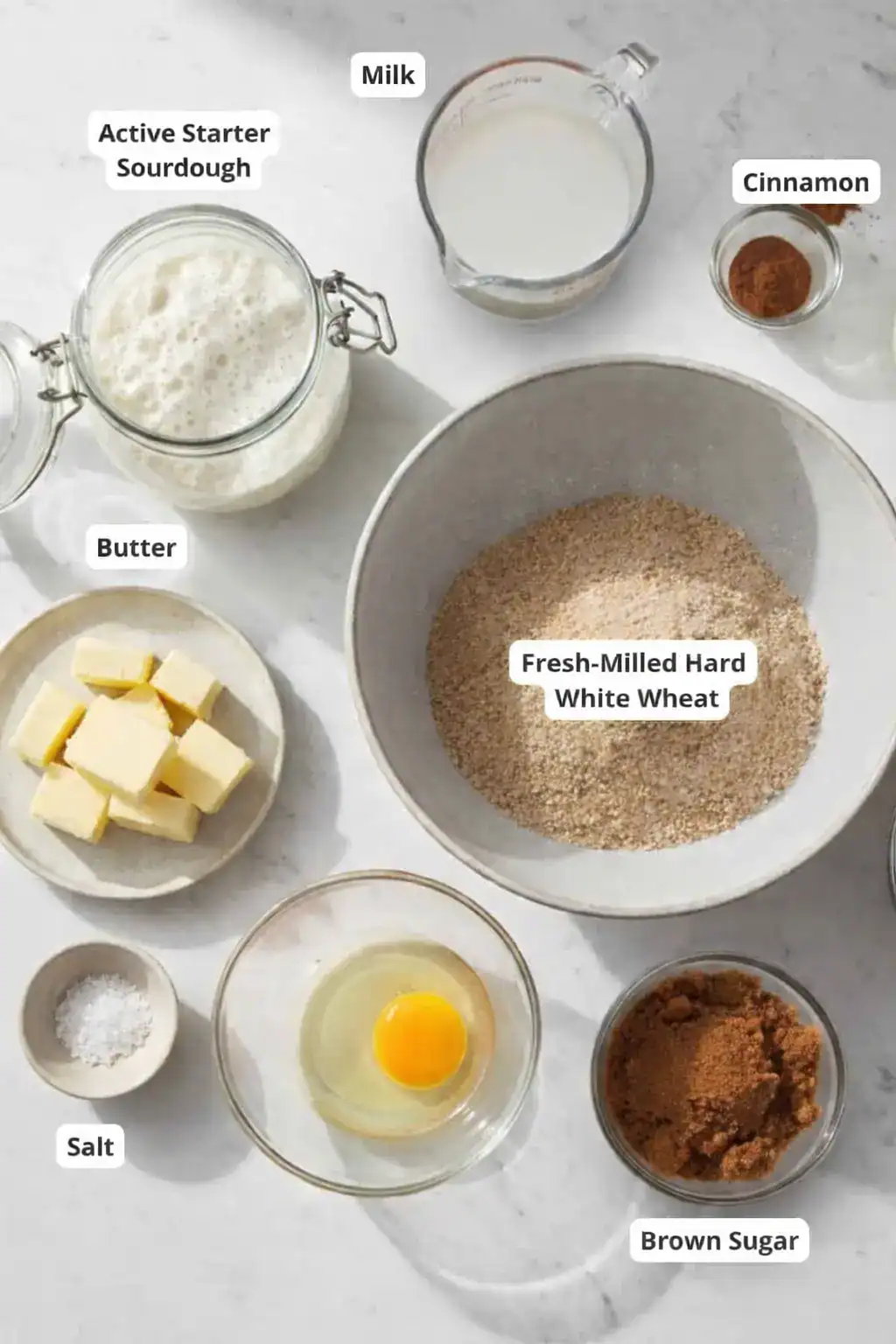
Important Ingredients
- Flour: fresh-milled hard white wheat flour forms the base for this enriched brioche dough.
- Sourdough starter makes them tender due to fermentation.
- Milk keeps the dough smooth and soft.
- Butter adds richness and makes them decadent.
- Egg helps bind the dough and adds structure.
- Sugar sweetens the dough just enough and speeds up the fermentation to balance the fats that slow it down.
- Cinnamon makes them taste like classic dessert rolls.
See recipe card for quantities.
Substitutions & Variations
- Vegan: Replace butter with coconut oil and egg with a flax egg.
- Fancy: Add nuts, chocolate chips, or cream cheese frosting for a richer version
- Ikea: Add 1 teaspoon of cardamom into the filling
How to Make Fresh-Milled Whole Grain Sourdough Cinnamon Rolls
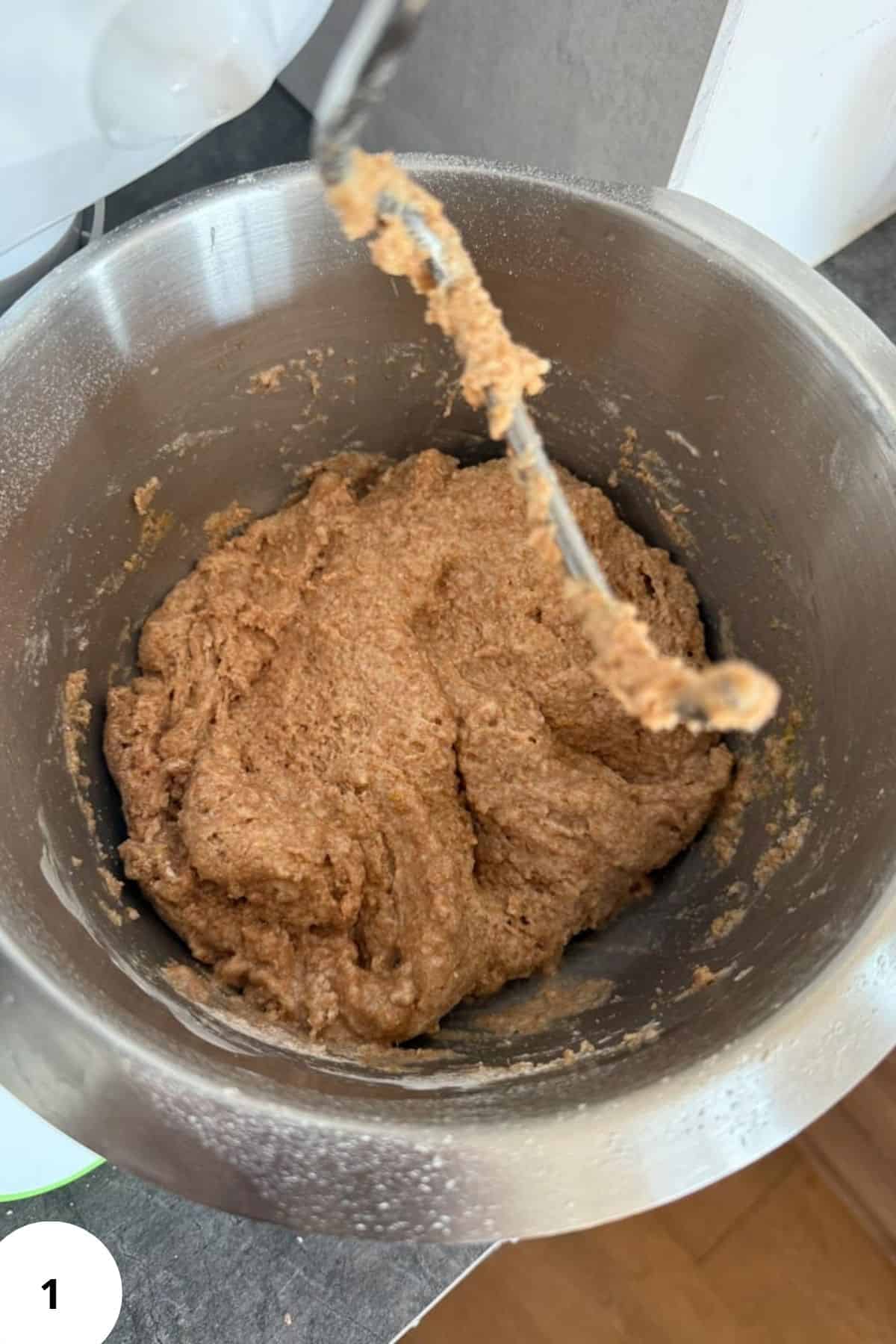
Step 1: In a large bowl or stand mixer, combine the flour, milk, starter, egg, sugar, and salt (Image 1). Mix until no dry bits remain. Let the dough rest for 20–30 minutes. If it feels very stiff, add 10–20 g more milk.
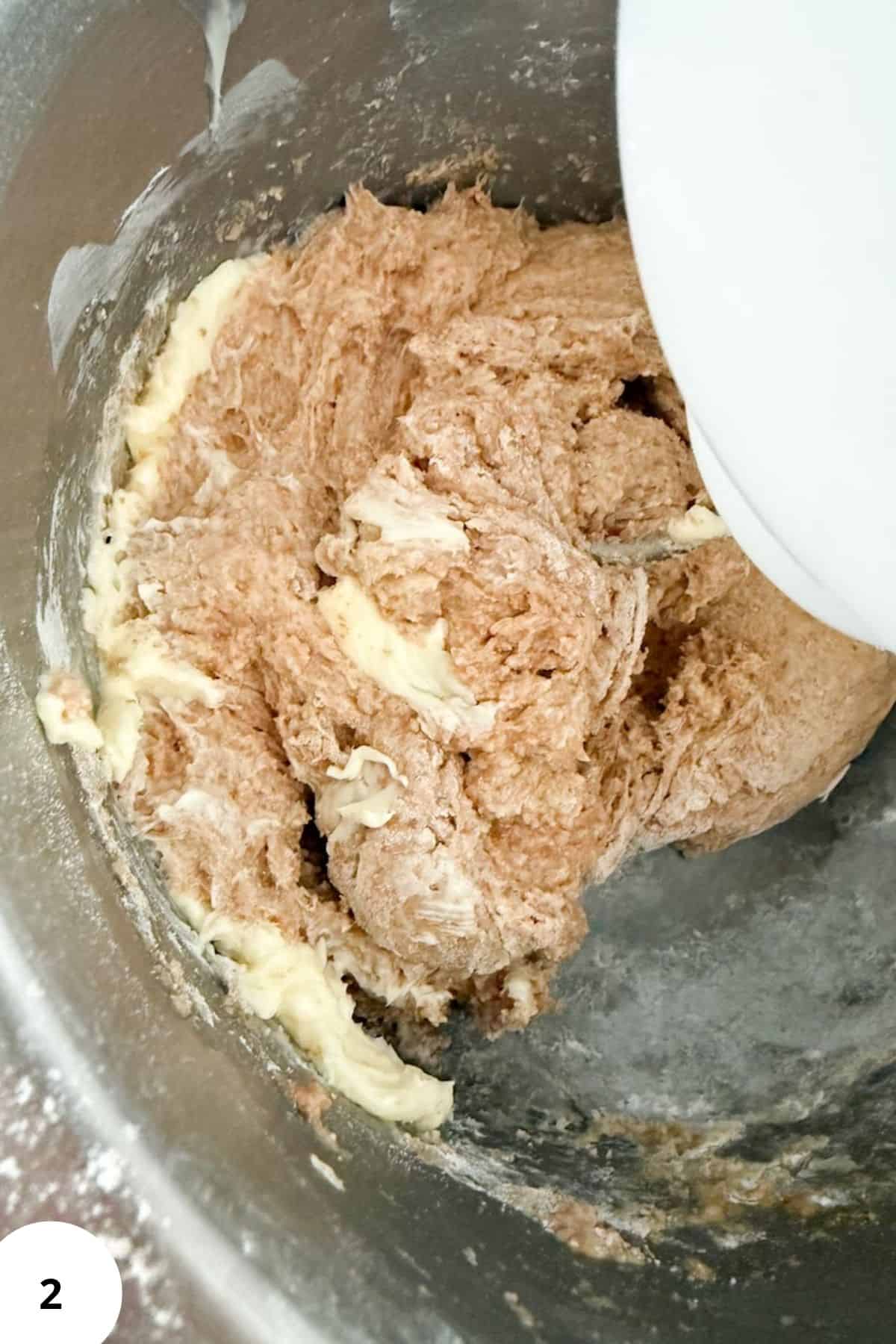
Step 2: On low speed, add the butter one tablespoon at a time until fully incorporated (Image 2). Mix for 2 minutes on low-medium speed. The dough is not kneaded here; its strength will develop during the stretch-and-folds.
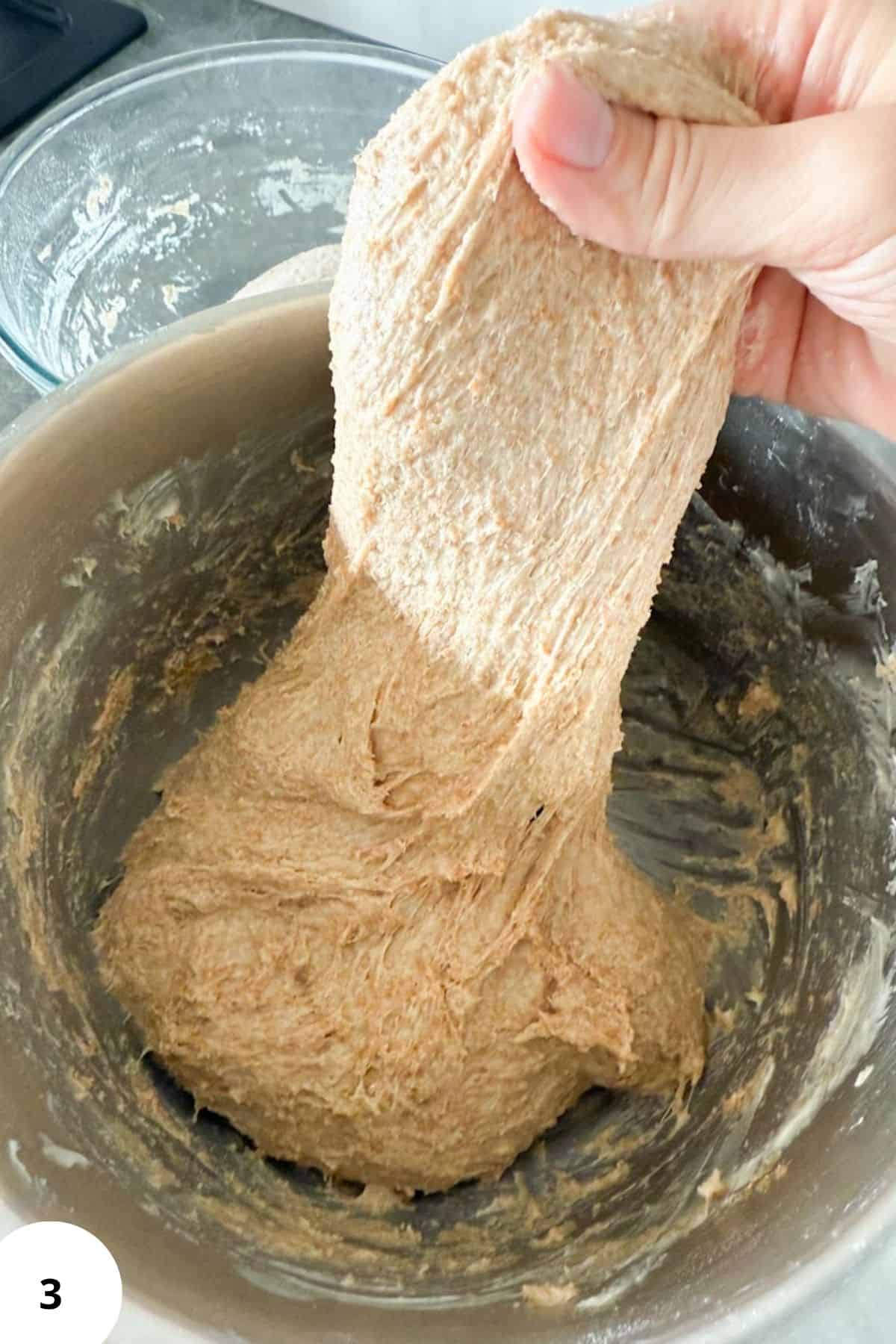
Step 3: Let the dough rest for 30 minutes. Perform 2–3 gentle stretch-and-folds, 30 minutes apart (Image 3).
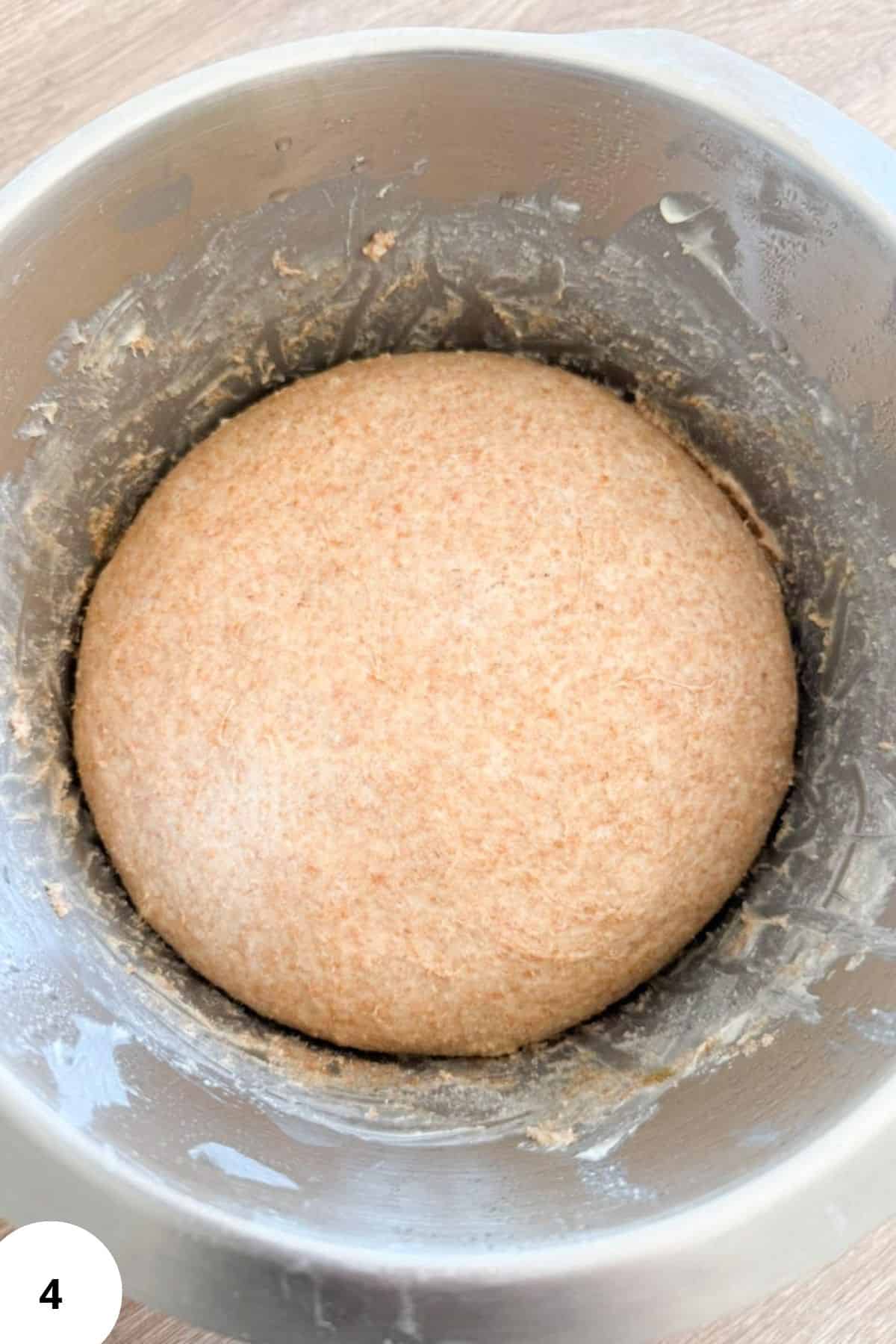
Step 4: Let the dough rise until it increases by 30–50% in volume (Image 4), usually 5–7 hours at 22°C / 72°F. You can also refrigerate the dough overnight and continue the next day.
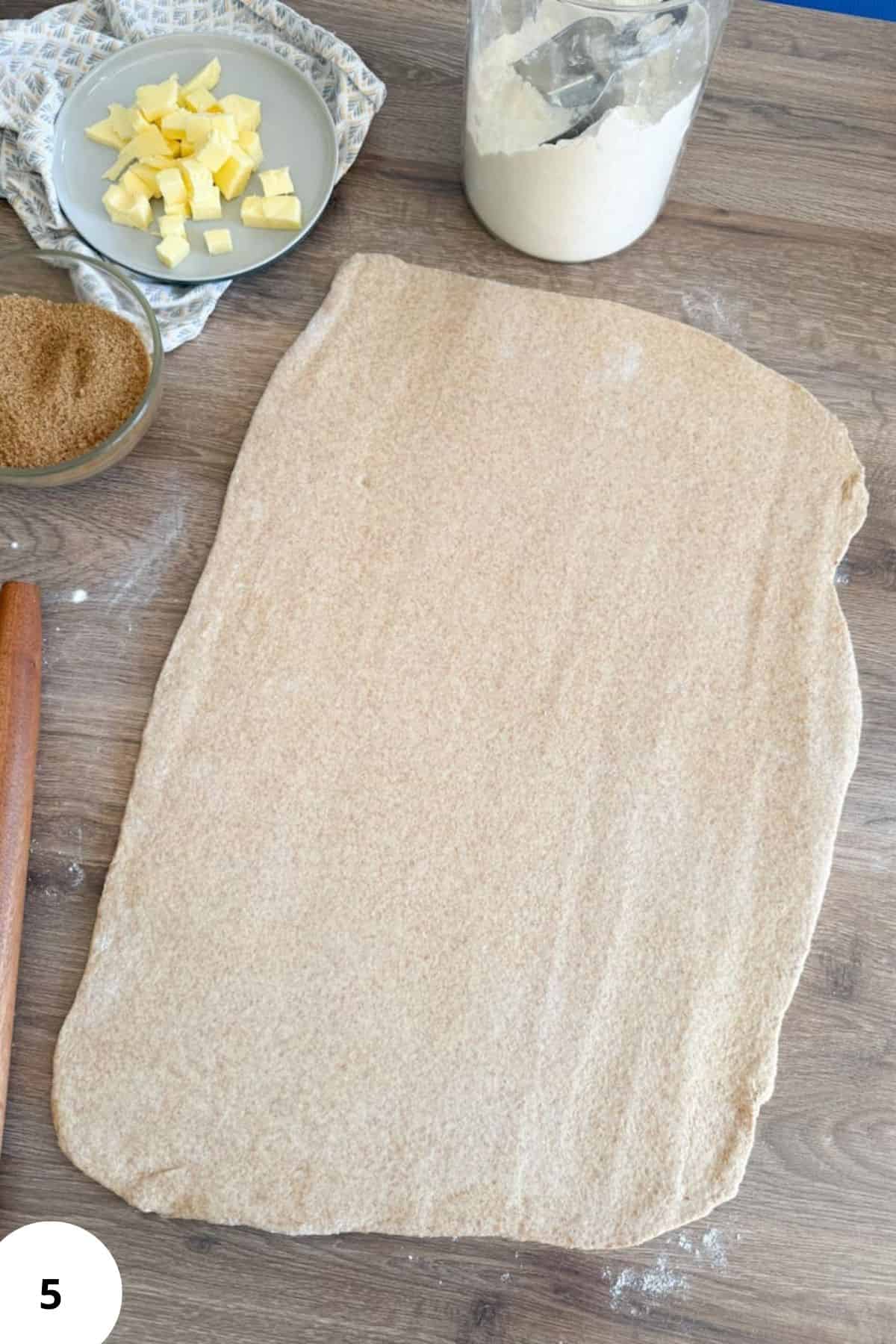
Step 5: Mix the softened butter with brown sugar and cinnamon. Lightly flour your counter and roll the dough into a 12 × 18 in (30 × 45 cm) rectangle (Image 5).
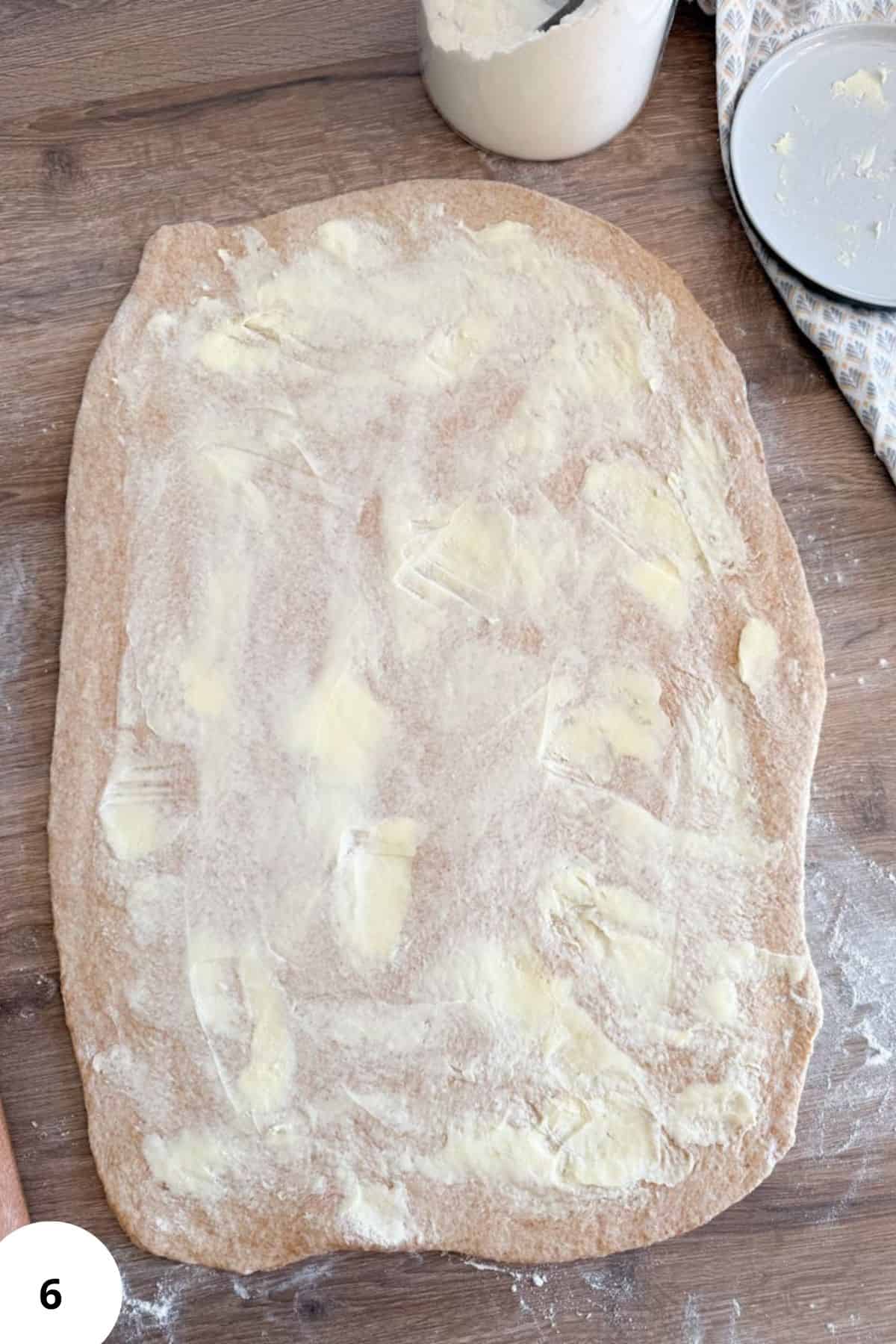
Step 6: Spread the butter evenly over the dough (Image 6), then sprinkle the cinnamon-sugar mixture on top (Image 7).

Step 7: Cut the dough into 12 long strips along the long edge (Image 7).

Step 8: Roll each strip (Image 8) and place them in a greased 9 × 13 in (23 × 33 cm) pan (Image 9).
Same day: Let proof at room temperature until puffy, about 2–3 hours.
Overnight: Cover and refrigerate. Next day, bring to room temperature and proof until puffy, about 3–4 hours.
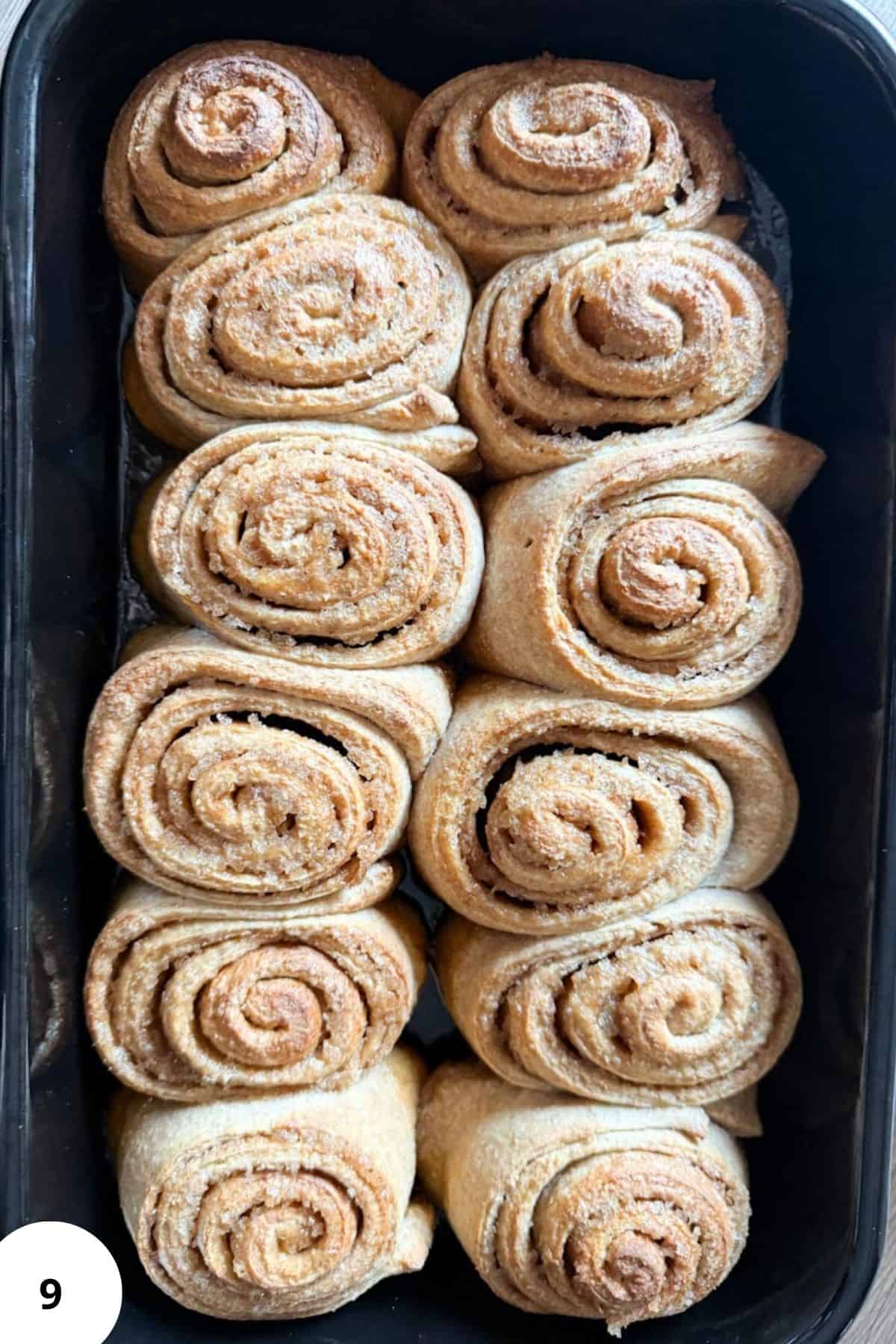
Step 9: Bake (Image 9):
Convection / fan oven: Preheat to 180°C / 355°F. Optional: drizzle 120 g heavy cream over the rolls before baking. Bake 22–25 minutes until golden (up to 30 minutes if cold from the fridge).
Conventional oven: Preheat to 190°C / 375°F. Optional: drizzle 120 g heavy cream over rolls before baking. Bake 25–30 minutes until golden (35–40 minutes from cold proof).
Tent loosely with foil if the tops brown too quickly.

Step 10: Cool slightly before serving (Image 10).
Hint: Make sure you're working with softened butter when mixing up the dough. If you melt it, the structure of the dough will change and you won't be able to do stretch and folds properly!
Baking Schedule
- 8:00 AM — Mix the Dough
- 8:30 AM — Rest (Hydration Phase)
- 8:30–9:30 AM — Stretch and Folds
- 9:30 AM–4:00 PM — Bulk Fermentation
- 4:00 PM — Pre-Shape the Dough
- 4:20 PM — Shape the Rolls
- 4:20–6:00 PM — Final Proof OR refrigerate overnight and bake the next morning
💭Crucial Success Tips
- Fresh milled flour absorbs more liquid, so add a splash of milk if the dough feels tight early on.
- These rolls need to look puffy before baking, and are hard to over ferment, so don't be afraid of the longer second rise.
- Try to start with all ingredients at room temperature. If you don't, fermentation time could end up being longer.
Recipe FAQs
Freshly milled flour gives them better flavor, better digestibility, and a soft texture you can’t get from store-bought whole wheat. Sourdough fermentation makes them even softer, because the flour can fully hydrate and ferment during bulk fermentation.
Usually it means they're under-proofed, or you used too much flour initially when you mixed up the dough.
You can, but the rolls won’t be as flavorful because store-bought flour. You also will probably need to add less milk, because fresh milled flour usually absorbs more liquid.
How To Store Fresh-Milled Whole Grain Sourdough Cinnamon Rolls
Store in an airtight container at room temperature for 1–2 days, or in the fridge for up to 1 week. Freeze for up to 1 month.
Rewarm in the oven or toaster oven until they're soft and the filling gets melty.
Other Delicious Recipes
- Fresh-Milled Cinnamon Roll Pull-Apart Sourdough Focaccia

- Fresh-Milled Double Chocolate Zucchini Muffins

- Fresh-Milled Sourdough Pancakes

- Fresh-Milled Sourdough Mini Pancakes (Jar Ring Pancakes)

If you tried this fresh-milled sourdough cinnamon rolls or any other recipe on my blog please leave a 🌟 star rating and let me know how it went in the 📝 comments below! Happy Baking!

Fresh-Milled Whole Grain Sourdough Cinnamon Rolls
Ingredients
- 500 g freshly milled hard white wheat flour milled fine
- 290 g milk cool room temperature (add 5–20 g more only if needed)
- 100 g active sourdough starter 100% hydration
- 80 g sugar
- 70 g butter room temperature
- 1 egg large
- 7 g fine sea salt
- 120 g heavy cream optional, for drizzling before baking
- 200 g brown sugar
- 115 g butter room temperature
- 1 tablespoon cinnamon
Instructions
- In a large bowl or stand mixer, combine the flour, milk, starter, egg, sugar, and salt. Mix until no dry bits remain. Let the dough rest for 20–30 minutes. If it feels very stiff, add 10–20 g more milk.
- On low speed, add the butter one tablespoon at a time until fully incorporated. Mix for 2 minutes at low-medium speed. The dough is not kneaded here; its strength will develop during the stretch-and-folds.
- Let the dough rest for 30 minutes. Perform 2–3 gentle stretch-and-folds, 30 minutes apart.
- Let the dough rise until it increases by 30–50% in volume, usually 5–7 hours at 22°C / 72°F. You can also refrigerate the dough overnight and continue the next day.
- Mix the softened butter with brown sugar and cinnamon. Lightly flour your counter and roll the dough into a 12 × 18 in (30 × 45 cm) rectangle.
- Spread the butter evenly over the dough, then sprinkle the cinnamon-sugar mixture on top.
- Cut the dough into 12 long strips along the long edge.
- Roll each strip and place them in a greased 9 × 13 in (23 × 33 cm) pan.Same day: Let proof at room temperature until puffy, about 2–3 hours.Overnight: Cover and refrigerate. Next day, bring to room temperature and proof until puffy, about 3–4 hours.
- Bake:Convection / fan oven: Preheat to 180°C / 355°F. Optional: drizzle 120 g heavy cream over the rolls before baking. Bake 22–25 minutes until golden (up to 30 minutes if cold from the fridge).Conventional oven: Preheat to 190°C / 375°F. Optional: drizzle 120 g heavy cream over rolls before baking. Bake 25–30 minutes until golden (35–40 minutes from cold proof).Tent loosely with foil if the tops brown too quickly.
- Cool slightly before serving.
Notes
- Make sure you're working with softened butter when mixing up the dough. If you melt it, the structure of the dough will change and you won't be able to do stretch and folds properly!
- Fresh milled flour absorbs more liquid, so add a splash of milk if the dough feels tight early on.
- Try to start with all ingredients at room temperature. If you don't, fermentation time could end up being longer.
- These rolls need to look puffy before baking, and are hard to over ferment, so don't be afraid of the longer second rise.
Private Notes
Tried this recipe?
Please leave a rating!Need Help Tweaking This Recipe?
Other Fresh-Milled Sourdough Recipes You'll Love









Ashley says
These look amazing! Thank you for the recipe!
Tina says
Thank you Ashley!
Tracy says
Cinnamon rolls, fresh milled flour and sourdough! It doesn't get better than this!
Tina says
It really doesn't! =D
Molly LaFontaine says
Thank you for sharing this recipe! They sound amazing!
Tina says
Thank you Molly!
Meredith says
I have been looking for a good fresh milled cinnamon roll recipe! Thank you for posting. Can't wait to try these out!
Tina says
Thank you Meredith!