

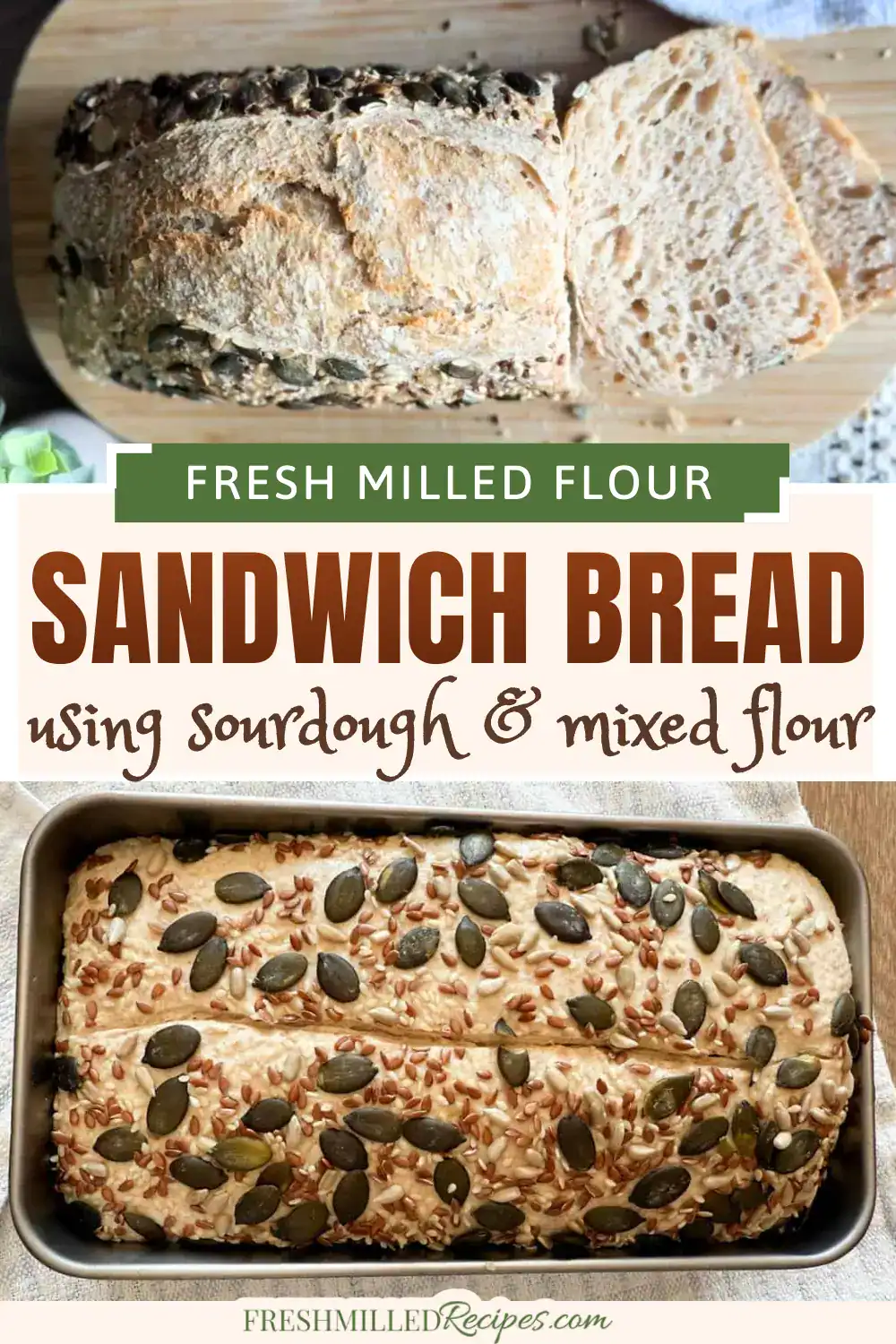
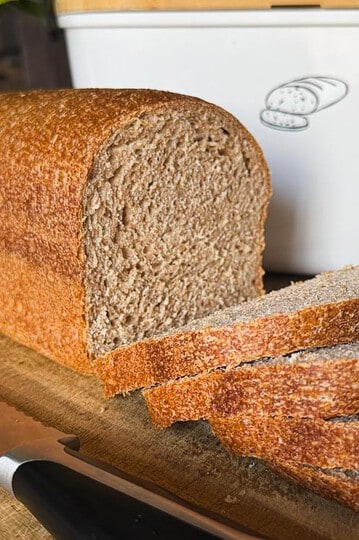
If you aren’t sure about jumping straight into 100% whole wheat sourdough sandwich bread, this mixed fresh-milled sourdough sandwich bread is a perfect in-between loaf. Most of the dough uses all-purpose flour, so the dough stays soft and easy to handle, while the fresh-milled flour brings in that good, whole-grain flavor.
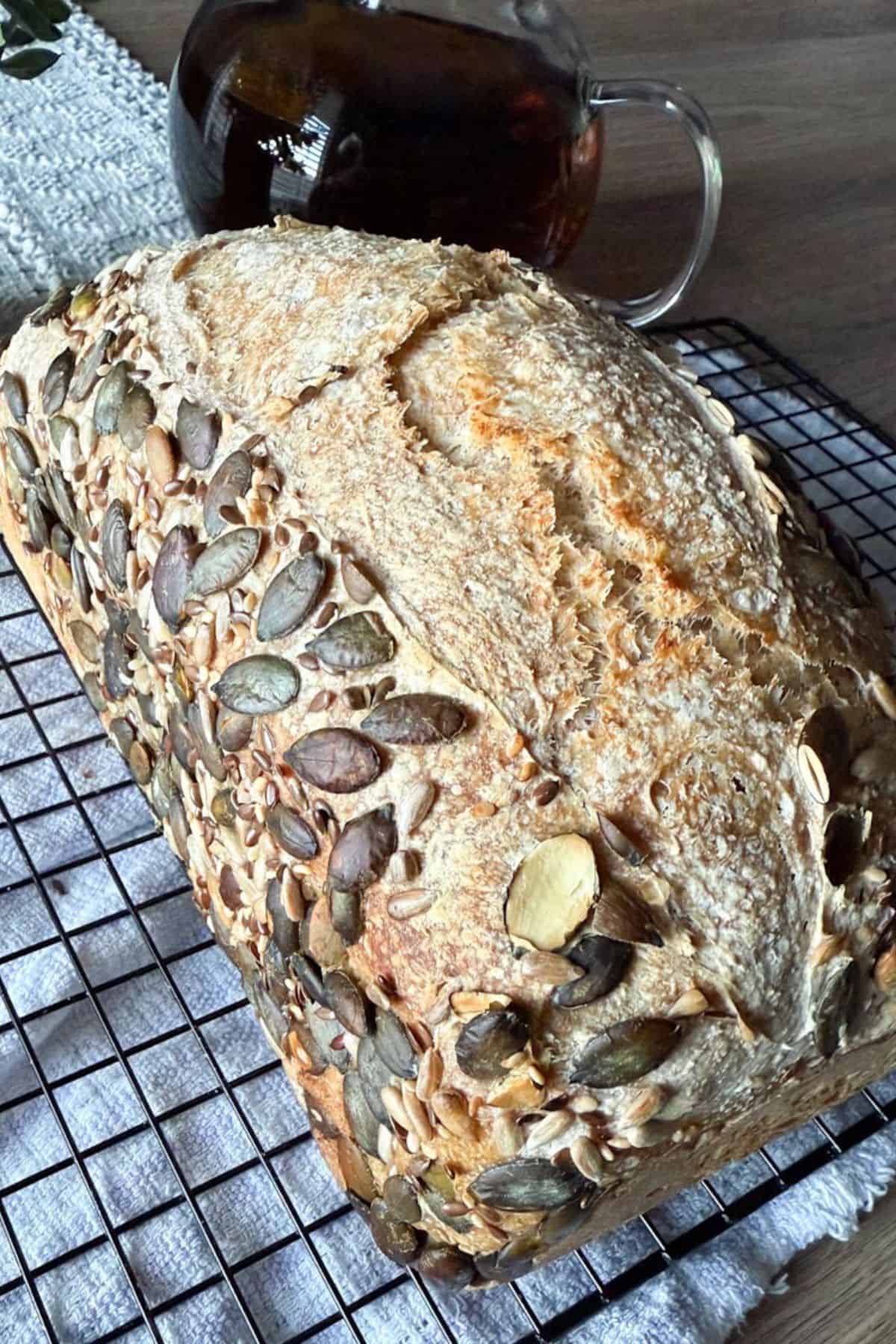
I reach for this recipe when I need to bake something familiar but I still want to use fresh flour from my grain mill (not everyone loves the strong taste of whole grains!).
It has the flavor of whole grain flour without overwhelming anyone who’s used to store-bought bread. It’s also a nice stepping stone if you’re trying to bake more with your own wheat or want to transition to a full whole wheat bread later on.
If you like your bread made in a loaf pan or don't have a Dutch oven, give my sourdough in a loaf pan a try!
Summarize & Save This Recipe On:
Quick Look
- Prep time: 20 mins.
- Bake time: 40–50 mins.
- Servings: 1 loaf.
- Main ingredients: Sourdough starter, fresh milled flour, all-purpose flour, water, salt, seeds
- Cooking method: Baking 🡢 Two-pan method (loaf pan) or Dutch oven
- Difficulty: Medium
- Serving ideas: Sandwiches (ideal!), breakfast toast, snack with butter or jam
Jump to:
- Summarize & Save This Recipe On:
- Quick Look
- Important Ingredients
- Substitutions & Variations
- How to Make Mixed Fresh-Milled Flour Sourdough Sandwich Bread
- Alternative Baking Methods
- Baking Schedule
- 💭Crucial Success Tips
- Recipe FAQs
- How To Store Mixed Fresh-Milled Flour Sourdough Sandwich Bread
- Mixed Fresh-Milled Flour Sourdough Sandwich Bread
- Other Posts You Might Want To Check Out
- Need Help Tweaking This Recipe?
- Other Fresh-Milled Sourdough Recipes You'll Love
Important Ingredients
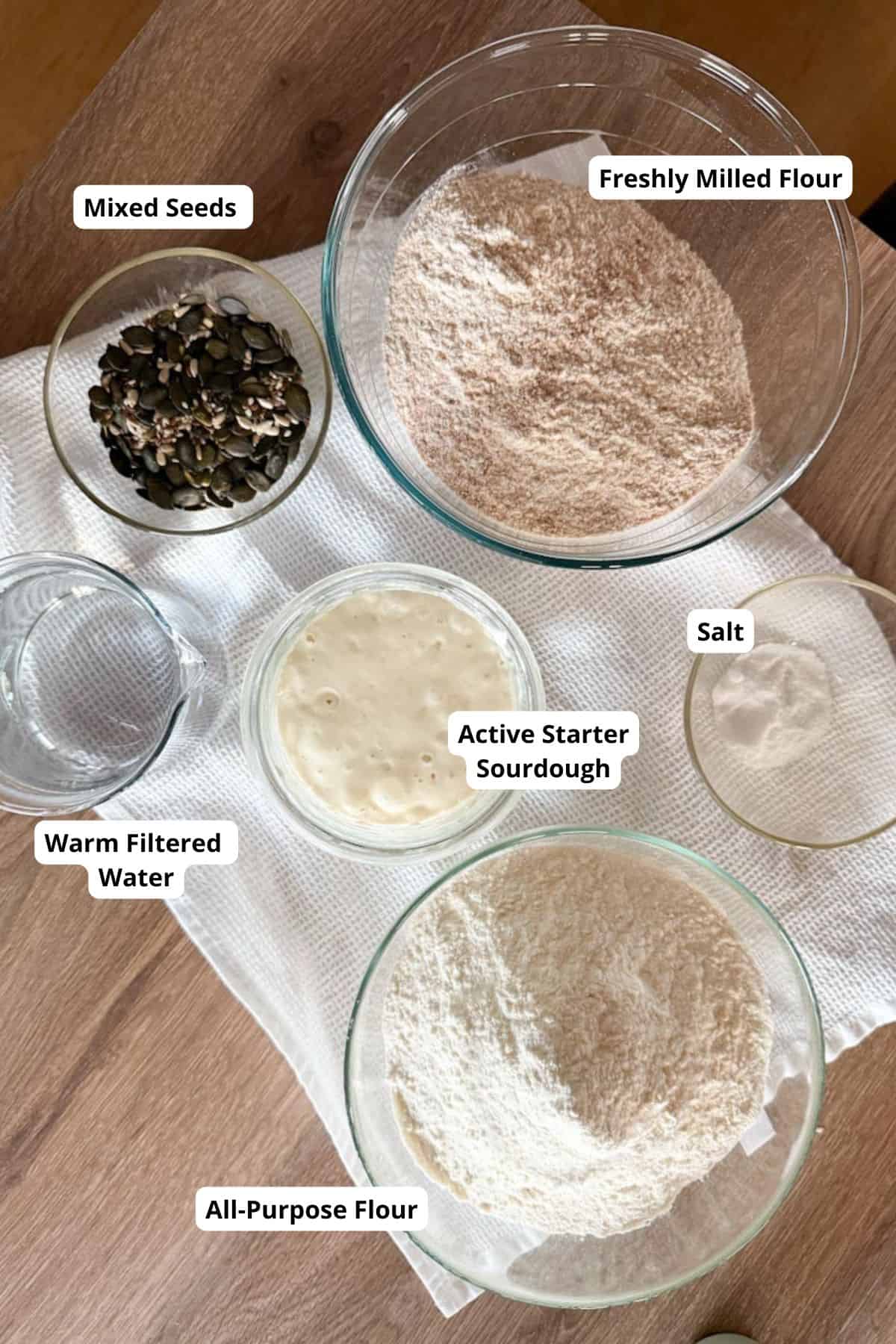
- Sourdough Starter is the only raising agent. Make sure it’s active and bubbly if you want a milder tasting loaf that rises quickly.
- Fresh-milled hard white wheat adds all the flavor, fiber, and health benefits. I'm using hard white wheat berries, because its high gluten content makes it great for bread baking.
- All-Purpose provides gluten structure to help the loaf rise and keeps the texture on the softer side.
- Seeds pumpkin, flax, sunflower, and sesame add crunch (and make the loaf look special).
- Sugar (optional) enhances browning and feeds the yeasts in the starter, giving it a boost.
- Water warm(ish) water helps activate the starter and speed up rising time.
- Salt balances flavor and strengthens gluten.
See recipe card for quantities.
Substitutions & Variations
- Bread flour: You can use bread flour instead of all purpose flour. Be prepared to add a bit more water (if needed). Using bread flour will result in better texture but the loaf will be less soft.
- Extra seeds: Add more seeds inside the dough for added texture. Make sure to soak them beforehand or add more water to the dough to make up for it!
- Extra sweetness and softness: Add 2 tablespoon honey or maple syrup to the dough for a slightly sweeter (and softer) loaf. Make sure to use both with milder flavor, otherwise you're risking the whole loaf to taste like honey/maple syrup. Any bread using whole wheat flour can benefit from adding a bit!
How to Make Mixed Fresh-Milled Flour Sourdough Sandwich Bread
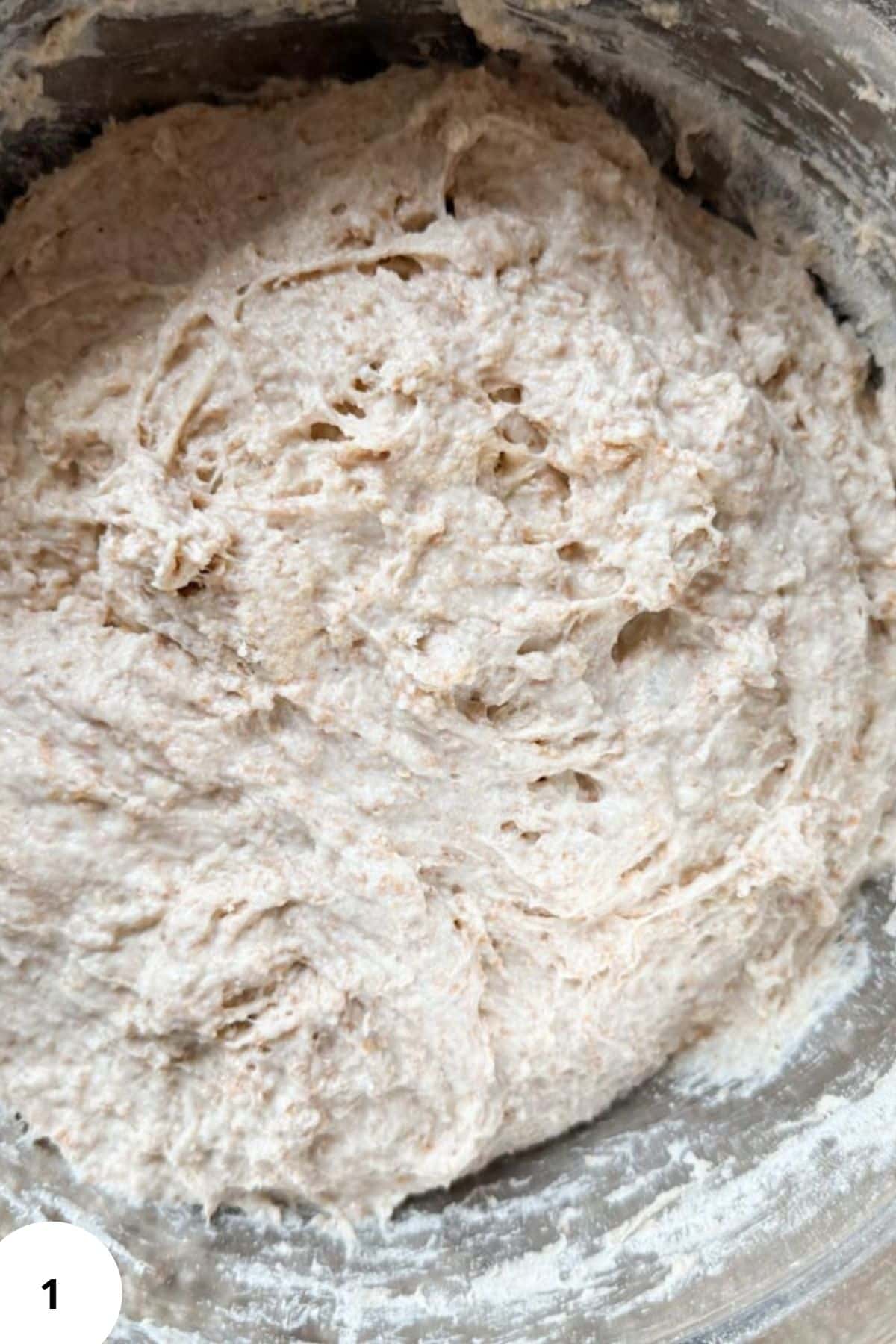
Step 1: In a large bowl, combine the sourdough starter, water, both flours, salt, and sugar (if using). Stir with a spoon or your hands until no dry flour remains. Let the dough rest for about 30 minutes, so the flour can absorb the water fully (Image 1).
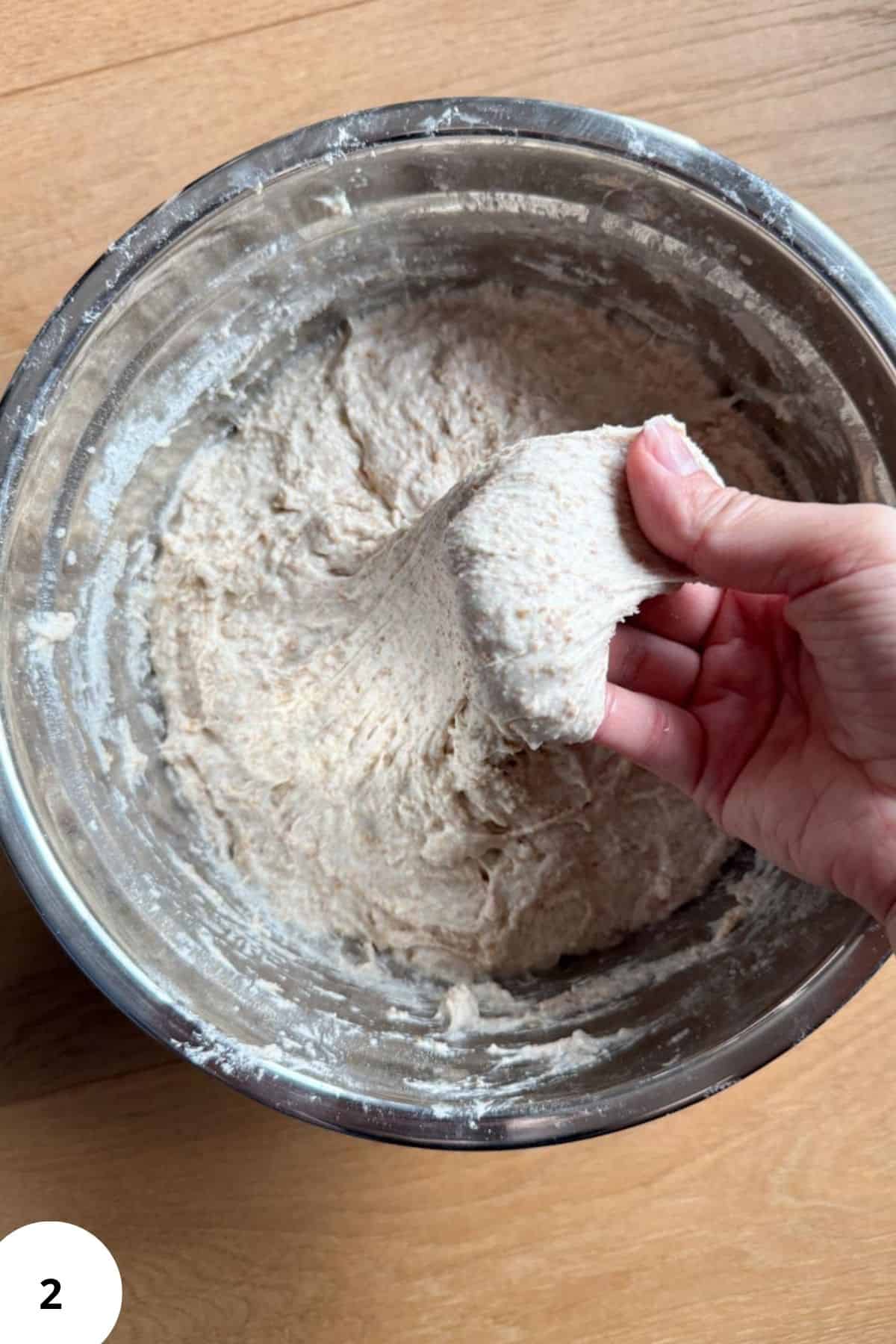
Step 2: When the dough hydrates and becomes more elastic and manageable (Image 2), lightly wet your hands (for less sticking). Pull one side of the dough gently upwards and fold it over the center. Turn the bowl a quarter turn and repeat all around. That completes one set.
Cover the bowl and let the dough rest for about 30 minutes.
Repeat this stretch-and-fold process two more times, waiting about 30 minutes between each set. Each time, the dough should become smoother, stronger, and more elastic.

Step 3: Let the dough rise until it roughly doubles in size (Image 3). Bulk fermentation for this bread usually takes 4–6 hours from the start of mixing.

Step 4: Turn the dough onto a floured counter (Image 4) and form it gently into a loose ball or oval (Image 5). Let it rest uncovered for 20–30 minutes.
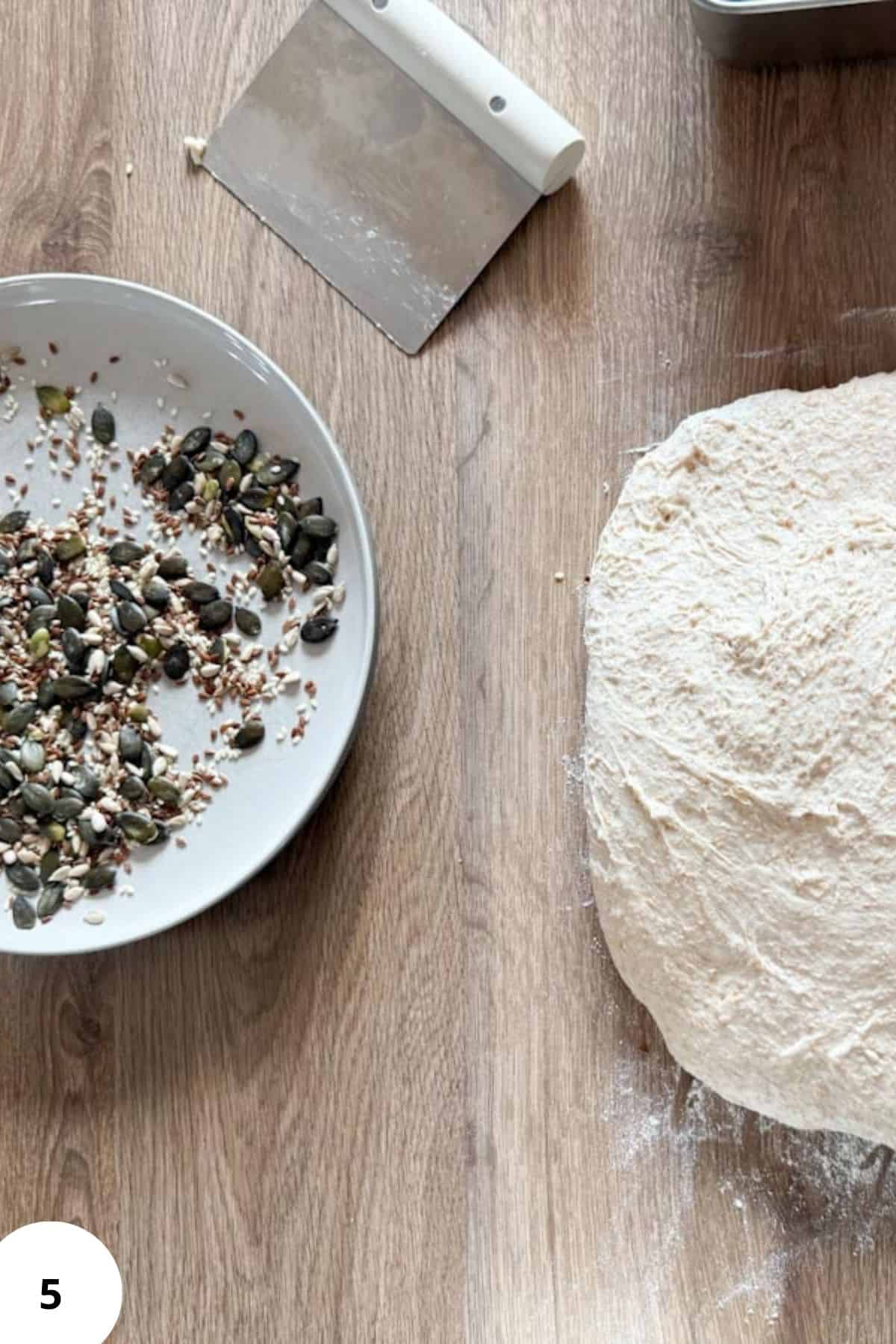
Step 5: Stretch the dough into a rectangle and roll it from the short end, then roll again tightly to form a sandwich loaf.
(Optionally, shape it as a round or oval for Dutch oven baking, adjusting bake times as needed.)
Roll the shaped dough in your seed mix. If the seeds don’t stick, lightly spray the dough with water first.
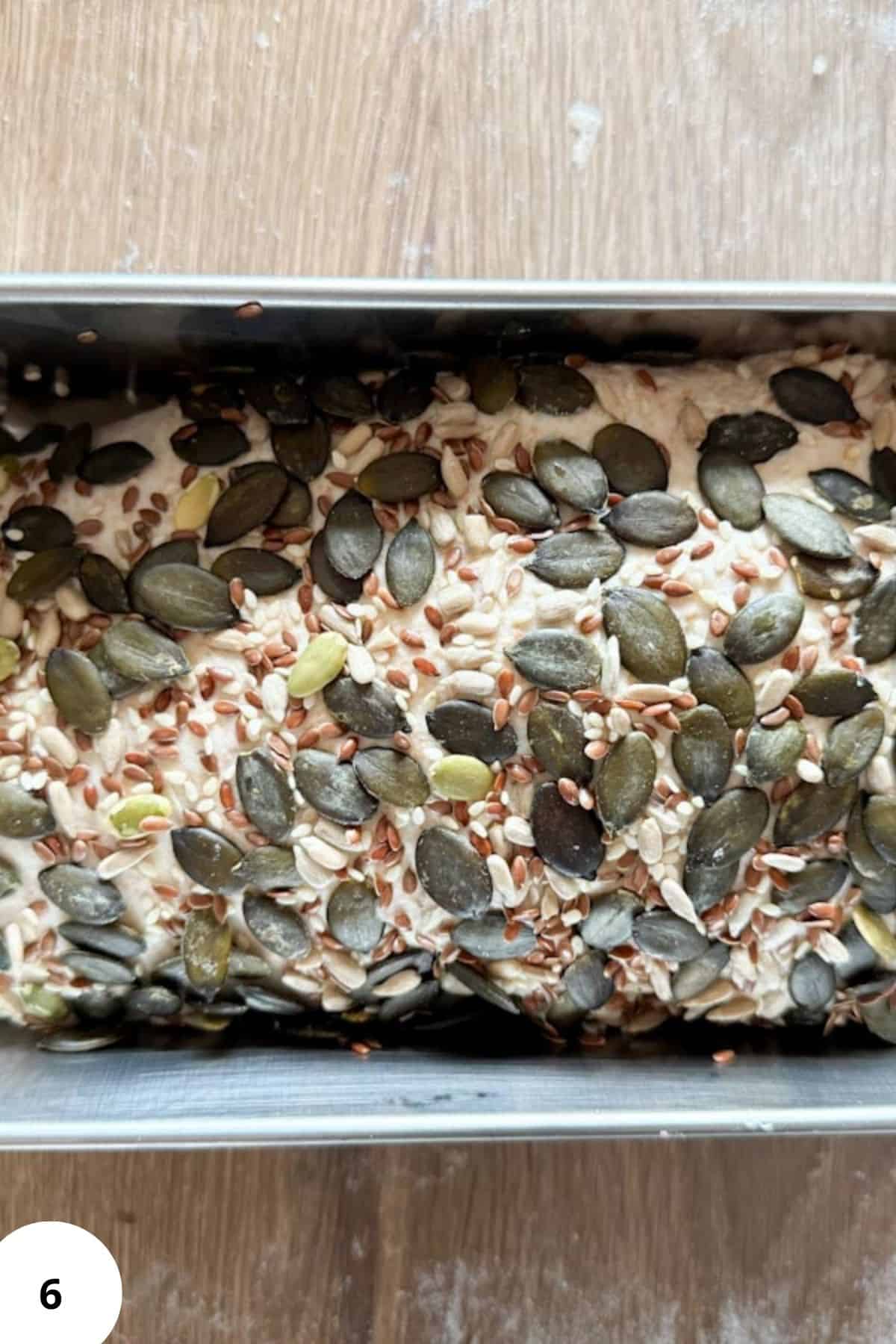
Step 6: Place the dough seam-side down in a greased or parchment-lined loaf pan (Image 6). I usually grease it with a thin layer of olive oil which works great!
For best results, cover and refrigerate overnight (8–12 hours).
Alternatively, you can skip the fridge and let it rise at room temperature for 1–2 hours instead.

Step 7: Baking – Two-Pan Steam Method (Soft Crust)
Preheat the oven to 425°F (220°C). Place a second loaf pan upside down on top to trap steam. Bake covered for 40 minutes, then remove the top pan and bake uncovered for 10–15 minutes until golden and the internal temperature reaches 200–205°F (93–96°C).
If the seeds brown too quickly, loosely cover the loaf with foil for the last 5–10 minutes.
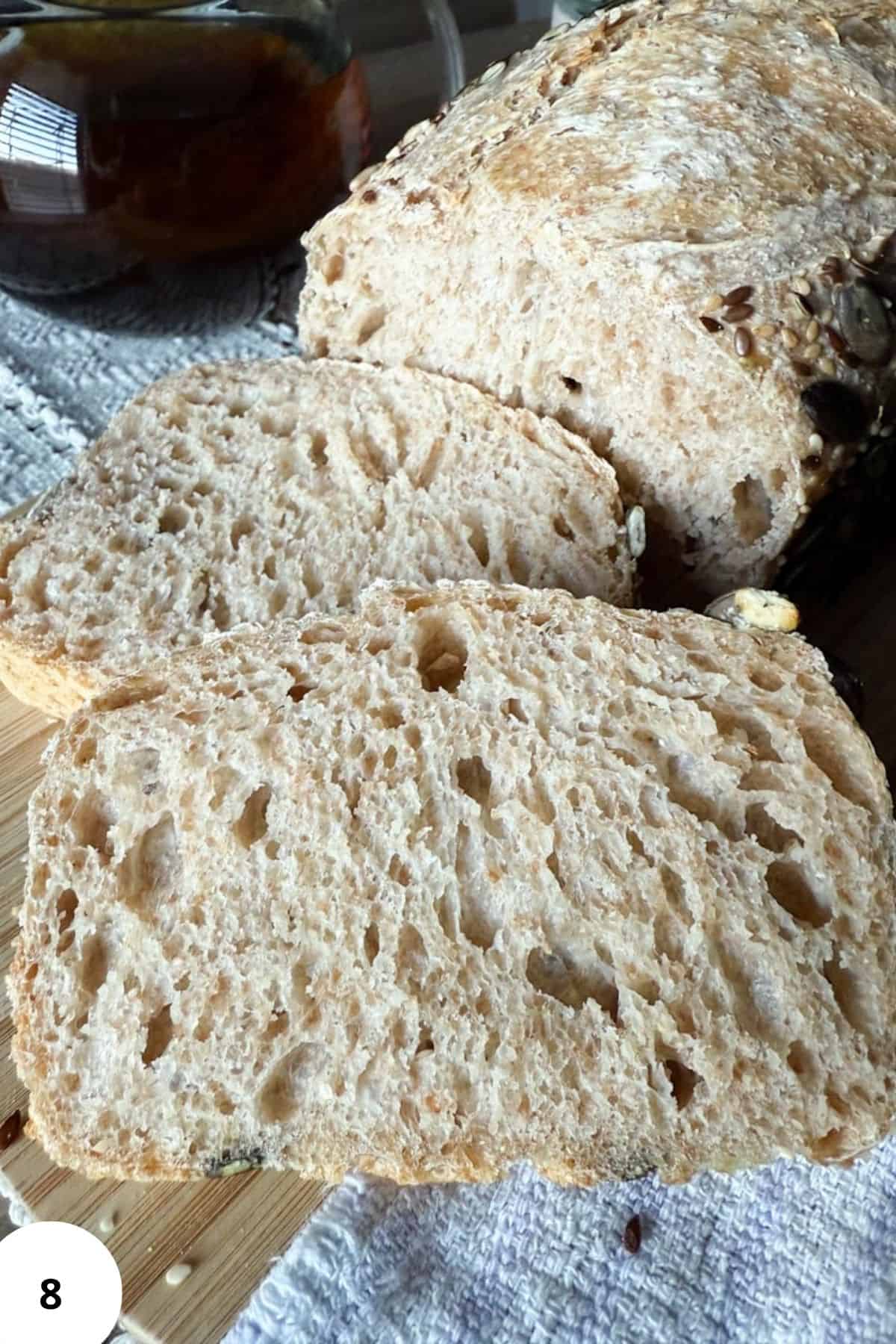
Step 8: Let the loaf cool for at least 1 hour before slicing so the inside sets properly (Image 8).
Hint: This loaf follows a simple timeline, and the rise time will depend on your room temperature and how active your starter is. Cooler kitchens take longer, so give the dough time during bulk fermentation to puff up well. Freshly milled flour usually ferments faster than store bough flours do, so keep an eye on it!
Alternative Baking Methods
Dutch Oven or Boule: Preheat Dutch oven to 450°F (230°C). Bake dough 20 minutes covered, then 25–30 minutes uncovered until deep golden and internal temp 200–205°F (93–96°C). Cool 1 hour before slicing.
Baking Schedule
8:00 AM — Mix the Dough
Stir together your active starter, water, fresh-milled flour, and all-purpose flour in a large mixing bowl. Make sure no dry spots remain.
8:30 AM — Rest (Autolyse)
Let the dough sit for 30 minutes so the whole grains can soak up the water.
8:30–9:30 AM — Stretch and Folds
Do one set of folds every 30 minutes (8:30, 9:00, 9:30). The dough should feel smoother and stronger by the third time.
9:30 AM–1:30 PM — Bulk Fermentation
Let the dough rise until it’s puffy and roughly doubled. Four hours is common when using fresh-milled flour, but always check the dough, not the clock.
1:30 PM — Shape the Loaf
Turn the dough out, rest it for 20–30 minutes, then shape it into a tight log and place it seam-side down in your greased loaf pan.
Option 1: Same-Day Bake
1:30–3:00 PM — Final Rise
Let the dough rise in a warm place for 1–2 hours, or until it rises above the top of the pan.
3:00 PM — Bake
Bake using your preferred method. Look for an internal temperature of 200–205°F for the best results.
4:00 PM — Cool Completely
Cool on a wire rack for at least 1 hour before slicing.
You’ll have a warm sandwich loaf just in time for dinner.
Option 2: Overnight Cold Proof (My Favorite)
1:30 PM — Into the Fridge
Cover the loaf pan with plastic wrap and refrigerate 8–12 hours. This develops more flavor and gives better oven spring.
Next Morning, 8:00–9:00 AM — Bake Straight From the Fridge
Bake right away. No warm-up needed. The crust will brown nicely, and the crumb stays soft.
9:00–10:00 AM — Cool Completely
Let the loaf cool to room temperature before cutting.
💭Crucial Success Tips
Let the dough really finish bulk fermentation before moving on. It should look airy and feel lighter, and rise for at least 30%-50% in volume. If it’s dense, give it more time in a warm place. Fresh-milled flour does ferment a bit faster in my experience, but it still needs plenty of time and if you rush it, your results won't be as good.
Recipe FAQs
This version uses a blend of fresh flour and all-purpose, so the dough stays soft and easy to handle while still giving you the flavor of whole grains.
Yes, bread flour works well and gives the dough more strength. You may need to add a little more water, so pay attention to the feel of your dough.
A grain mill gives you the freshest flavor, but you can use store-bought whole wheat flour if that’s what you have on hand. The loaf will still turn out soft. But milling your own flour has some perks, and I highly recommend using freshly milled flour in general.
Cooler kitchens slow down the first rise. If the dough hasn’t doubled, it just needs more time. Warm it gently and let the dough rise fully before shaping.
Yes, you can bake it as a boule in a Dutch oven. It won’t have the classic sandwich shape, but the flavor stays the same.
How To Store Mixed Fresh-Milled Flour Sourdough Sandwich Bread
Store the loaf at room temperature for 2–3 days in a bread box or wrapped in a towel. For longer storage, freeze slices in an airtight bag for up to 2–3 months and thaw at room temperature or toast before eating. Avoid the fridge, as it dries the bread faster.
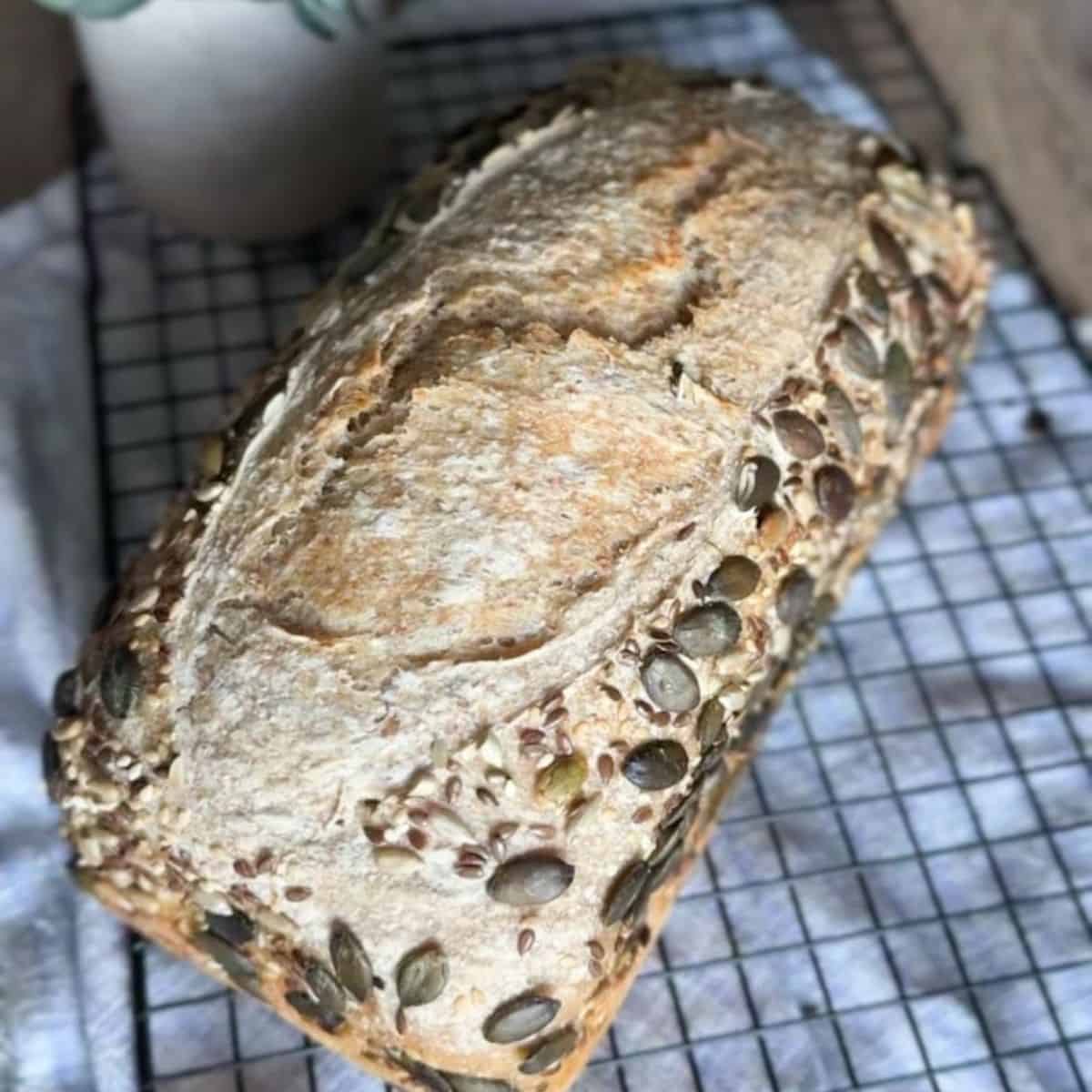
Mixed Fresh-Milled Flour Sourdough Sandwich Bread
Ingredients
- 370 g water warm filtered
- 300 g all-purpose or bread flour see notes
- 180 g freshly milled flour
- 80 g sourdough starter
- 10 g fine sea salt
- 10 g sugar optional
- Mixed seeds for rolling pumpkin, flax, sunflower, sesame
Equipment
- 2 Loaf pans *see recipe notes!
Instructions
- In a large bowl, combine the sourdough starter, water, both flours, salt, and sugar (if using). Stir with a spoon or your hands until no dry flour remains. Let the dough rest for about 30 minutes, so the flour can absorb the water fully.
- When the dough hydrates and becomes more elastic and manageable, lightly wet your hands (for less sticking). Pull one side of the dough gently upwards and fold it over the center. Turn the bowl a quarter turn and repeat all around. That completes one set.Cover the bowl and let the dough rest for about 30 minutes.Repeat this stretch-and-fold process two more times, waiting about 30 minutes between each set. Each time, the dough should become smoother, stronger, and more elastic.
- Let the dough rise until it roughly doubles in size. Bulk fermentation for this bread usually takes 4–6 hours from the start of mixing.
- Turn the dough onto a floured counter and form it gently into a loose ball or oval. Let it rest uncovered for 20–30 minutes.
- Stretch the dough into a rectangle and roll it from the short end, then roll again tightly to form a sandwich loaf. (Optionally, shape it as a round or oval for Dutch oven baking, adjusting bake times as needed.) Roll the shaped dough in your seed mix. If the seeds don’t stick, lightly spray the dough with water first.
- Place the dough seam-side down in a greased or parchment-lined loaf pan.For best results, cover and refrigerate overnight (8–12 hours).Alternatively, you can skip the fridge and let it rise at room temperature for 1–2 hours instead.
- Preheat the oven to 425°F (220°C). Place a second loaf pan upside down on top to trap steam. Bake covered for 40 minutes, then remove the top pan and bake uncovered for 10–15 minutes until golden and the internal temperature reaches 200–205°F (93–96°C).If the seeds brown too quickly, loosely cover the loaf with foil for the last 5–10 minutes.
- Let the loaf cool for at least 1 hour before slicing so the inside sets properly.
Video
Notes
- MAY FAVORITE LOAF PANS: https://amzn.to/3JTgKcs
- More water is normal: Whole grains absorb more water, so the dough may feel sticky at first, but trust the process and only add additional flour if you're sure you need it.
- Shorter fermentation time: Doughs from fresh-milled flour rise faster, so keep an eye on it.
- Flour for shaping: Dust your counter well if dough sticks. There's no shame in using extra flour!
- Baking time: Whole grain loaves sometimes need extra minutes. Look for a deep golden crust, a hollow sound when tapped, or check that internal temp is 200–205°F (93–96°C).
Private Notes
Tried this recipe?
Please leave a rating!Other Posts You Might Want To Check Out
- Fresh-Milled Sourdough Pancakes

- Fresh-Milled Sourdough Mini Pancakes (Jar Ring Pancakes)

- Fresh-Milled Zucchini Fritters

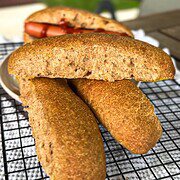
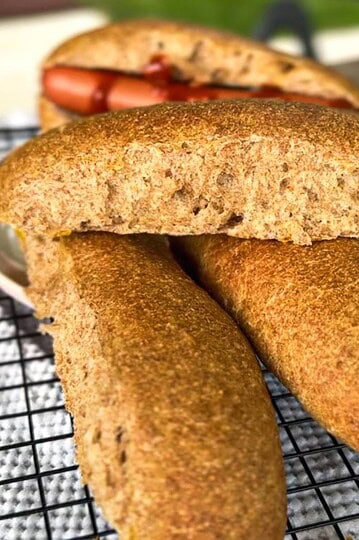
- Fresh-Milled Sourdough Hot Dog Buns
If you tried this mixed fresh-milled flour sourdough sandwich bread or any other recipe on my blog please leave a 🌟 star rating and let me know how it went in the 📝 comments below! Happy Baking!
Need Help Tweaking This Recipe?
Other Fresh-Milled Sourdough Recipes You'll Love






Leave a Reply