
If you don't have a Dutch over (or you just don't want to use it all the time!), this fresh milled sourdough in a loaf pan turns out tall, soft, and sliceable. It's still plain sourdough, made from flour, water, salt and starter, but easier to slice than an artisan loaf.
This recipe uses a simple two-pan method to trap steam, so you get a great rise and a beautiful crust with pans you already own, no Dutch oven needed!

If you like the loaf shape for your bread, also check out my mixed fresh-milled sourdough sandwich bread!
Summarize & Save This Recipe On:
Quick Look
- Prep Time: 20 minutes active work
- Bulk Fermentation: 4–6 hours
- Final Proof: 1 hour (counter) OR 3–24 hours (fridge)
- Cook Time: 50 minutes
- Total Time: 6–24 hours (depending on schedule)
- Servings: 1 loaf (about 10–12 slices)
- Difficulty: Beginner-friendly sourdough
- Baking Method: Two-pan method
- Best For: Sandwich bread, toast, everyday family bread
Jump to:
- Summarize & Save This Recipe On:
- Quick Look
- Important Ingredients
- Substitutions & Variations
- How to Make
- Baking Schedule
- 💭Crucial Success Tips
- Recipe FAQs
- How To Store Sourdough in a Loaf Pan
- Other Delicious Recipes
- 100% Fresh Milled Sourdough in a Loaf Pan (The Two-Pan Method)
- Need Help Tweaking This Recipe?
- Other Fresh-Milled Sourdough Recipes You'll Love
Important Ingredients
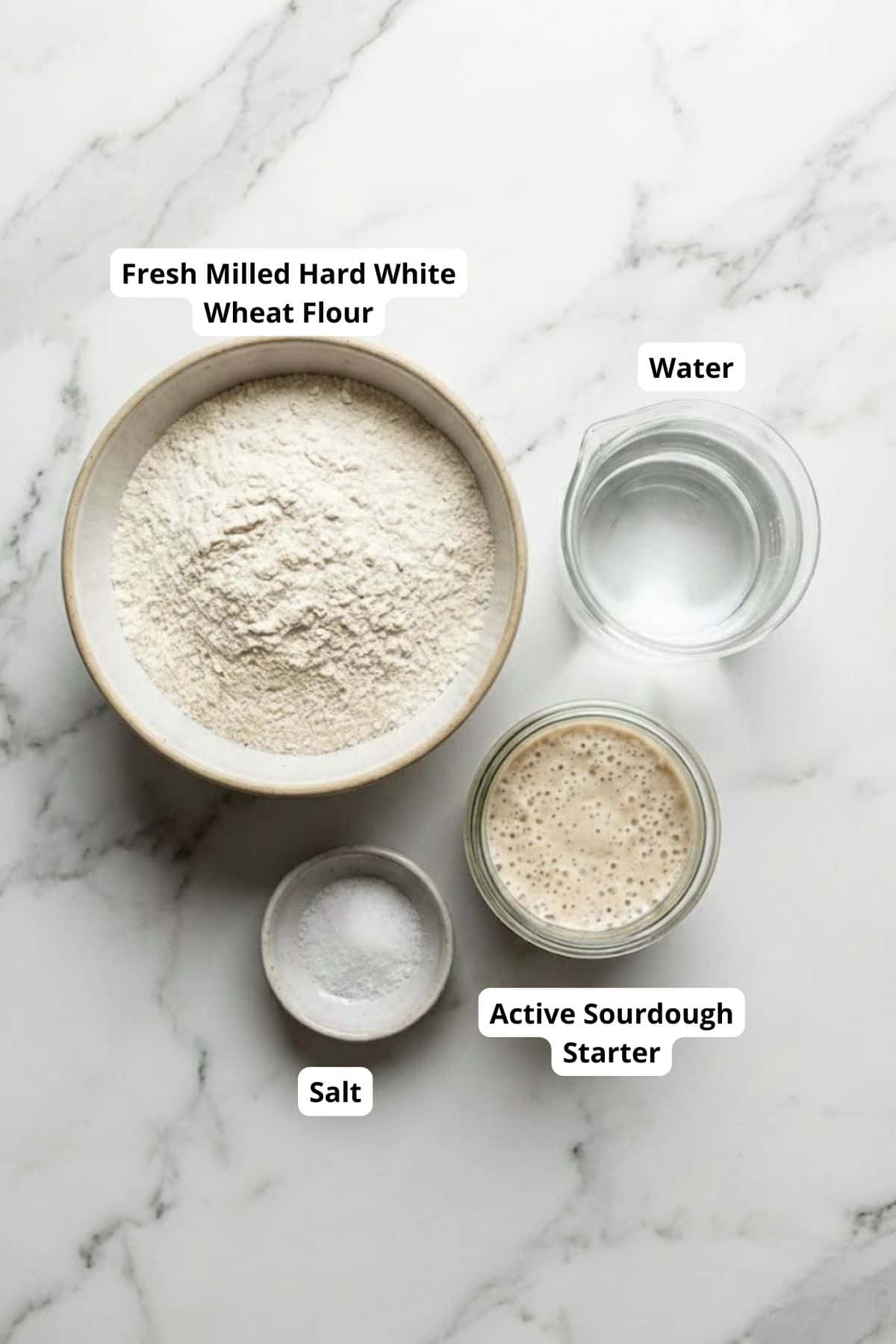
- Fresh milled wheat flour gives the bread flavor, nutrition, and structure.
- Active sourdough starter helps the dough rise naturally and adds a sour flavor.
- Water hydrates the flour and allows fermentation to happen.
- Salt strengthens the dough and balances flavor.
See recipe card for quantities.
Substitutions & Variations
- You can replace up to 30% of the wheat with another grain like spelt or rye.
- Hard red wheat works if you want a deeper flavor.
- Add 1–2 tablespoons honey if you want a softer, slightly sweeter loaf. Just be prepared for the bread to ferment a bit quicker because of that!
How to Make
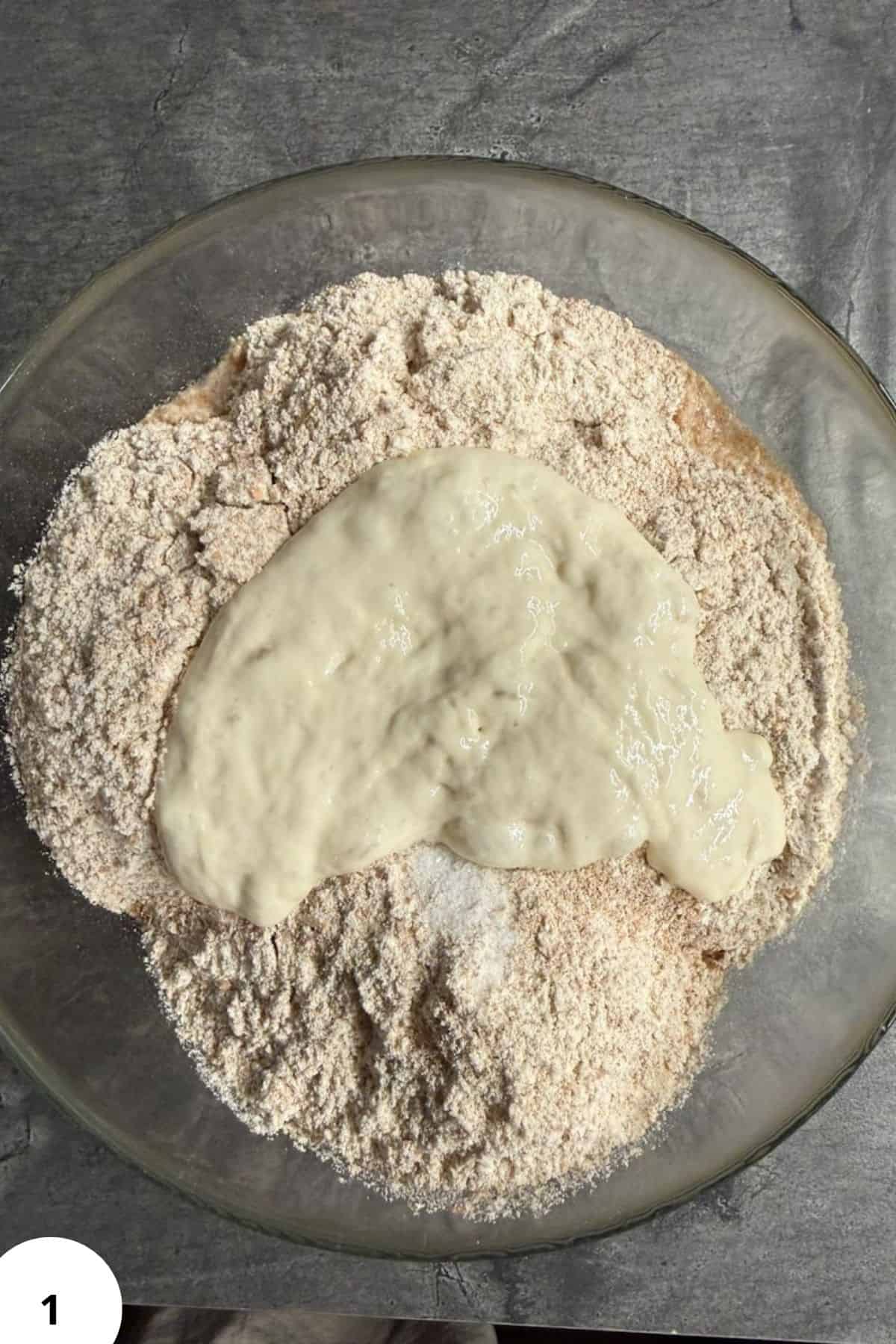
Step 1: Add everything to a bowl (Image 1). The order doesn’t matter.
I usually mix by hand so I can squeeze the dough and make sure the starter and salt are fully dispersed.
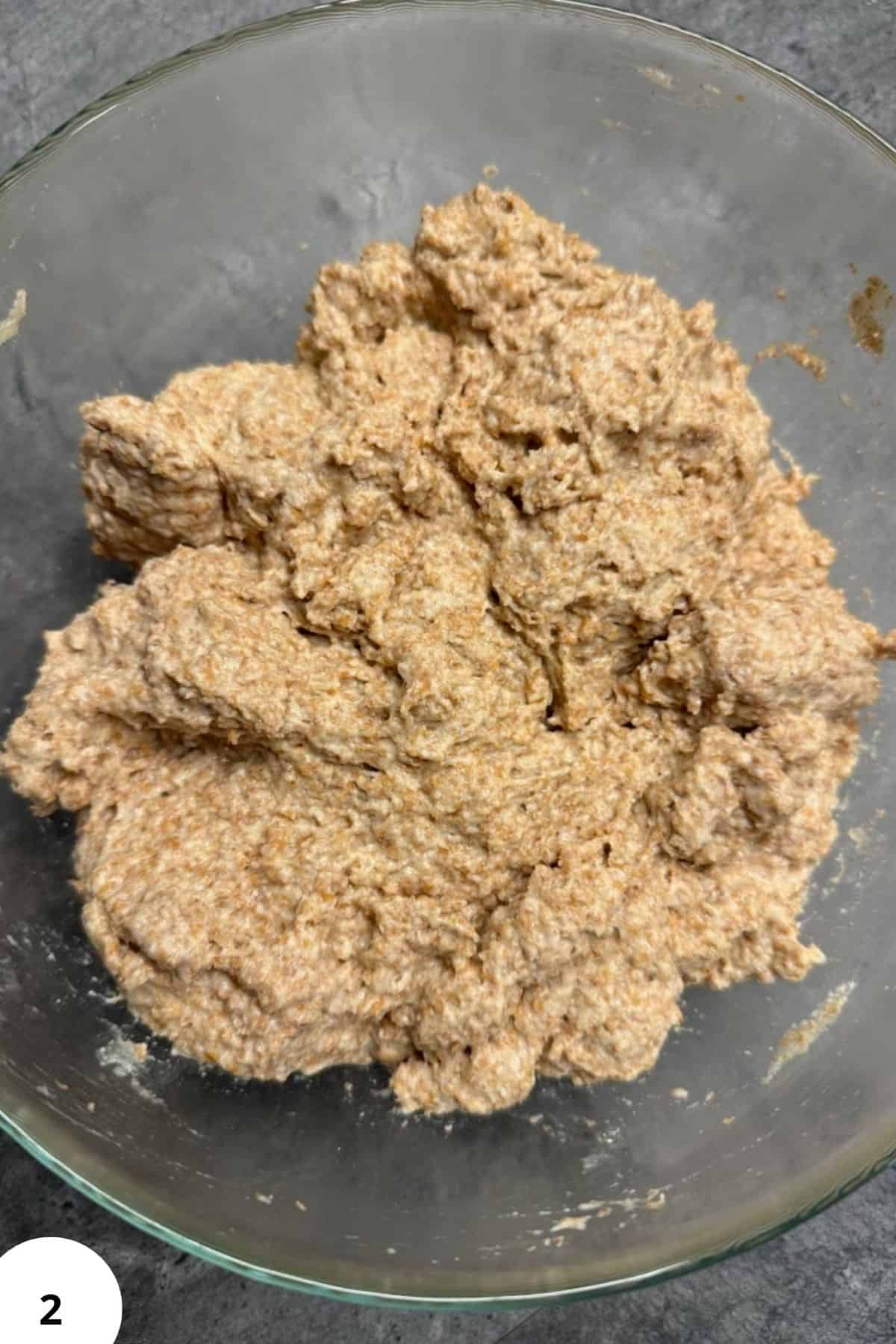
Step 2: Mix until there are no dry bits of flour left.
At this stage, the dough will feel sticky and almost like wet sand (Image 2). That’s completely normal with fresh-milled flour. It won’t be stretchy yet.
Cover the bowl with a wet tea towel, shower cap, or anything that keeps it from drying out.
Let rest for 30 minutes to 1 hour.
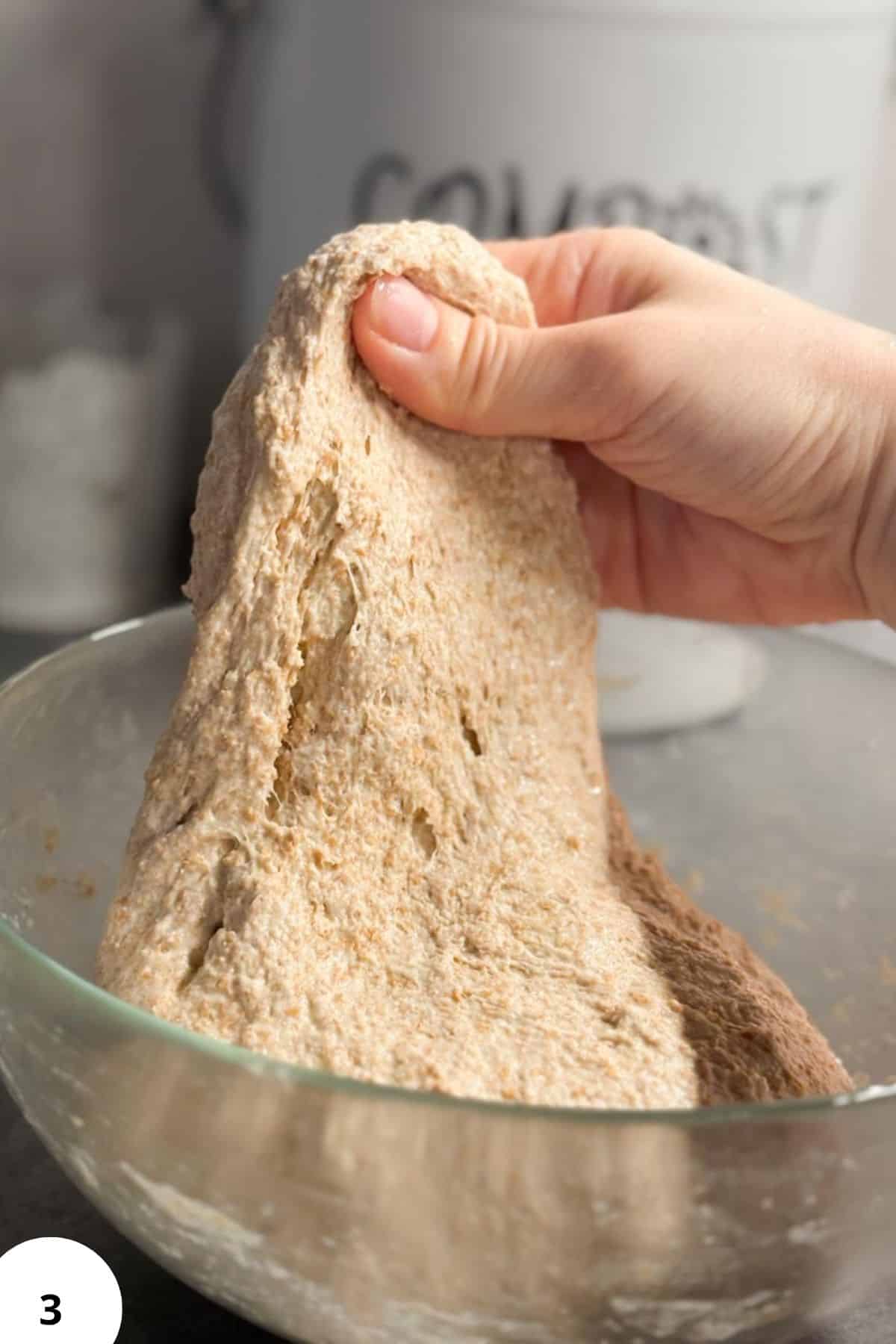
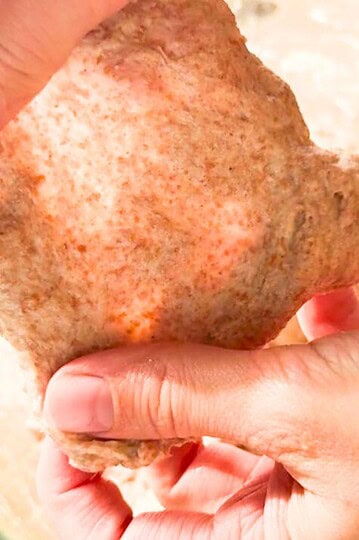
Step 3: After the rest, do your first set of stretch and folds (Image 3).
What are stretch and folds?
With wet hands, gently grab one side of the dough, lift it slightly, and fold it over itself. Turn the bowl and repeat on all four sides. That’s one round.
Be gentle. No need for long pulls. It’s better to do short, soft folds than to tear the dough.
Cover again and rest 30 minutes.
Do a second round.
After another 30 minutes, you can do a third round if you want, but I usually stop at two.
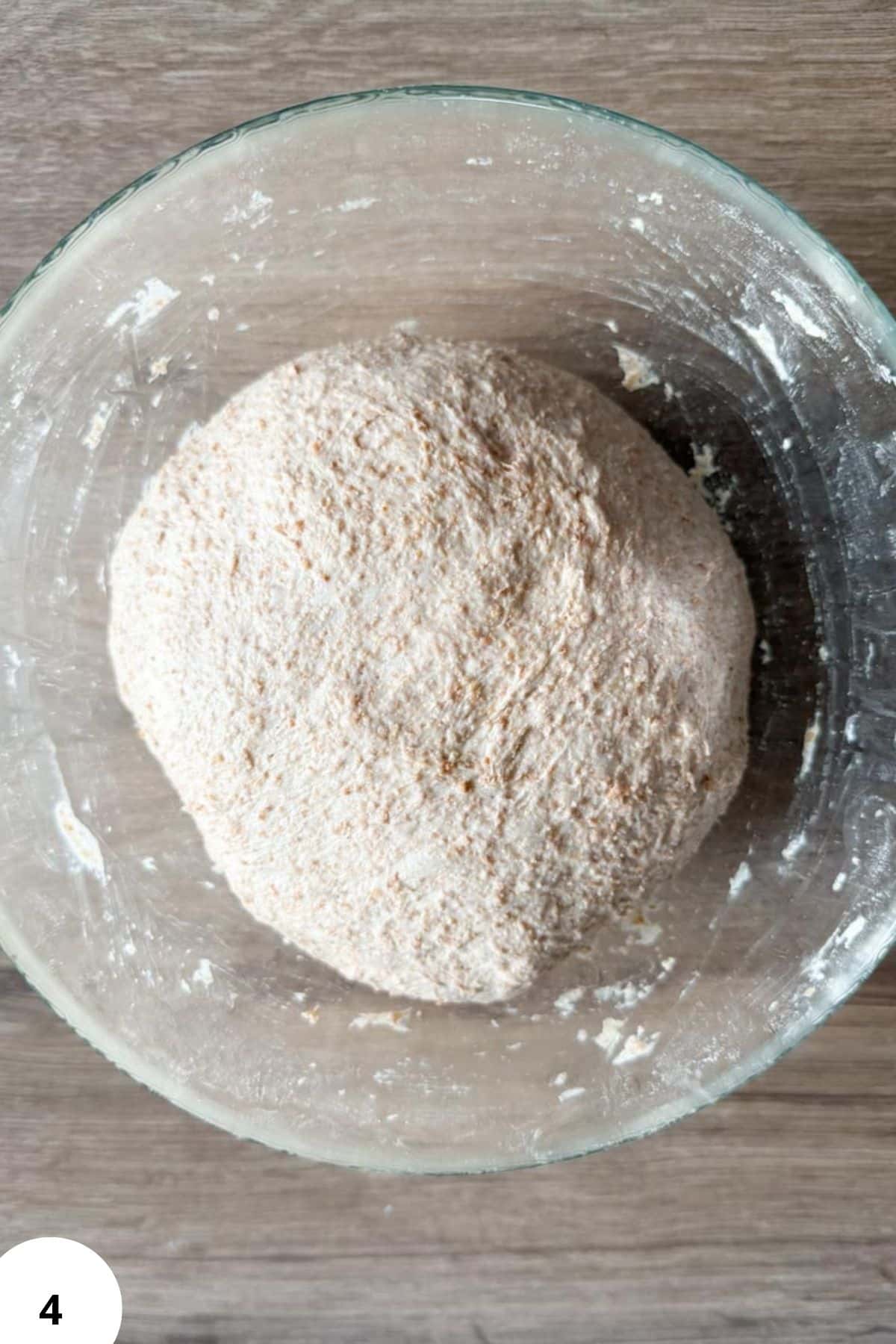
Step 4: Let the dough bulk ferment for 4–6 hours, depending on your kitchen (Image 4).
- Summer: closer to 4 hours
- Winter: closer to 6 hours
You’re looking for about 30–50% rise, not a full doubling.
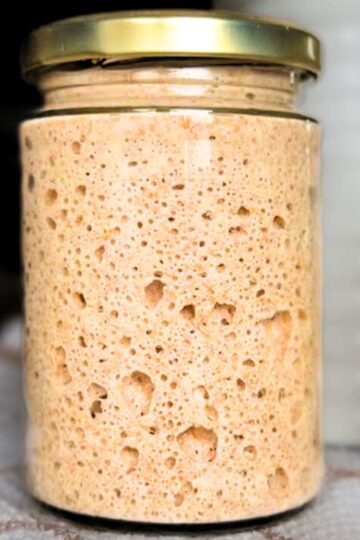
If you’re using a glass bowl, you should see bubbles throughout the dough. Don’t wait for dramatic volume. Fresh-milled dough behaves differently.
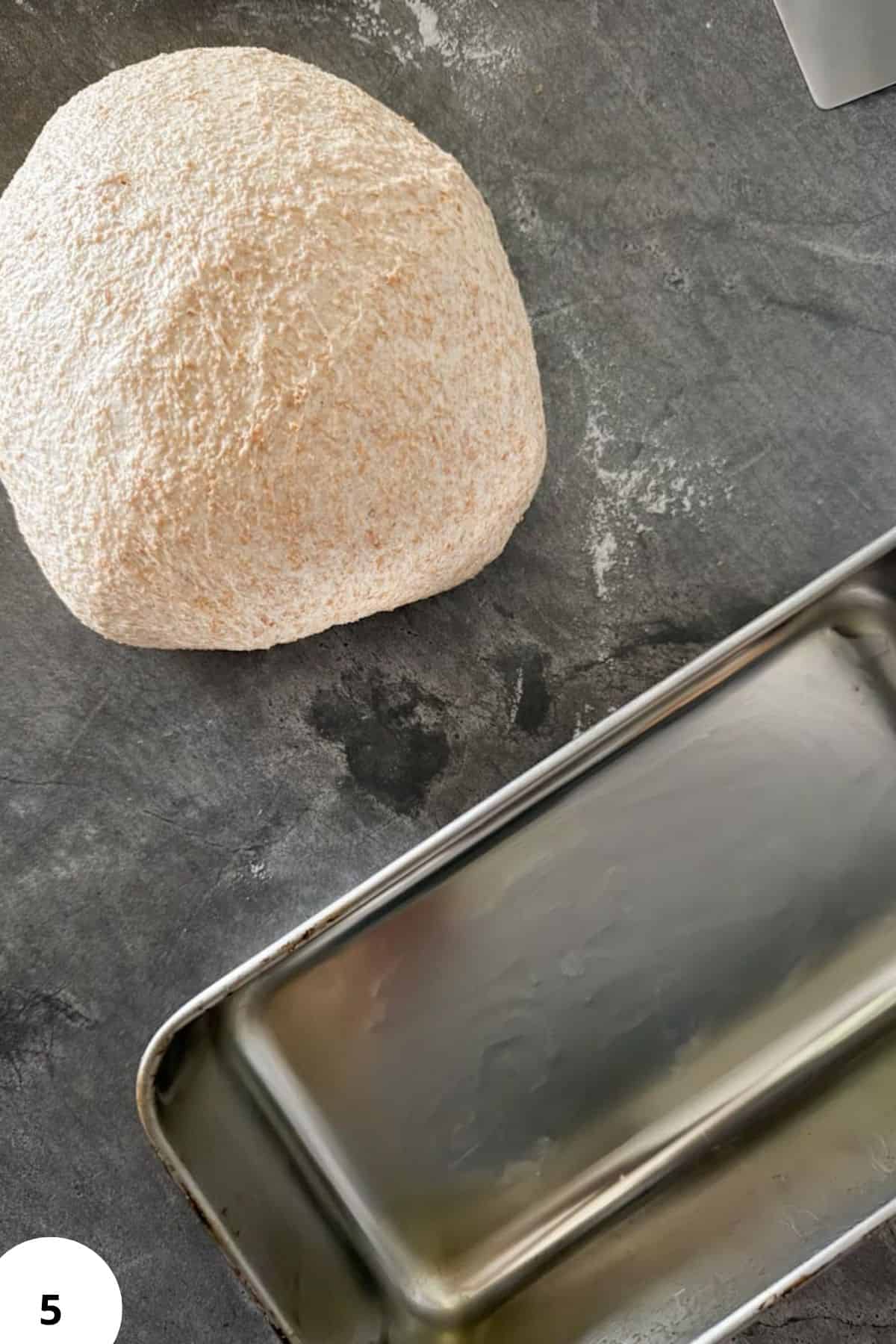
Step 5: Lightly flour your work surface.
Turn the dough out so the side that was exposed to air is now on the bottom.
Roll it gently into a loose log, then lightly into a ball (Image 5). Nothing tight.
Let it rest on the counter for about 5 minutes while you prep your loaf pan.
Generously oil one loaf pan.
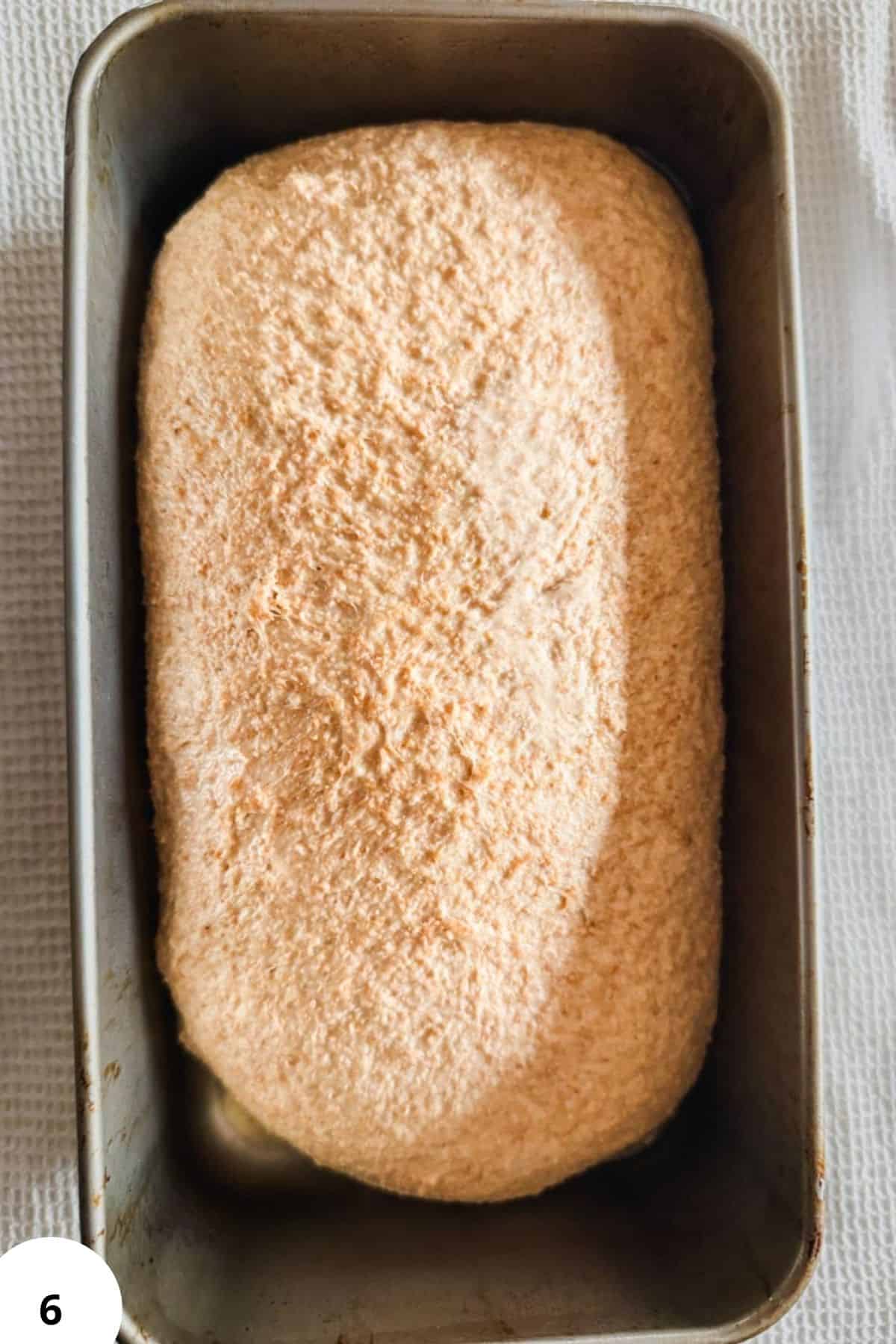
Step 6: Turn the dough again so the exposed side becomes the bottom once more.
Flatten slightly, then roll it up once into a log. Gently squeeze the sides to neaten it.
Place seam-side down into your oiled loaf pan (Image 6).
Cover with a wet towel, shower cap, or slip the whole pan into a plastic bag.
You now have two flexible options:
Option 1: Counter Rise
Let it sit at room temperature for about 1 hour while your oven preheats.
Option 2: Fridge Rise (My Go-To)
Place the loaf in the fridge anywhere from 3 hours up to overnight (max ~24 hours).
Because this recipe uses a good amount of starter, going longer than 24 hours will make it quite sour.
Most fermentation happens while the dough is cooling down, so once it’s cold, the exact fridge time isn’t critical. This makes it very schedule-friendly.

Step 7: When ready to bake, preheat your oven to:
- 205°C / 400°F (convection / fan)
- 220°C / 425°F (conventional / non-fan ovens)
Place a second loaf pan upside-down on top of the first one to trap steam.
Bake covered for 40 minutes.
Then remove the top pan and bake uncovered for another 10 minutes, until the top is nicely browned (Image 7).
The internal temperature should reach about:
96–98°C / 205–208°F

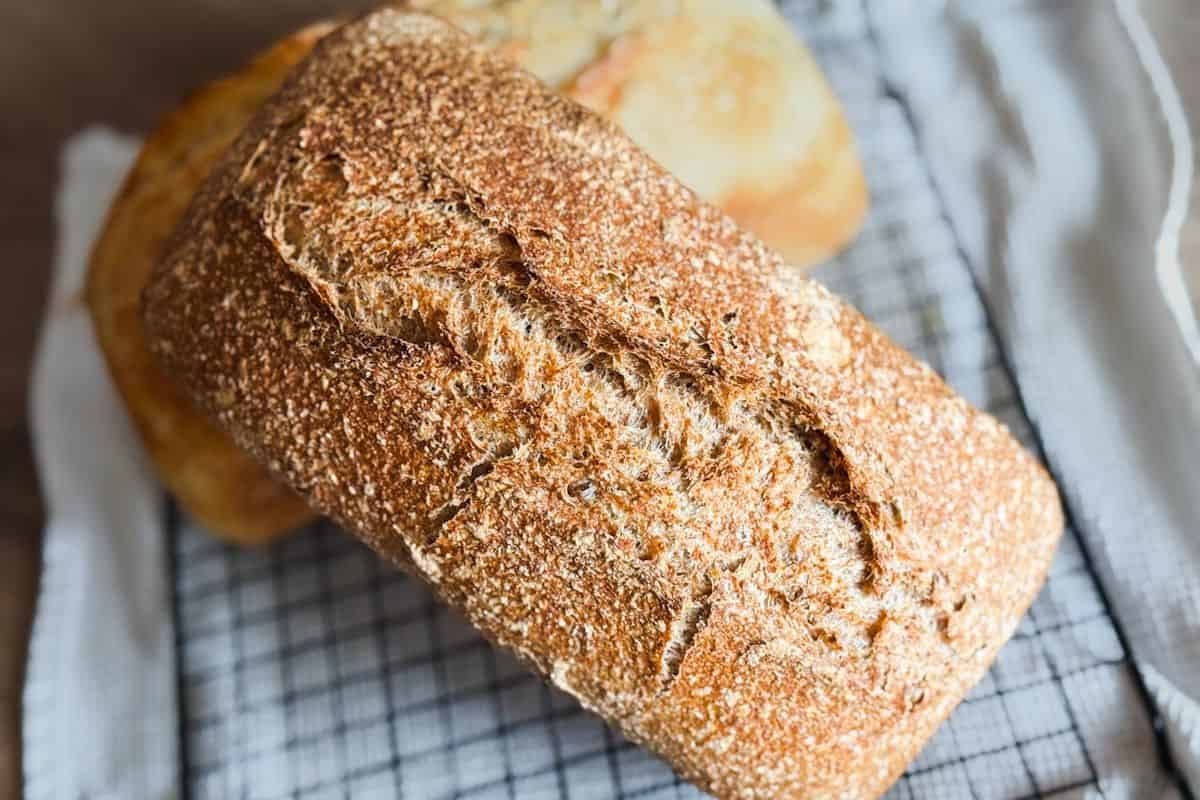
Step 8: Once baked, use a flat spatula / pancake turner (a fish spatula works great) to gently loosen the sides if needed.
Let the bread sit in the pan for about 5 minutes, then remove and transfer to a wire rack (Image 8).
Don’t let it cool in the pan, or you’ll get soggy sides and bottom.
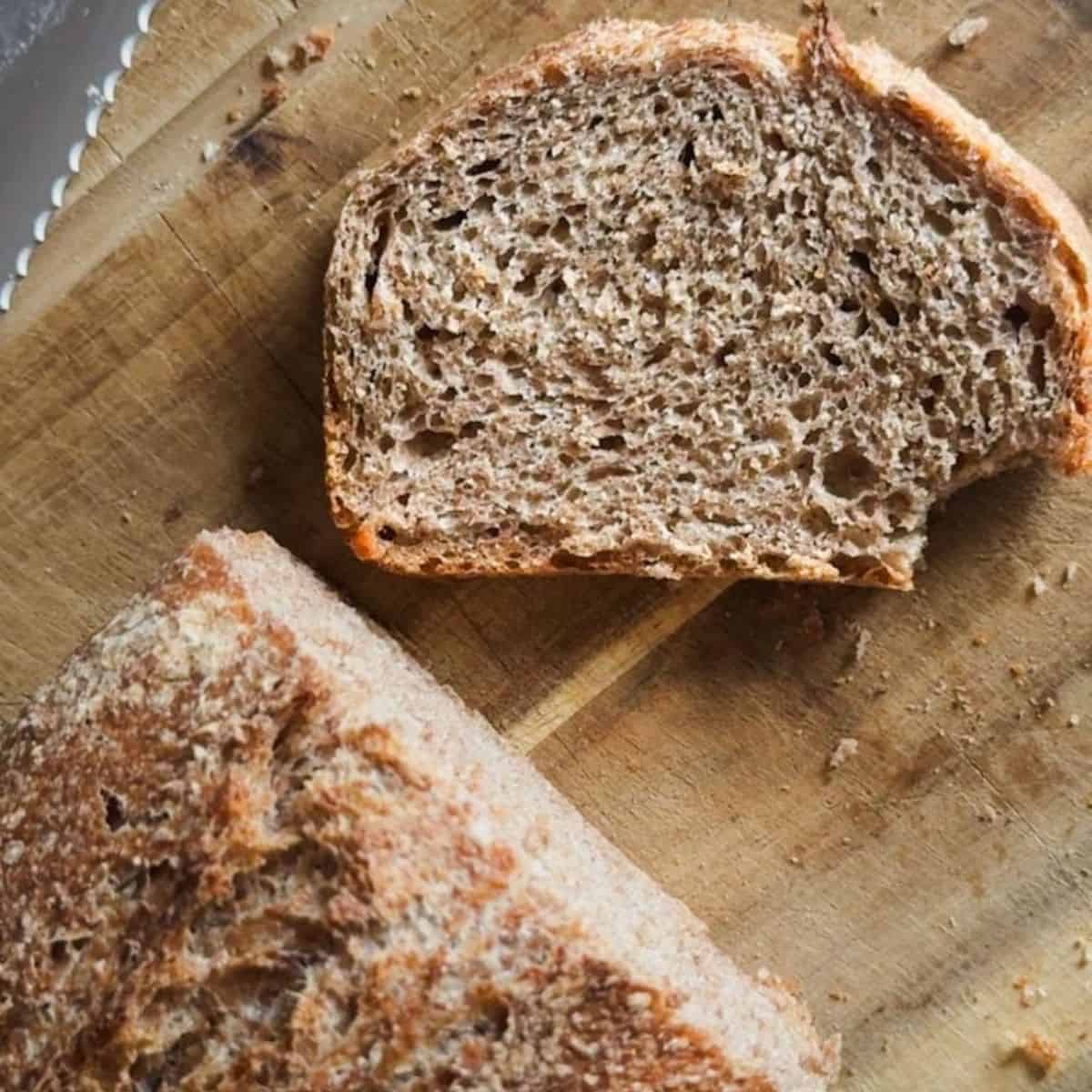
For best crumb, let it cool completely before slicing. I know it’s hard. But it’s worth it.
Hint: watch your dough and not the clock. I say this for almost every sourdough recipe, but it's especially important with plain sourdough recipes, when you only have flour, water and salt in the dough. When it doubt, leave it to ferment a bit longer!
Baking Schedule
Morning mix → afternoon bake
or
Evening mix → fridge overnight → morning bake
This dough is flexible and it fits well around any day.
💭Crucial Success Tips
Do not chase a full doubling in bulk. Stop around 30 to 50% rise. Fresh milled dough can over-ferment if you push it too far.
Recipe FAQs
No. The two-pan method traps steam and acts like a Dutch oven would. It gives you a great rise without a Dutch oven.
Most often, the dough did not ferment long enough. It can also happen if your starter was not active. Watch for bubbles and a steady rise during bulk.
Yes. That is my favorite way to do it. Keep it under about 24 hours so it does not get too sour.
How To Store Sourdough in a Loaf Pan
Store at room temperature in a bread bag or towel for 2–3 days.
For longer storage, slice and freeze. Freeze up to 2 months. Toast straight from frozen.
Other Delicious Recipes
- 100% Fresh Milled Sourdough in a Loaf Pan (The Two-Pan Method)
- Fresh Milled Banana Muffins with Applesauce

- How to Make a Sourdough Starter With Fresh Milled Flour - From Scratch!
- Fresh-Milled Cinnamon Toast Crunch Cereal

If you tried this 100% fresh milled sourdough in a loaf pan (the two-pan method) or any other recipe on my blog please leave a 🌟 star rating and let me know how it went in the 📝 comments below! Happy Baking!
100% Fresh Milled Sourdough in a Loaf Pan (The Two-Pan Method)
Method
- Add everything to a bowl. The order doesn’t matter. I usually mix by hand so I can squeeze the dough and make sure the starter and salt are fully dispersed. Mix until there are no dry bits of flour left.
- At this stage, the dough will feel sticky and almost like wet sand. That’s completely normal with fresh-milled flour. It won’t be stretchy yet. Cover the bowl with a wet tea towel, shower cap, or anything that keeps it from drying out. Let rest for 30 minutes to 1 hour.
- After the rest, do your first set of stretch and folds. What are stretch and folds? With wet hands, gently grab one side of the dough, lift it slightly, and fold it over itself. Turn the bowl and repeat on all four sides. That’s one round. Be gentle. No need for long pulls. It’s better to do short, soft folds than to tear the dough. Cover again and rest 30 minutes. Do a second round. After another 30 minutes, you can do a third round if you want, but I usually stop at two.
- Let the dough bulk ferment for 4–6 hours, depending on your kitchen. - Summer: closer to 4 hours - Winter: closer to 6 hours You’re looking for about 30–50% rise, not a full doubling. If you’re using a glass bowl, you should see bubbles throughout the dough. Don’t wait for dramatic volume. Fresh-milled dough behaves differently.
- Lightly flour your work surface. Turn the dough out so the side that was exposed to air is now on the bottom. Roll it gently into a loose log, then lightly into a ball. Nothing tight. Let it rest on the counter for about 5 minutes while you prep your loaf pan. Generously oil one loaf pan.
- Turn the dough again so the exposed side becomes the bottom once more. Flatten slightly, then roll it up once into a log. Gently squeeze the sides to neaten it. Place seam-side down into your oiled loaf pan. Cover with a wet towel, shower cap, or slip the whole pan into a plastic bag.You now have two flexible options: - Option 1: Counter Rise Let it sit at room temperature for about 1 hour while your oven preheats. - Option 2: Fridge Rise (My Go-To) Place the loaf in the fridge anywhere from 3 hours up to overnight (max ~24 hours). Because this recipe uses a good amount of starter, going longer than 24 hours will make it quite sour. Most fermentation happens while the dough is cooling down, so once it’s cold, the exact fridge time isn’t critical. This makes it very schedule-friendly.
- When ready to bake, preheat your oven to: - 205°C / 400°F (convection / fan) - 220°C / 425°F (conventional / non-fan ovens) Place a second loaf pan upside-down on top of the first one to trap steam. Bake covered for 40 minutes. Then remove the top pan and bake uncovered for another 10 minutes, until the top is nicely browned. The internal temperature should reach about: 96–98°C / 205–208°F
- Once baked, use a flat spatula / pancake turner (a fish spatula works great) to gently loosen the sides if needed. Let the bread sit in the pan for about 5 minutes, then remove and transfer to a wire rack. Don’t let it cool in the pan, or you’ll get soggy sides and bottom. For best crumb, let it cool completely before slicing. I know it’s hard. But it’s worth it.


Leave a Reply